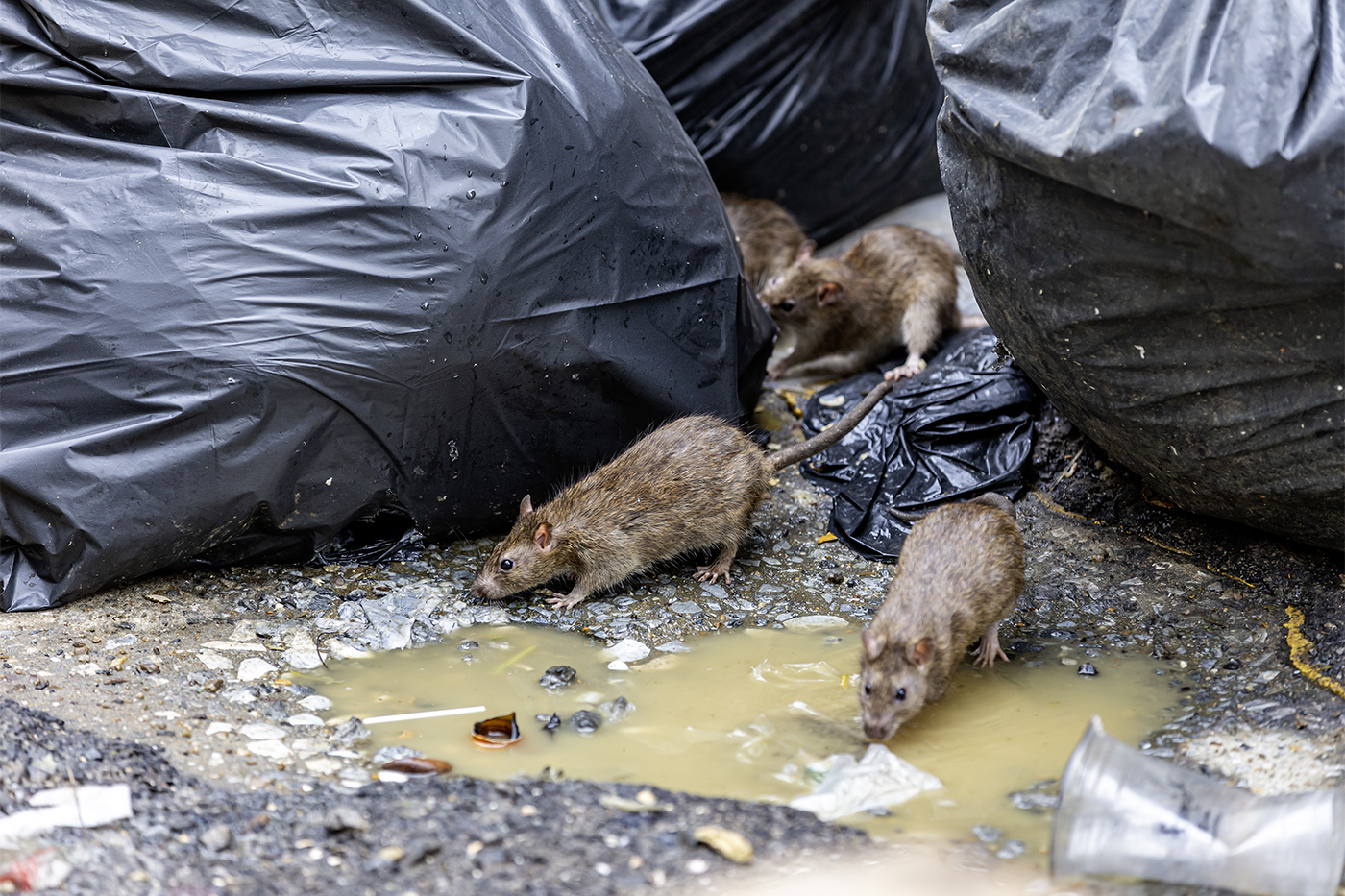
Recording Rats: Boston’s Innovative Approach
In Boston, a unique scientific project is in the works, focusing on capturing and studying the vocalizations of the city’s rat population. Utilizing AI technology, researchers are filtering out human speech from audio recordings, allowing them to analyze rat communications in their natural urban environment.
The Project Overview
This initiative is a partnership between Basis, a nonprofit organization utilizing AI for complex problems, and city officials, led by John Ulrich from the Department of Environmental Services. By correlating rat vocalizations with behavioral video recordings, the team aims to better understand rat interactions and movements, which could lead to preemptive measures against infestations rather than reactive responses.
The Rat Problem in Boston
Rats thrive in urban areas, drawn by easy access to food from human waste and shelter from buildings. Boston has struggled with rat populations, topping the list of U.S. cities with the highest rat sightings. In response to numerous rodent-related complaints, city officials are exploring innovative solutions, including gathering data on how rats react to control efforts.
The Science Behind the Sounds
Rats communicate using a range of sounds, many of which are inaudible to humans, falling between 20 and 100 kilohertz. Specialized microphones reveal a continuous chorus of rat calls, including alarm calls and playful squeaks, highlighting their social complexity.
Why Study Rats in Their Environment?
Experts argue that studying rats in their natural habitat provides insights that lab settings cannot. Observations reveal complex behaviors, emotional depth, and social interactions that standard experimentation fails to capture. The documentation has produced over a million calls, organized into a “rat dictionary” that connects behavior with vocalizations.
The Role of AI
With AI, researchers are analyzing patterns in rat calls and translating them into three-dimensional maps to visualize their behaviors. This sophisticated approach helps identify different types of calls used for various purposes, enhancing our understanding of these intelligent creatures.
Fostering Empathy
As researchers gain knowledge about rats’ behaviors and social structures, there is potential for shifting public perceptions, promoting more humane methods of rodent control, and ultimately encouraging coexistence with these resilient urban dwellers.
If you’re interested in the fusion of technology and wildlife study, this project represents a pioneering step toward understanding a species often viewed as a nuisance.


