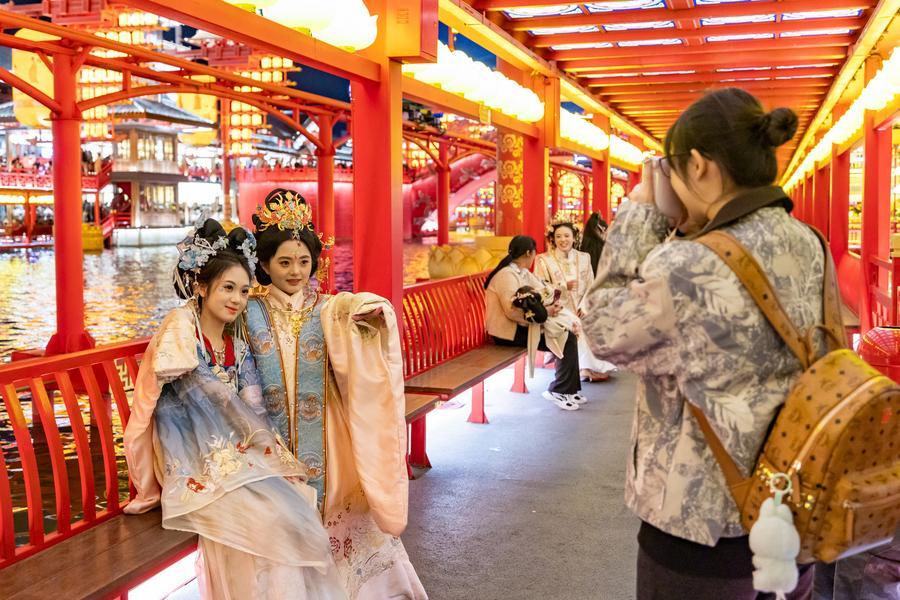
The article discusses the growing integration of culture and tourism in China, particularly highlighted during the National Day holiday. Here are the main points:
-
Cultural Tourism Growth: The trend is shifting towards experiences that offer rich cultural content, such as the Confucius cruise in Shandong Province, which combines travel along the Grand Canal with elements of Confucianism.
-
Uniqueness of Holidays: With the Mid-Autumn Festival coinciding closely with National Day, many Chinese opted for longer holidays, allowing for expansive travel and exploration of cultural sites, including traditional festivals and revolutionary historical landmarks.
-
Cultural Heritage and Innovation: Efforts are being made to revitalize tourism through innovative cultural offerings. This includes immersive experiences in places like Hong’an Township and the incorporation of popular online narratives into travel itineraries.
-
Inbound Tourism Appeal: China is attracting international tourists by offering unique, immersive cultural experiences, as seen in destinations like Jingdezhen, known for its porcelain-making.
-
Shift in Tourist Interests: There is a noticeable shift from traditional sightseeing towards deeper engagement with local culture and history, emphasizing quality experiences over standard attractions.
-
Economic Plans: The Chinese government’s 15th Five-Year Plan emphasizes the integration of culture into tourism to enhance economic development, particularly in regions with unique cultural heritages.
-
Statistics and Data: Recent data indicates a strong recovery in tourism, with significant increases in bookings for tours, scenic spots, and transportation during holiday periods.
Overall, the article underscores a burgeoning trend in Chinese tourism that blends cultural immersion with travel, reflecting a deeper societal interest in heritage and history.