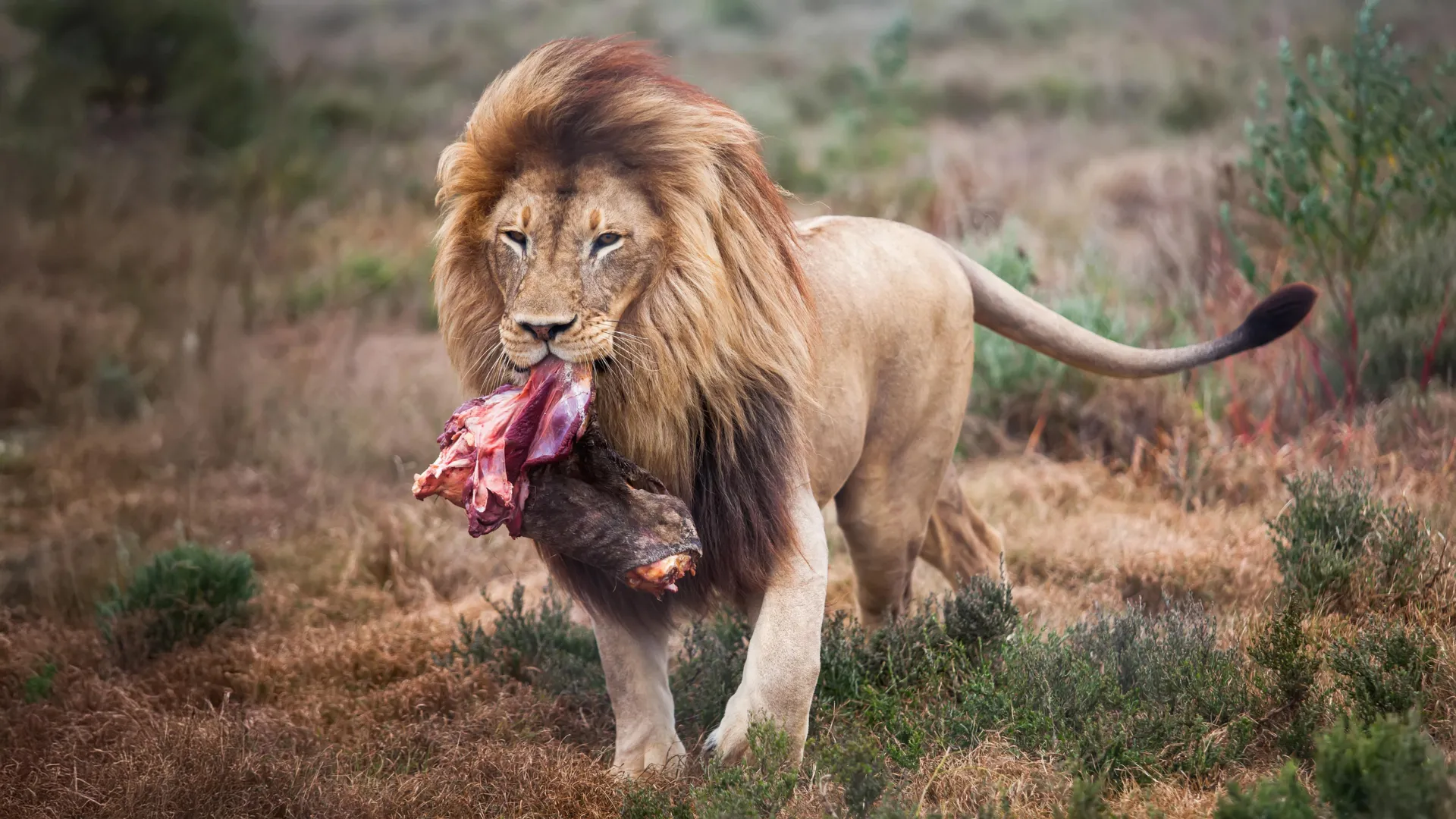
The study highlighted in the article indicates that zoo lions behave more naturally when provided with whole animal carcasses and a feast and fast feeding schedule. Conducted by researchers from Adelaide University and Monarto Safari Park, the research reveals that these feeding routines mimic the natural feeding cycles of wild lions.
Key Findings:
-
Feasting and Fasting: When given whole carcasses every nine days, lions exhibit behavior patterns similar to those of wild lions, where they feast after a hunt and then fast.
-
Behavior Observations: Continuous video monitoring showed an increase in time spent eating, longer periods of rest following feeding, and a gradual rise in activity levels during fasting.
-
Natural Feeding Ecology: The lions were observed to more frequently engage in behaviors like tearing and manipulating food, essential aspects of their natural feeding behavior.
-
Pacing Behavior: The study also noted that pacing, often seen in captive animals, was linked more to familiar routines than to hunger, indicating that predictable events can influence their behavior.
-
Need for Long-Term Monitoring: The results stress the importance of monitoring animal behavior over longer periods rather than focusing on immediate reactions to feeding.
Conclusion:
The research demonstrates that whole carcass feeding not only meets nutritional needs but also enriches the life of captive lions by allowing them to engage in natural behaviors, suggesting that zoos can enhance animal welfare through more naturalistic feeding practices. Future studies may integrate behavioral data with physiological measurements for a comprehensive understanding of feeding strategies’ effects on animal welfare.


