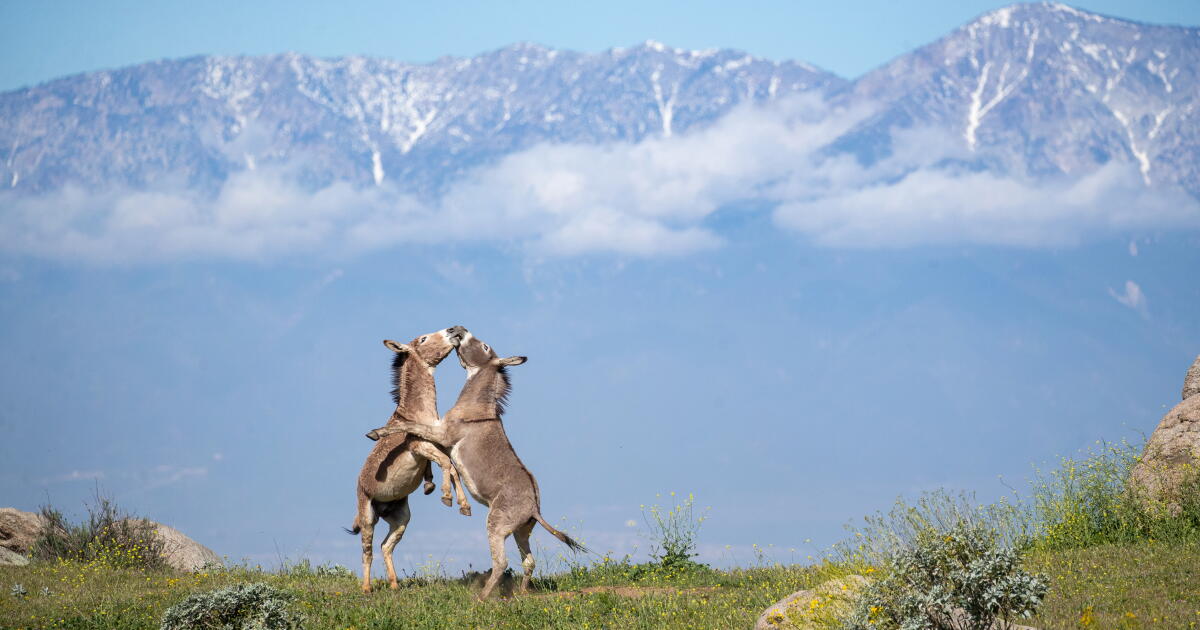
Wild Donkeys at UC Riverside: A Complicated Coexistence
At UC Riverside, the start of the fall semester comes with familiar sights: picking up syllabi, reconnecting with friends, and spotting the iconic wild donkeys that roam the campus. These “hoofed Highlanders” have become an unofficial mascot, celebrated in campus culture through social media threads and merchandise.
However, the relationship between these burros and the local community is far from straightforward. While many residents adore the wild donkeys, others see them as a public safety issue, citing concerns over potential car accidents, property damage, and injuries during encounters.
The management of the donkey population has sparked considerable tension. A community uproar erupted when San Bernardino County attempted to relocate hundreds of donkeys to a sanctuary in Texas, leading to threats against the nonprofit involved. After backlash, the county reversed its course on this decision.
This year, public outrage flared again after reports of donkeys being shot with arrows in a series of unsolved attacks. Despite these incidents, knowledge about the herd’s size, growth, and environmental impact remains limited.
Research Initiatives at UC Riverside
A research team at UC Riverside is now working to address these knowledge gaps to foster coexistence between humans and donkeys. Marko Spasojevic, an associate professor, leads the research focused on understanding the population and ecological role of these animals. One of the primary objectives is to determine the herd size and monitor birth trends, as it is estimated that several hundred donkeys inhabit the Box Springs Mountain Reserve and venture into surrounding urban areas.
Graduate student Wyatt Hall is deploying motion-activated cameras to help track the donkeys’ population. Understanding population dynamics could help mitigate traffic collisions involving the animals. This research might also inform interventions needed to manage the donkeys sustainably.
Additionally, researchers aim to assess the ecological impact of the donkey population. Preliminary observations suggest that burros can help control the spread of non-native grasses, benefiting local ecosystems, though concerns regarding soil erosion from their trails persist. Future plans may involve analyzing their feeding habits and using GPS collars to monitor their movements.
Understanding the Donkeys’ Origins
Another aspect of the research includes uncovering the origins of the wild donkey population in the Inland Empire. Historical records trace donkeys back over 5,000 years to eastern Africa, with connections to Spanish colonization in the Americas. Two popular theories suggest that miners abandoned them during the gold rush or that ranchers brought them from Death Valley in the 1950s. Genetic analysis will compare local donkey DNA with samples from other populations to clarify their origins.
Navigating Human-Donkey Interactions
The unique proximity of the donkeys to urban environments raises the stakes for human-donkey interactions. Students at UC Riverside receive education on the importance of observing donkeys from a distance to prevent conflicts, as these animals can be aggressive when threatened.
As urban development expands in the Inland Empire, the chances of human-donkey encounters will likely increase. Understanding and managing the wild donkey population effectively is essential for fostering harmony in this complicated coexistence.


