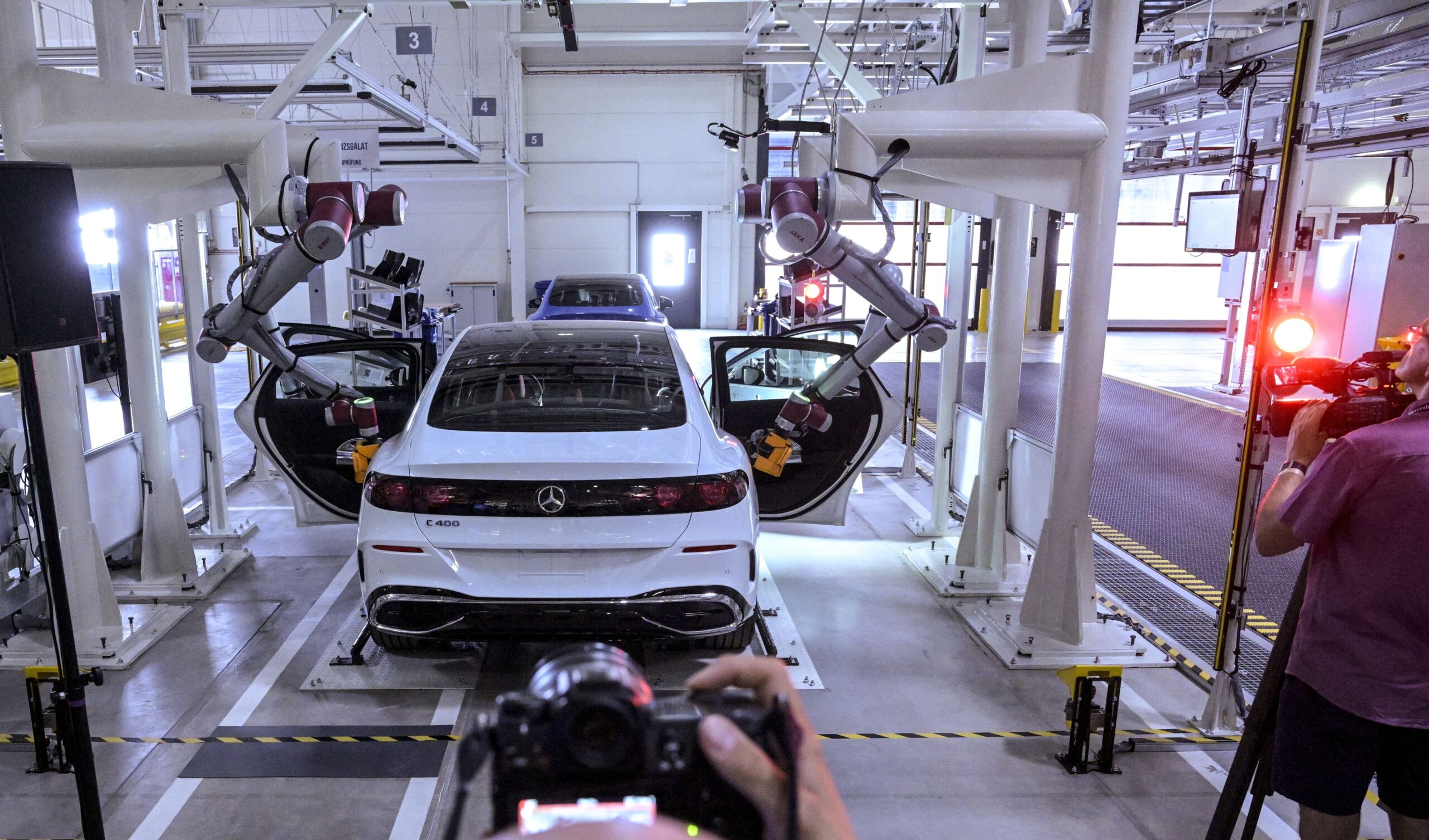
Hungary is experiencing a notable expansion in its automotive industry amid challenges faced by the sector in Western Europe, such as weak demand and heightened competition, particularly from China. Despite these obstacles, Hungary is attracting substantial foreign investments due to its combination of low labor costs, a skilled workforce, and a robust automotive infrastructure built over decades.
Key Highlights:
-
Foreign Investment: Major automotive companies, including BYD, BMW, and Mercedes-Benz, are increasing their presence in Hungary. BYD has established a manufacturing site in Szeged, while BMW has started production at its facility in Debrecen, focusing on electric models.
-
Cost Advantage: Hungary boasts significantly lower labor costs compared to Western Europe, with average hourly wages at about €15.20, compared to over €49 in Germany. This cost-effective environment, coupled with a low corporate tax rate of 9%, makes Hungary an attractive location for manufacturing.
-
Production Growth: Despite a downturn in 2024, recent data indicates a rebound in vehicle manufacturing, particularly with the launch of electric vehicle production. BMW’s Debrecen plant has ramped up operations to three shifts, producing up to 150,000 vehicles annually.
-
Local Industry: Established local supply chains and a skilled labor pool integrate new projects into existing European automotive networks smoothly. Companies like Audi and Bosch are further strengthening Hungary’s position in high-tech automotive sectors like software development and automated driving.
-
Challenges Ahead: Despite the growth, experts caution against complacency. Sustained demand in core European markets remains uncertain, and rising wages could erode Hungary’s competitive advantages. The country must adapt from being a cost-efficient manufacturing base to a high-tech automotive hub to ensure long-term viability.
Conclusion:
Hungary’s unique positioning amid a European automotive downturn offers both opportunities and challenges. Local investments may bolster the economy, but the future hinges on adaptability and innovation within Hungary’s automotive sector.

