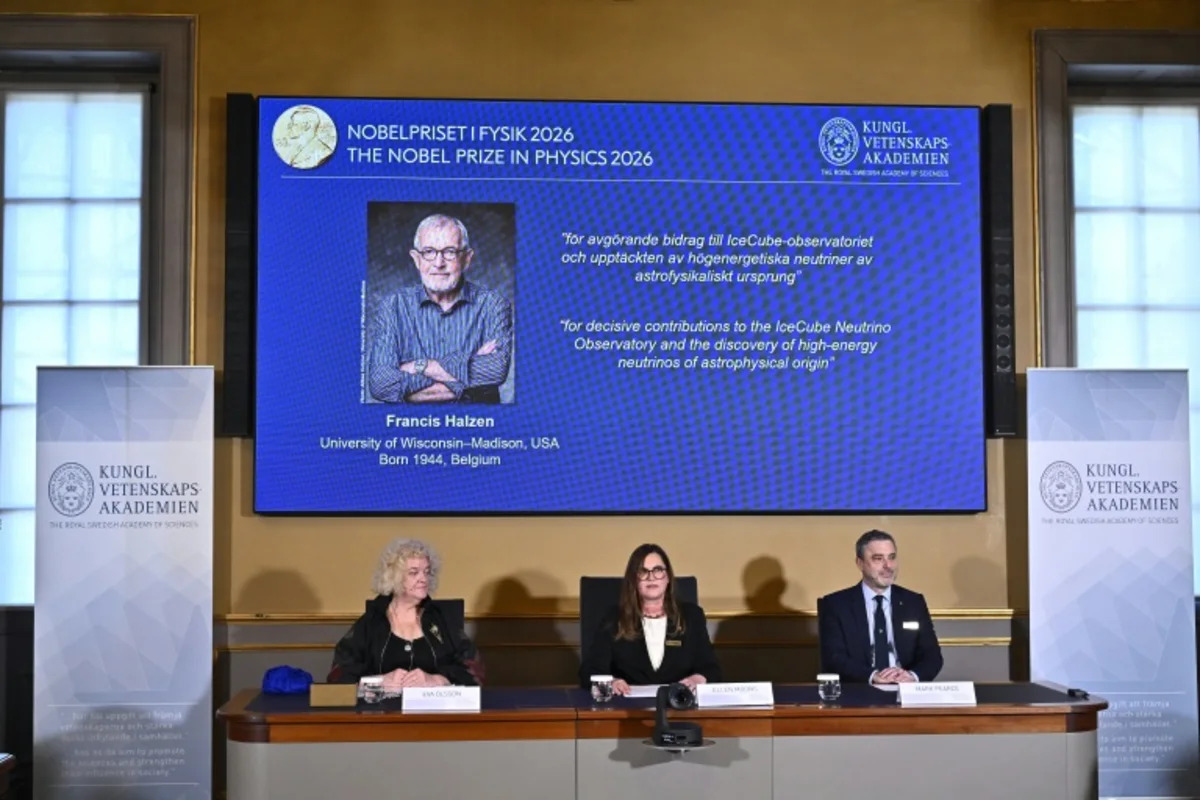
Belgian physicist Francis Halzen has been awarded the Nobel Prize in Physics for his innovative work with the IceCube Neutrino Observatory, which uses South Pole ice to detect neutrinos from the distant universe. This achievement offers new insights into cosmic phenomena. Halzen’s contributions enable researchers to capture these elusive particles that travel from high-energy astrophysical processes without altering their paths.
At 82, Halzen, who is a professor at the University of Wisconsin–Madison, expressed his surprise and pleasure upon receiving the award. The Royal Swedish Academy of Sciences emphasized the importance of Halzen’s work in establishing a new field of astronomy through the observatory, which consists of a cubic kilometer of ice embedded with light sensors.
High-energy neutrinos are unique because they provide valuable information about the universe’s most energetic processes without losing energy or changing direction, unlike other particles. Halzen’s vision, first proposed in 1988, garnered support from other scientists, leading to the observatory’s completion in 2011.
The award comes during a week of Nobel announcements, following the medicine prize awarded to researchers in optogenetics. The Nobel Prize includes a diploma, a gold medal, and a monetary award, with formal presentations occurring on December 10, the anniversary of Alfred Nobel’s death.


