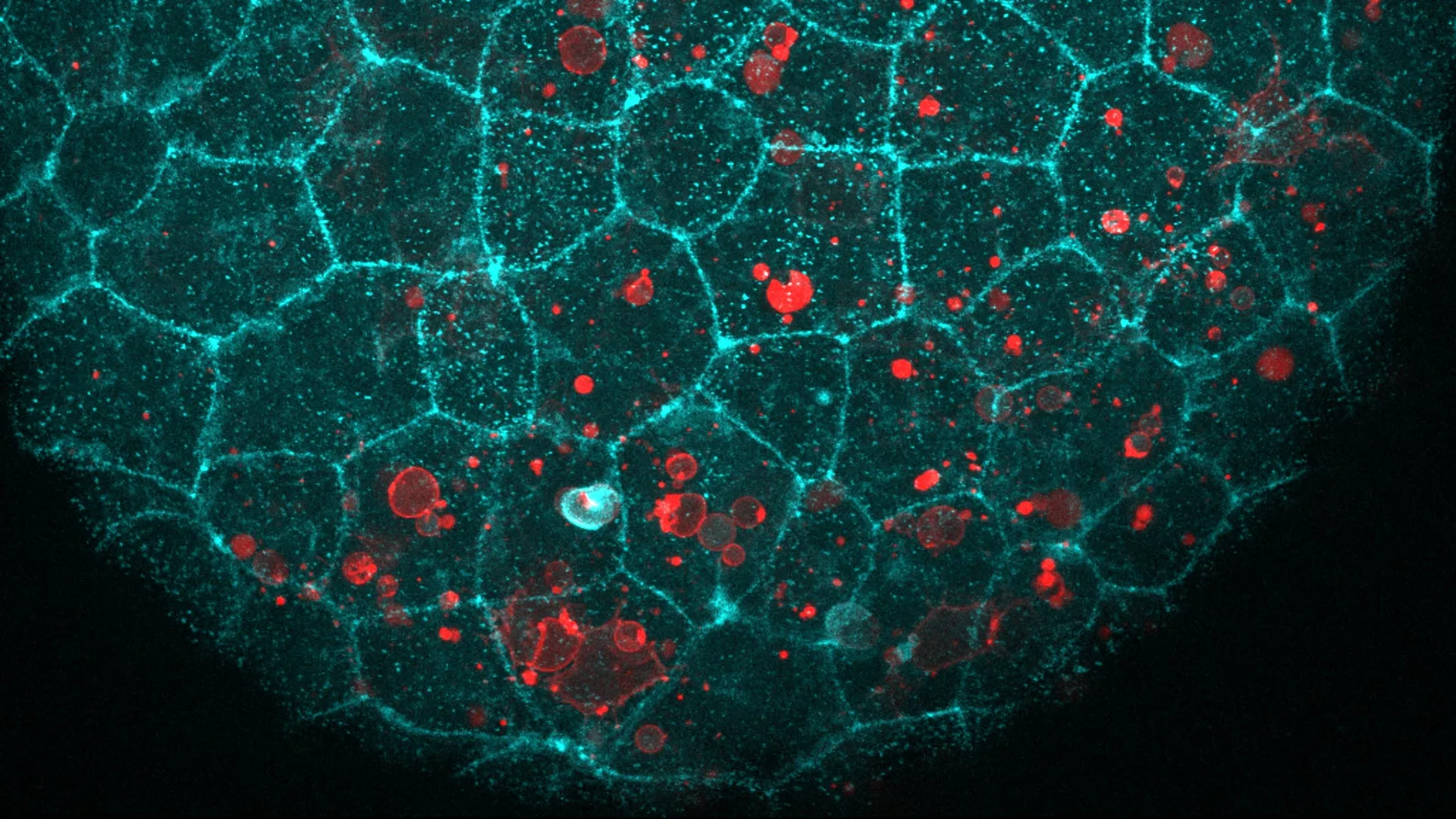
This text discusses a significant discovery about E-cadherin, a protein mainly known for its role in cell adhesion, revealing its unexpected function in helping epithelial cells engulf dead cells. The research, published in Nature Communications, suggests that E-cadherin plays a crucial role in clearing debris from dying cells, which could influence chronic inflammation—a condition where cell debris contributes to inflammatory responses.
Key Findings:
-
E-cadherin’s Dual Role: Traditionally seen as a structural protein connecting epithelial cells, E-cadherin also aids in the cleanup of dying cells.
-
Research Methodology: The team, led by Verena Ruprecht, used zebrafish and mouse embryos to observe how epithelial cells address dying cells using the same machinery that binds them together.
-
Mechanical Behavior: Epithelial cells can stretch and shape their lower surfaces to engulf dying cells while maintaining the integrity of their upper surfaces, akin to dancers adjusting their movements while remaining linked.
-
Mechanics of Cleanup: The study identified components of the E-cadherin complex that facilitate engulfment, showing a critical tethering protein that connects to the cell’s internal skeleton and a brake mechanism that prevents excessive stiffness during cleanup.
-
Conservation Across Species: The cleanup mechanism appears to be conserved in early mouse embryos, indicating a shared evolutionary function among vertebrates.
-
Implications for Adult Tissues: The potential for the same mechanism to operate in adult tissues is still unknown, but previous studies suggest epithelial cells in adults can also clear dying cells.
-
Medical Importance: Inefficient clearance of dying cells can lead to chronic inflammation, making the understanding of this mechanism crucial for human health.
Overall, the discovery opens pathways for further research into cell cleanup mechanisms, especially in understanding and addressing chronic inflammatory conditions.


