Physicists at RHIC Find Tantalizing Indication of a “Critical Point”
Key Findings from Recent Experiments
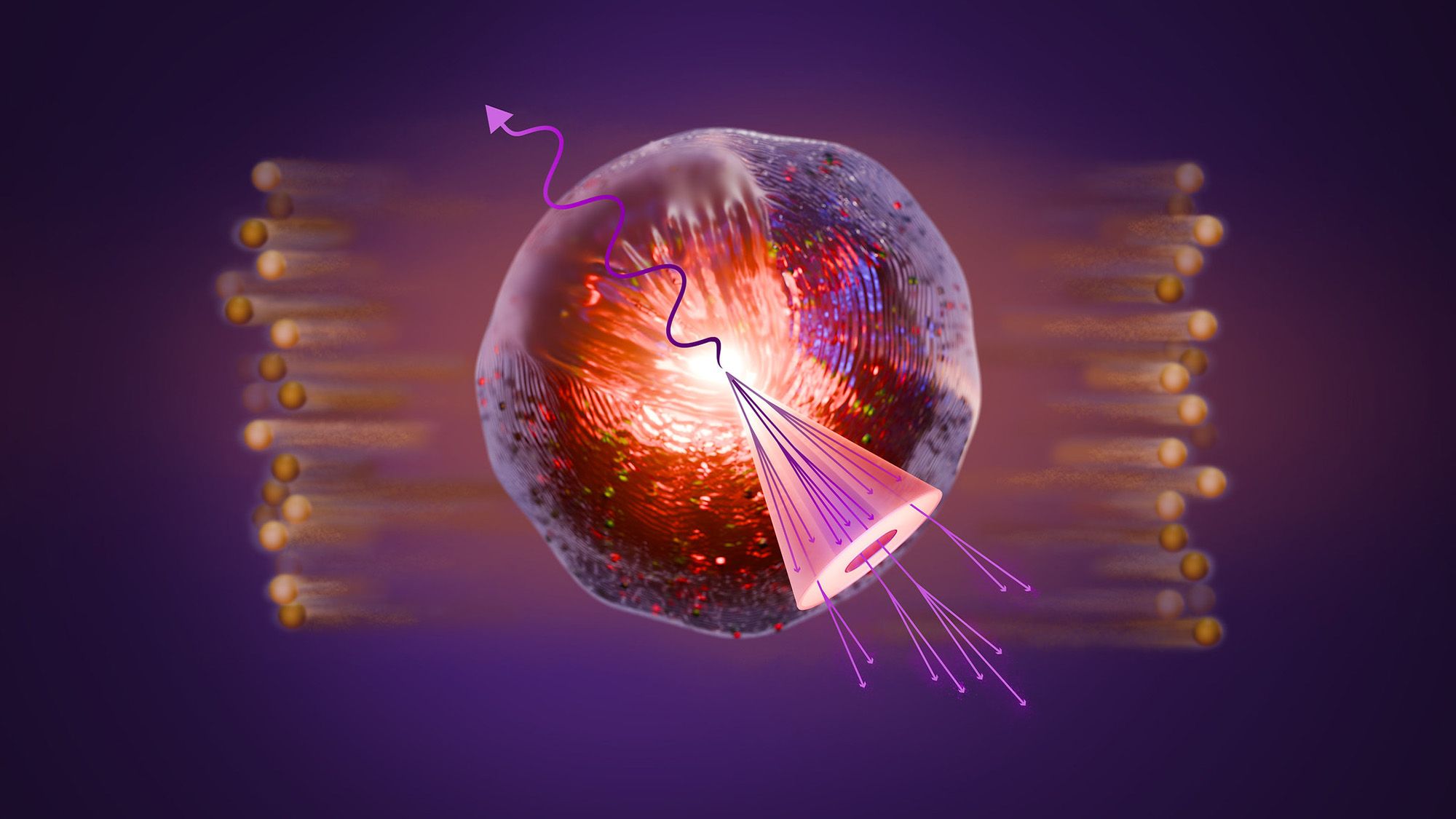
Researchers at the Relativistic Heavy Ion Collider (RHIC) at Brookhaven National Laboratory have observed an unexpected pattern in the particles produced from collisions of gold nuclei traveling close to the speed of light. The results, published in Physical Review Letters, imply a potential “critical point” in nuclear matter transitions, which could shed light on the early universe’s state just after the Big Bang.
Discovery of the Dip
In the experiments, as collision energy was varied, the researchers noted that the sideways momentum of ejected particles displayed an unusual dip instead of a smooth variation. This observation (statistically significant at 5 sigma) may signal a transition point in nuclear matter where it changes form.
Implications for Understanding Matter
The significance of the so-called critical point lies in its role as a transition marker for different states of nuclear matter, akin to the liquid-gas transition in water. The study aims to refine our understanding of how the primordial quark-gluon plasma cooled and transformed into ordinary matter.
Challenges and Future Research
Despite the encouraging data, the researchers caution that these findings do not constitute definitive proof of a critical point. Various factors might contribute to the observed fluctuations, necessitating further tests against theoretical models and additional measurements. Future experiments will aim to probe the specific heat of the hot matter and correlate it with supercomputer simulations.
Conclusion
This intriguing dip in correlations serves as a stepping stone for physicists, inviting further exploration into the conditions of nuclear matter and its evolution from the early cosmos.


