Meta’s AI Data Centers and Their Tax Strategy: A Deep Dive
Mark Zuckerberg recently touted Meta’s advancements in artificial intelligence (AI) and their substantial impact on the company’s growth. He stated to investors, “Our investments in AI are accelerating every major part of our core business,” instilling confidence in the company’s direction. However, a different narrative emerges when scrutinizing Meta’s tax filings. Here’s what’s happening.
Tax Filings vs. Public Statements
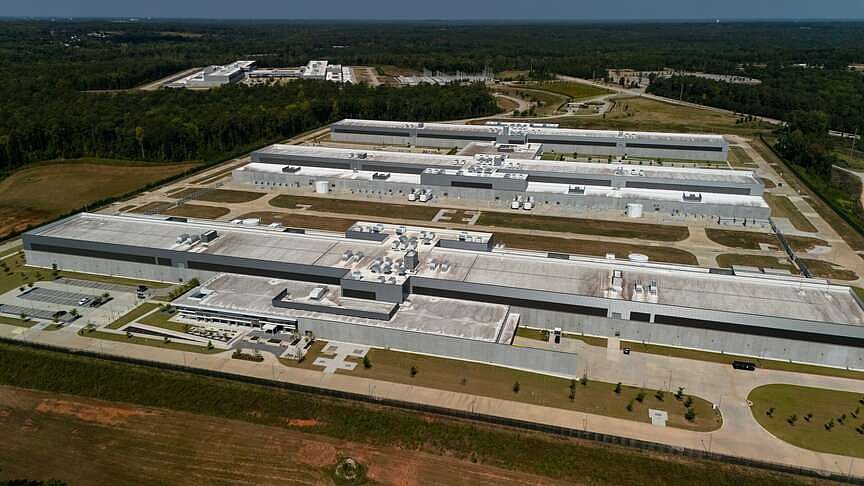
Internally, Meta labels its extensive AI data centers as “pilot models,” a characterization that raises eyebrows in the financial community. This classification allows Meta to access research and experimentation tax credits, interpreting the tax code in a way that many experts deem aggressive. Andre Shevchuck, a partner at BPM, commented on this interpretation as “kind of wild and out there,” suggesting underlying uncertainties.
Meta has reportedly minimized its tax responsibilities by nearly $4 billion last year alone through this strategy, leading it to become the largest beneficiary of the research tax credit among publicly traded companies.
Legal and Financial Risks
Meta’s tax strategy, while financially beneficial, sits on precarious legal ground. Company disclosures hint that there’s a significant risk of losing the tax savings if the IRS challenges them. The IRS has often disputed similar claims from other firms, particularly when equipment is proven and commercially available.
Some within Meta’s finance department expressed concern over the sustainability of this tactic, given existing IRS rulings that rejected tax credits for standard operations and commercially available technology. For example, a federal judge recently denied tax credit claims for an Indiana shipbuilder’s new vessel constructions, emphasizing that substantial uncertainty must be documented to qualify for the credit.
Historical Context of the Tax Credit
The research and experimentation tax credit originated during the Reagan administration to encourage innovation and technological advancement in the United States. Companies can claim this credit for costs associated with experimental projects, but proving eligibility requires meeting a complex four-part test.
In 2024, as Meta expanded its data center footprint aggressively, the idea to leverage this credit emerged. While the experiments around physical layouts and server networking are new undertakings, the chips themselves, costing thousands each and made by established players like Nvidia, are not untested.
Meta’s Tax Strategy: Implications and Future Considerations
Meta’s decision to classify chips for AI centers separately from standard data centers reflects a calculated risk. Initially, the company claimed savings of $700 million from research credits in 2023. As the strategy matured, this figure rose dramatically: to $2 billion in 2024 and $3.9 billion in 2025.
Yet, communication within Meta about this strategy has been limited, possibly due to its contentious nature. Notably, other tech giants like Apple, Amazon, Alphabet, and Microsoft also report substantial research credits but have not flagged similar risks in their disclosures.
As Meta progresses into the future, the company faces crucial decisions around compliance and tax strategy, weighing financial gains against regulatory scrutiny. The organization must navigate this precarious landscape carefully, as the stakes remain high with unprecedented growth amid evolving legal challenges in the tech sector.


