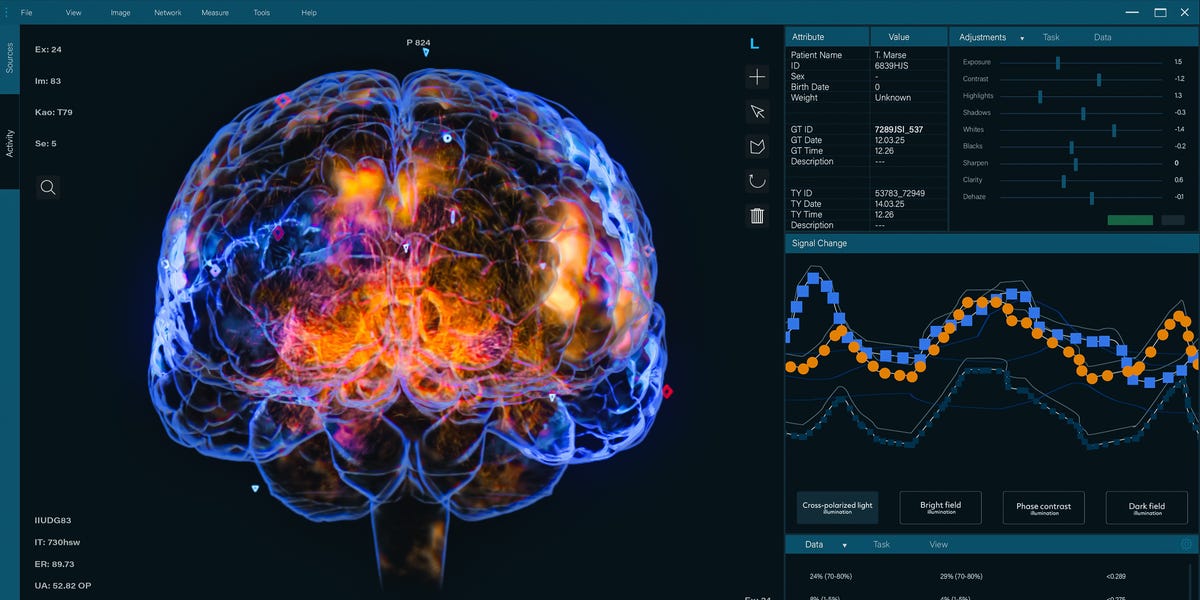
Breakthrough AI Decodes Brain Activity into Clear Visuals
Key Takeaways:
- Advances in AI and fMRI Scans: Researchers have been training AI to analyze functional MRI (fMRI) scans to reconstruct visual data.
- Introducing Brain-IT: A new AI tool named Brain Interaction Transformer (BIT) can decode and encode fMRI scans, recreating images with impressive clarity using minimal data.
- Real-World Applications: This tool has the potential to aid communication for those with severe paralysis and enhance our understanding of the brain’s visual processing systems.
Understanding AI’s Progress
Amid discussions about AI’s capabilities in surpassing human intelligence, one area where it’s making waves is pattern recognition. Leveraging large datasets, AI can accurately identify patterns and has shown potential in medical diagnostics and even in generating novel biological entities.
The Development of Brain-IT
Recent research from the Weizmann Institute of Science has introduced Brain-IT, an AI model capable of reconstructing mental images with remarkable accuracy from brain scans. According to Michal Irani, the lead researcher, while existing models provide decent reconstructions, they often struggle with basic features like colors and detail.
Data Challenges in AI Training
AI systems typically require vast amounts of data for effective training; however, fMRI scans paired with corresponding images are scarce. The research team in this study utilized the Natural Scenes Dataset, which includes scanning data from just eight individuals, to overcome this limitation.
Innovations in Image Reconstruction
By employing a decode/encode mechanism, Brain-IT translates images back and forth between visual data and brain activity, effectively generating a larger dataset for training. This enables the AI to make accurate predictions and reconstructions based on a small dataset.
Future Prospects
The implications of such technology are vast, potentially revolutionizing communication for those with severe disabilities and offering deep insights into brain functionality. The researchers have discovered new brain regions tied to image processing and are optimistic about future advancements, including possibly recording dreams.
Challenges Ahead
Despite these breakthroughs, decoding complex visual stimuli like video content remains a challenge due to the rapid changes occurring frame by frame. Nonetheless, overcoming these barriers could set the stage for groundbreaking applications in neuroscience and communication.
Conclusion
This remarkable progress in AI and neuroscience highlights the potential to not only improve individual lives through communication technologies but also to deepen our understanding of how the brain processes visual information. As AI continues to evolve, the future of mind-reading and dream analysis may not be as far-fetched as it once seemed.


