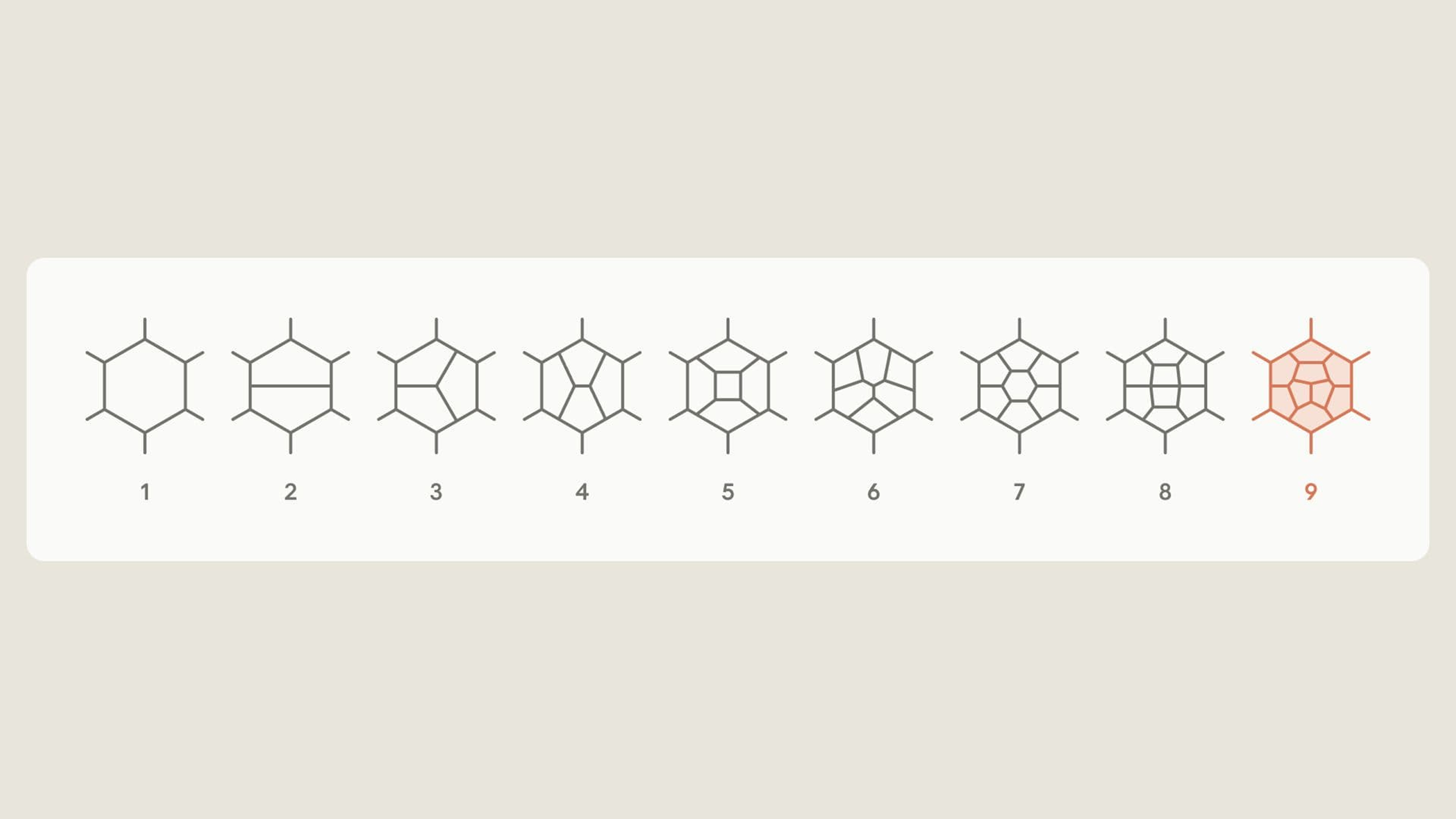
The article discusses a challenge posed by physicist Matt von Hippel to AI companies to solve complex computational problems in theoretical particle physics, specifically in the realm of scattering amplitudes. Von Hippel, previously a theoretical physicist and now a science writer, was intrigued to see if an AI could tackle a frontier problem in his former field, effectively demonstrating its capabilities.
Key Points:
-
Challenge Issued:
- Von Hippel challenged AI companies to solve significant scattering amplitude problems, specifically asking if AI could calculate specific aspects of N=4 super Yang-Mills theory up to nine loops.
-
Importance of Scattering Amplitudes:
- Scattering amplitudes are crucial for predicting particle interactions and testing the validity of physical theories. Accurate calculations could aid in understanding phenomena like dark matter.
-
Computational Complexity:
- Calculating these amplitudes becomes progressively harder with more loops, with most physicists managing only up to three. Von Hippel aimed to see if AI could exceed these computational limits.
-
Response from Anthropic:
- Physicists at Anthropic, Liam Fitzpatrick and Siddharth Mishra-Sharma, took on the challenge using the Claude LLM (large language model) with structured prompts, accomplishing the computation in a way that showcased the efficiency of AI while utilizing reasonable computational resources.
-
Results and Implications:
- Claude successfully computed a nine-loop amplitude. While the result was within reach of human capability, it highlighted an opportunity for AI to perform leading-edge calculations reliably, suggesting that there are indeed computational barriers that can be overcome with AI.
-
Reflections on AI’s Role in Physics:
- The article raises questions about AI’s future in research and its potential to automate complex calculations without extensive human oversight. While the achievement is notable, it does not provide clear insights into the future risks of AI superintelligence.
-
Community Reactions:
- Other physicists in the field echoed similar sentiments regarding the promising results of AI in tackling complex computational issues, although concerns about the implications of AI generating new physical insights were also acknowledged.
Conclusion:
The endeavor exemplifies a significant stride in the intersection of AI and theoretical physics. Von Hippel’s challenge not only pushed the boundaries of what AI can accomplish in scientific research, but also opened discussions on the evolving landscape of scientific inquiry in the age of artificial intelligence.


