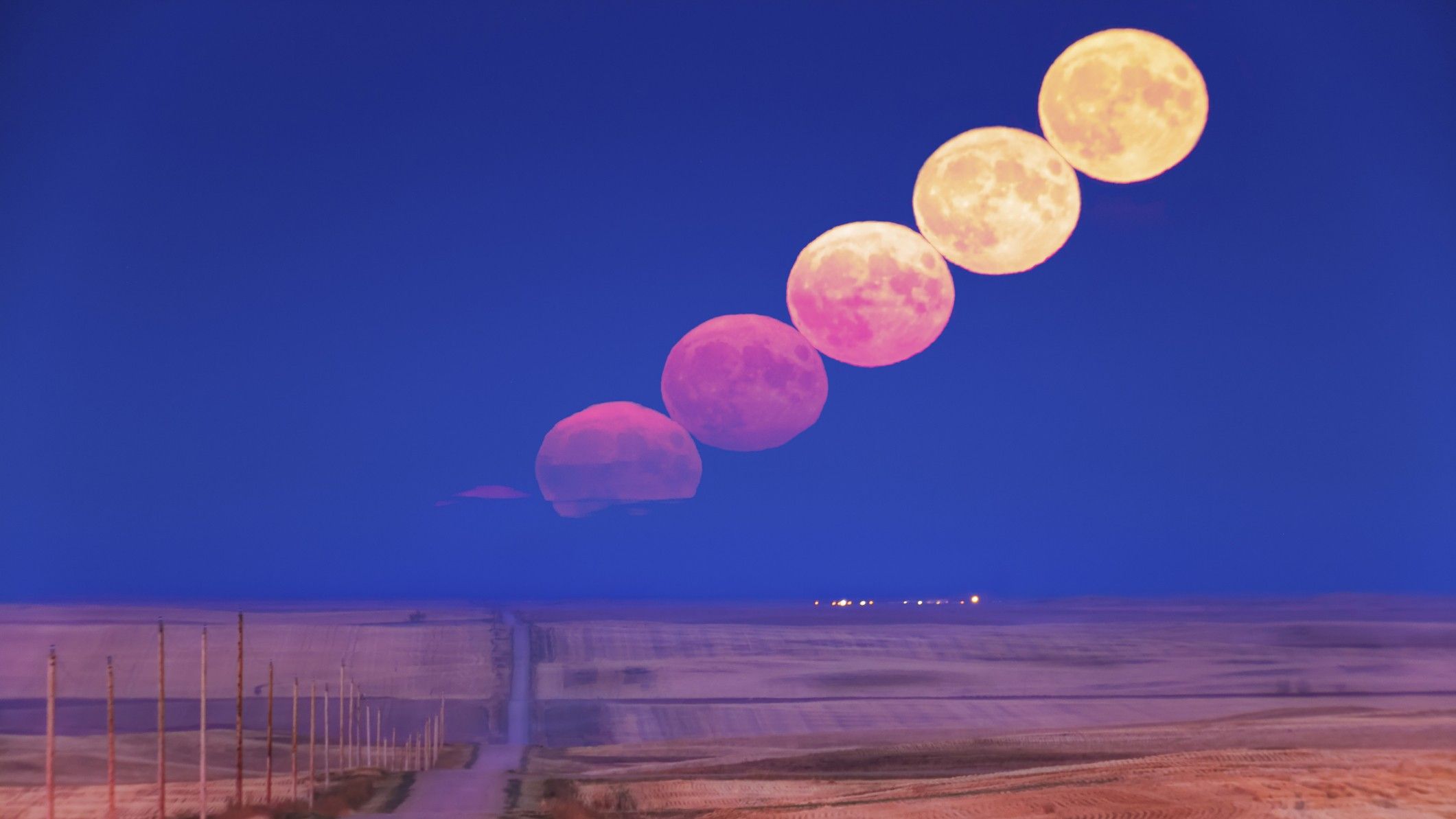
The Harvest Moon: What You Need to Know
The Harvest Moon, which is the full moon closest to the autumnal equinox, has unique characteristics that set it apart from other full moons. This year, it will reach its full phase on September 26, following the equinox on September 23.
Why Is It Called the Harvest Moon?
Historically, farmers relied on the bright light of the Harvest Moon to complete their harvests after sunset. Unlike other full moons with quirky names like the Beaver Moon, the Harvest Moon resonates widely, recognized globally with regional variations like the Corn Moon or Barley Moon, emphasizing the importance of the harvest.
Unique Orbital Characteristics
From a Northern Hemisphere perspective, the Harvest Moon provides moonlight shortly after sunset for several nights. This phenomenon occurs because, around the autumn equinox, the ecliptic angle where the moon rises meets the eastern horizon at a shallow angle. As a result, moonrises during this period can be just a few minutes apart, especially at higher northern latitudes.
- For instance:
- In Edinburgh, moonrise from September 24-28 occurs at times: 6:23, 6:29, 6:36, 6:43, and 6:52 p.m. (a span of only 29 minutes).
- In New York City, moonrise during the same dates occurs at 5:50, 6:12, 6:34, 6:58, and 7:27 p.m. (a span of 97 minutes).
When to Observe the Harvest Moon
For the best photographic opportunities, aim for the full moon rising just after sunset. In Edinburgh, that will be on September 28, while in New York City, the prime viewing will be on September 26, just 12 minutes before sunset.
Additional Celestial Events
- Saturn will be visible rising beneath the full moon on September 26, nearing its annual opposition on October 4, making it a prime time for observation.
Constellation of the Week: Aries
Following the full moon, the moon will move into the constellation of Aries, recognizable by its small crooked line of stars. It sits between the more star-rich areas of Taurus and Perseus.
Be sure to mark your calendars for these celestial events for an enriching experience this autumn!


