Black Business Owners Call for Support in Wake of HUB Office Closure
GREENSBORO, NC – Black business owners gathered earlier this month to urge North Carolina Governor Josh Stein to reaffirm the state’s dedication to historically underutilized businesses (HUBs) after the abrupt closure of the HUB office.
The elimination of this office has severely impacted minority and women-owned businesses, leading to loss of contracts and difficulties in meeting payroll. As many as 6,400 businesses were enrolled in the HUB program prior to its termination, which came with the state’s 2026 budget bill on July 7. Now, these businesses find themselves competing against larger corporations without the certification and support that previously aided their bidding processes.
“We’re here to talk about solutions,” said Gerry McCants, co-founder of the Greensboro Business League. The coalition pushing for change, known as “The Collective,” includes various business and civil rights organizations, such as the North Carolina Black Alliance and the NAACP North Carolina State Conference.
Concerns and Recommendations
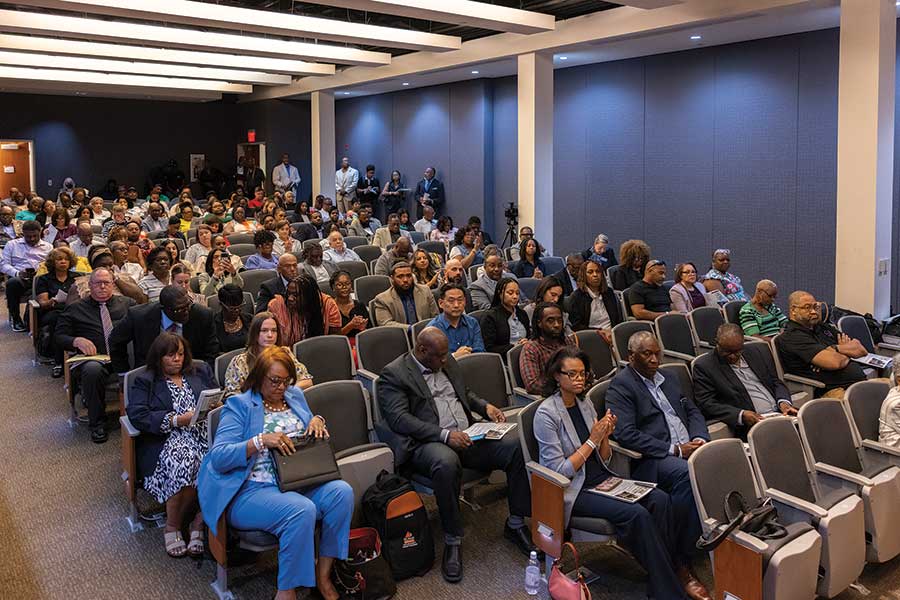
At a summit held on September 10 at the International Civil Rights Center & Museum, business leaders expressed their urgent need for action. The coalition is advocating for the reinstatement of the HUB program through an executive order, coupled with a set participation goal of 25% for small minority-owned businesses.
Rep. Amos Quick III noted that the past initiatives generated an estimated $2.6 billion in economic impact for the state, and he emphasized that such benefits cannot simply vanish due to new legislation.
Michele Clark Jenkins, a legal expert, highlighted that an executive order could restore crucial funding and resources for minority-owned businesses, stating, “There’s no reason why the governor can’t sign an executive order that would put back into place… better HUB support.”
Path Forward
As state leaders develop new programs, an accelerator aimed at aiding small businesses navigate the certification process is set to launch on October 15. However, the gap between the HUB office closure and the establishment of a new program poses a significant risk for current contractors.
“We have to provide the same kind of economic incentives that any other company would want,” McCants emphasized. As these business owners rally support, they call for increased collaboration within local chambers of commerce and engagement with state officials.
Cyril Broderick Jr. encapsulated the movement’s intent, declaring, “Now’s the time for us to build Black economic power in North Carolina.”


