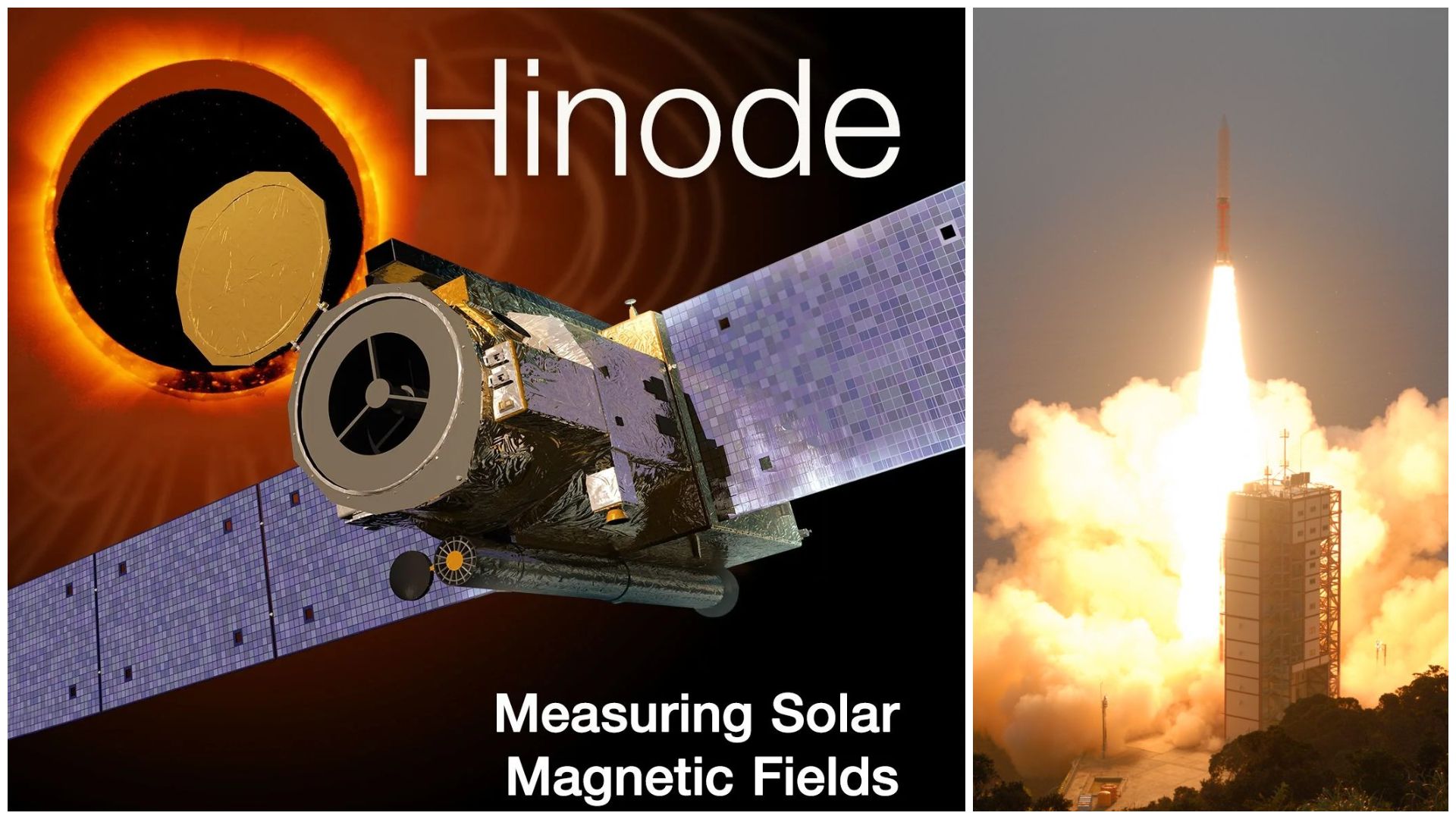
On September 22, 2006, the Japanese Aerospace Exploration Agency (JAXA) launched the Hinode satellite, also known as Solar-B, to observe the sun. Named after the Japanese word for “sunrise,” Hinode is positioned about 400 miles (640 kilometers) above the Earth in a sun-synchronous orbit, ensuring it is always facing the sun.
Since its launch, Hinode has been integral in studying solar phenomena, including the sun’s magnetic fields and solar flares, while capturing stunning imagery of sunspots and solar transits. The satellite features a Solar Optical Telescope, which is unprecedented in measuring the sun’s magnetic field strength and direction.
Hinode is a collaborative effort involving Japan, the United States, the United Kingdom, and Europe, and it continues to provide valuable data even beyond its initial mission timeline, originally expected to end in 2020. Its unique orbit allows it to experience “eclipse season” each summer in the Northern Hemisphere, with the Earth eclipsing the sun during every orbit for up to 10 minutes.
The satellite’s launch occurred from the Uchinoura Space Center in Japan on an M-V rocket, with the local time marking September 23 in Japan despite it being September 22 in Eastern Daylight Time (EDT). Hinode’s ongoing observations are crucial for understanding the sun’s activities and their impacts on space weather and technology on Earth.


