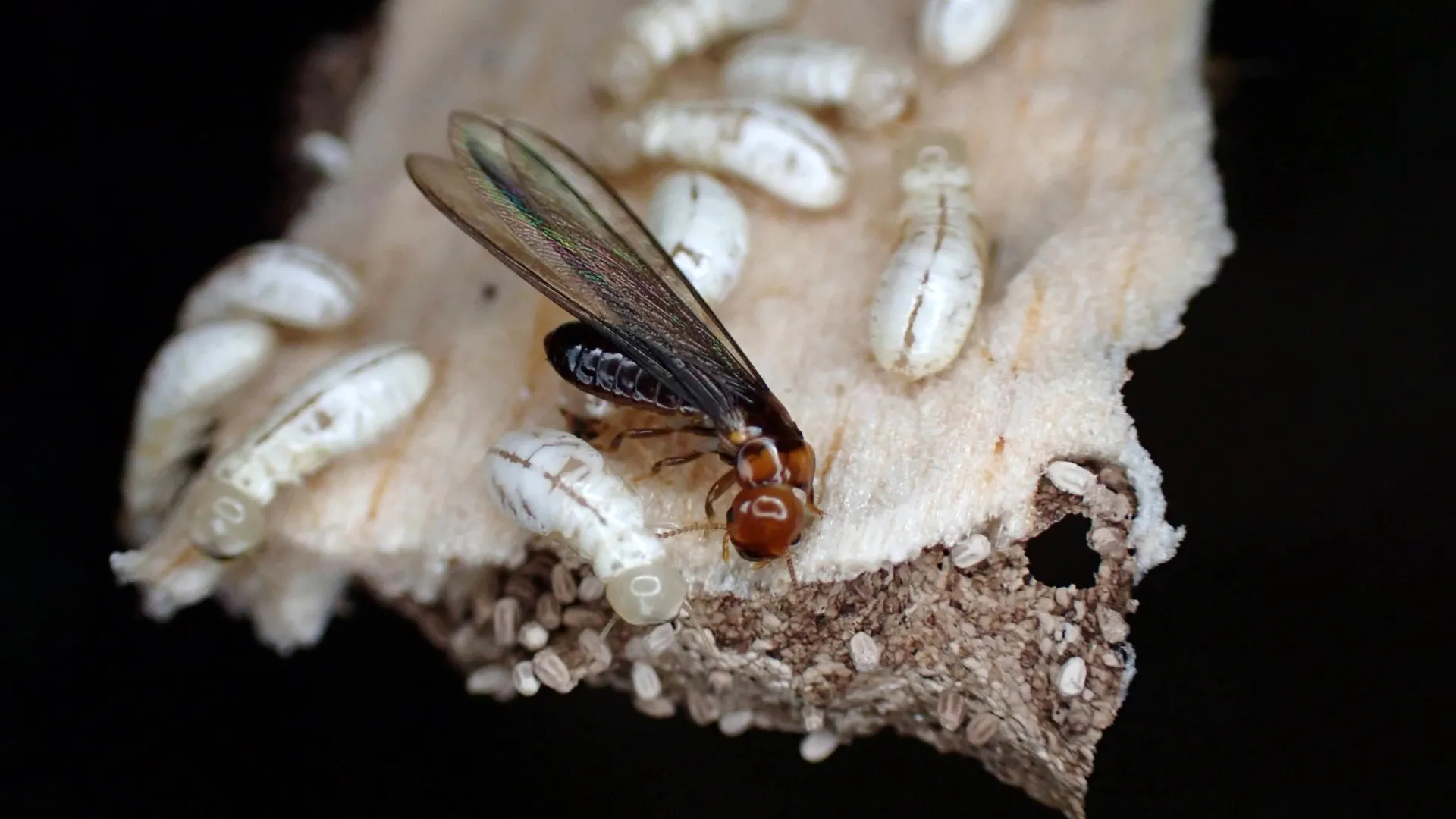
Summary of Drywood Termite Research
Researchers at the University of California, Riverside, have developed a new approach to tackle drywood termite infestations, which are difficult to detect and eliminate due to the insects’ ability to conceal themselves inside wood. They identified a unique vulnerability in drywood termites—their need to molt. By exploiting this biological weakness, they discovered that bistrifluron, an insect growth regulator, can effectively disrupt the production of chitin, essential for forming new exoskeletons, leading to termite mortality.
Key Findings:
-
Effectiveness of Bistrifluron:
- Laboratory experiments showed 95.7% mortality when termites had a choice between treated and untreated wood, and up to 99% mortality with continuous exposure.
- Bistrifluron works by inhibiting chitin synthesis, making molting lethal when termites are exposed.
-
Insect-Specific and Environmentally Friendly:
- This chemical is selective to insects, posing minimal risk to humans and the environment compared to traditional insecticides.
-
Social Behavior and Treatment Spread:
- Termites share food, and even a small number of exposed termites can spread bistrifluron to untreated nestmates, leading to complete colony mortality.
-
Potential for Localized Treatment:
- The slow action of the chemical allows for interaction among termites, enhancing treatment effectiveness as contaminated individuals share bistrifluron with their colony.
-
Alternatives to Fumigation:
- Unlike whole-structure fumigation—which is disruptive and costly—bistrifluron could enable spot treatments, potentially providing lasting protection against re-infestation.
-
Additional Strategies:
- Researchers are also exploring using pinene, a chemical from trees, to lure termites toward treated areas, enhancing insecticide effectiveness.
-
Detection of Active Infestations:
- Separate research is focusing on the microbial composition of termite droppings to determine if a colony is still active, which could assist pest control professionals.
Conclusion
These findings represent a promising shift in termite control strategies, leveraging biological traits and social behavior of termites for improved pest management. This approach not only aims to be more effective, but it also emphasizes environmental safety. Consequently, continued development and practical application of these strategies could lead to significant advancements in managing drywood termite infestations, especially in regions where these pests are prevalent.


