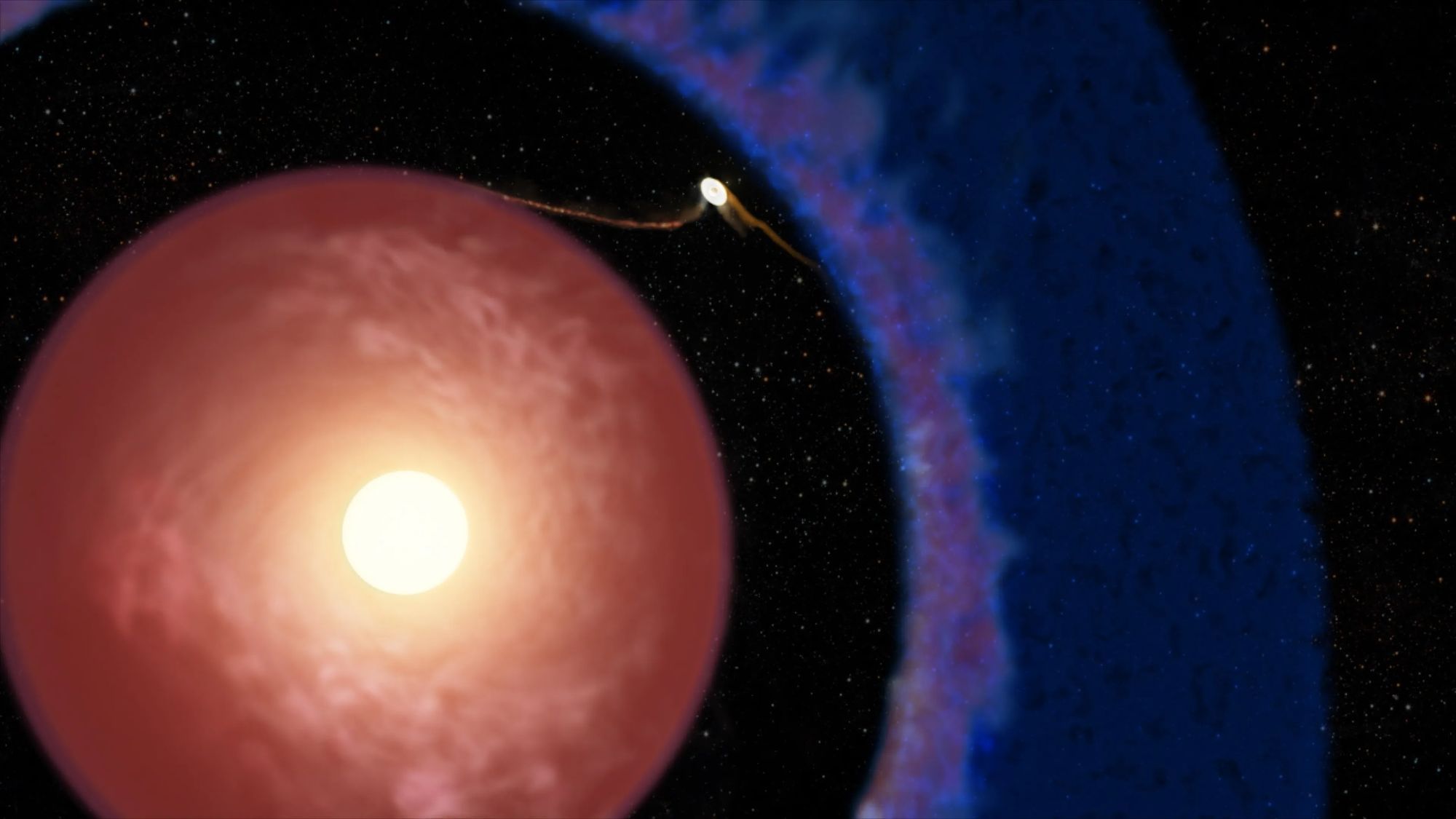
Astronomers have recently identified the youngest exoplanet on record, named Elias 2-24 b, which is located about 450 light-years away from Earth. This planet is about the size of Jupiter but is believed to be less than a million years old. The discovery was made by analyzing archival data from the W.M. Keck Observatory in Hawaii, focusing on the star Elias 2-24, which is surrounded by a disk of material indicative of ongoing planet formation.
Previously, the title of “youngest exoplanet” was held by four planets, each over 5 million years old. According to Lucas Cieza, a professor involved in the study, the existence of Elias 2-24 b challenges existing planet-formation models, suggesting that important processes in planet formation are still not fully understood.
The team, led by Andrea Bernardi, utilized data from various observatories, including the Atacama Large Millimeter/submillimeter Array (ALMA) and the European Southern Observatory’s Very Large Telescope, to support their findings. Interestingly, they relied on observations made with coronagraphs, which can block out starlight to enhance the visibility of planets.
The identification of this “baby” planet offers a unique opportunity for researchers to study early stages of planet formation, as the galaxy continuously produces new celestial bodies. Researchers hope that future instruments, like NASA’s Nancy Grace Roman Space Telescope, will facilitate more direct observations of young planets like Elias 2-24 b. This significant discovery was detailed in a study published on September 16 in The Astrophysical Journal Letters.


