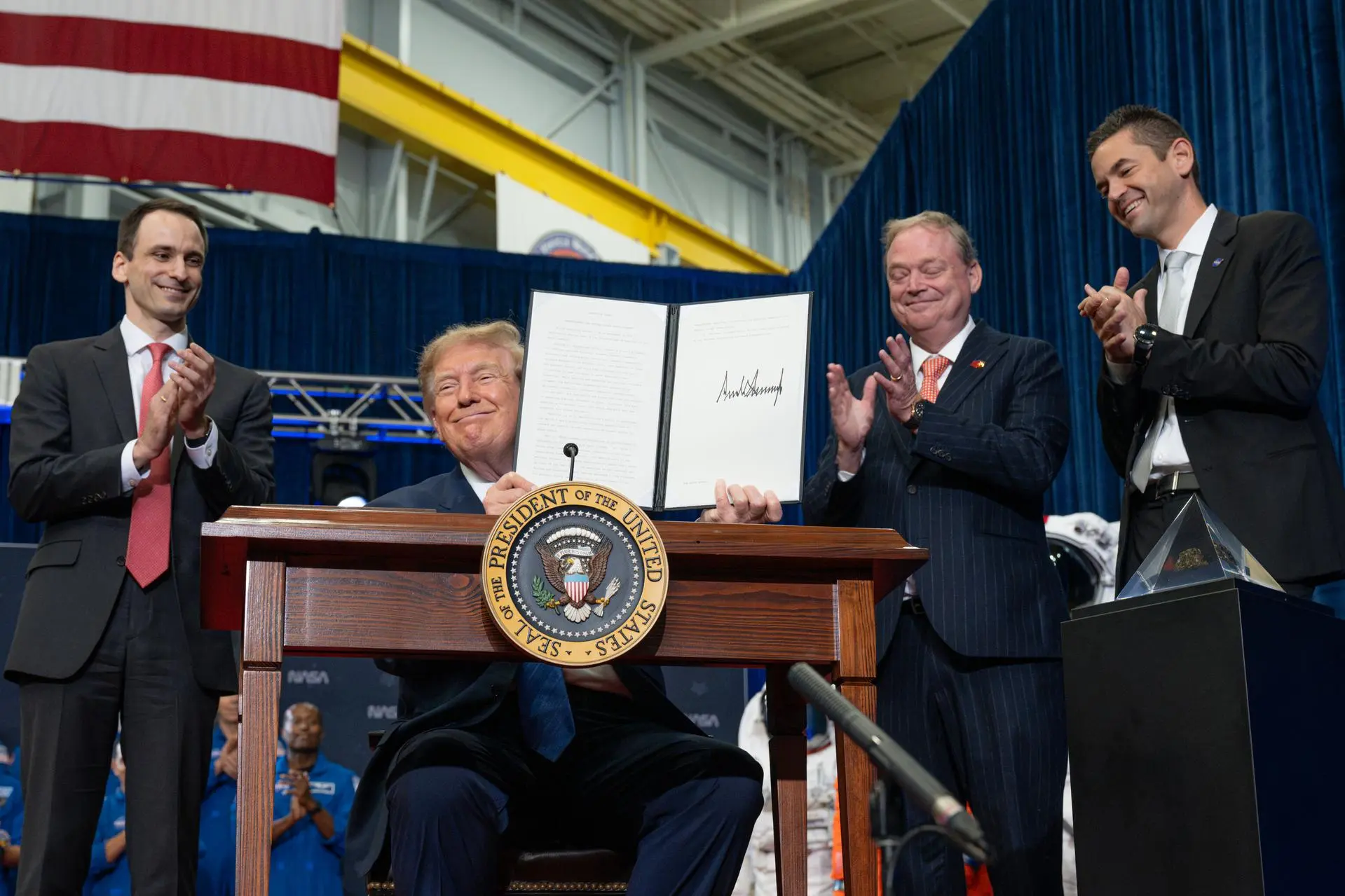
The article discusses the competition among states to host the newly proposed US Space Academy, established by an executive order from President Donald Trump. Here are the key points:
-
Space Academy Proposal: An executive order signed on August 28 directed NASA to create a civilian space academy akin to military service academies. NASA is currently gathering proposals from states to determine the Academy’s location.
-
Timeline: NASA aims to break ground by 2027, admit an interim cohort in 2028, and have a permanent campus by 2031.
-
Location Requirements: The site must be at least 300 acres, near NASA or university facilities, and have the capacity for 1,200 students expandable to 4,000.
-
Bidding States:
- Texas: Led by Governor Greg Abbott, focusing on the Johnson Space Center.
- Florida: Senator Ashley Moody filed the STARS Act to promote Florida as the Academy’s home and is collaborating with state aerospace authorities.
- Alabama: Advocated for Northern Alabama with help from local representatives and existing space facilities.
- Nevada: A private developer proposes a desert site west of Las Vegas.
-
Competition and Challenges: Some states, like Colorado, have strong capabilities but face skepticism regarding the necessity of a second space academy. Other states like Ohio and New Mexico are also potential contenders for the Academy.
-
Legislative Requirements: Establishing the academy will require an act of Congress, and input from the commission will be vital for the final decision.
This initiative illustrates the increasing interest and competition for space education and research capabilities across the United States.


