Liquid Nitrogen on Pluto: Recent Discoveries
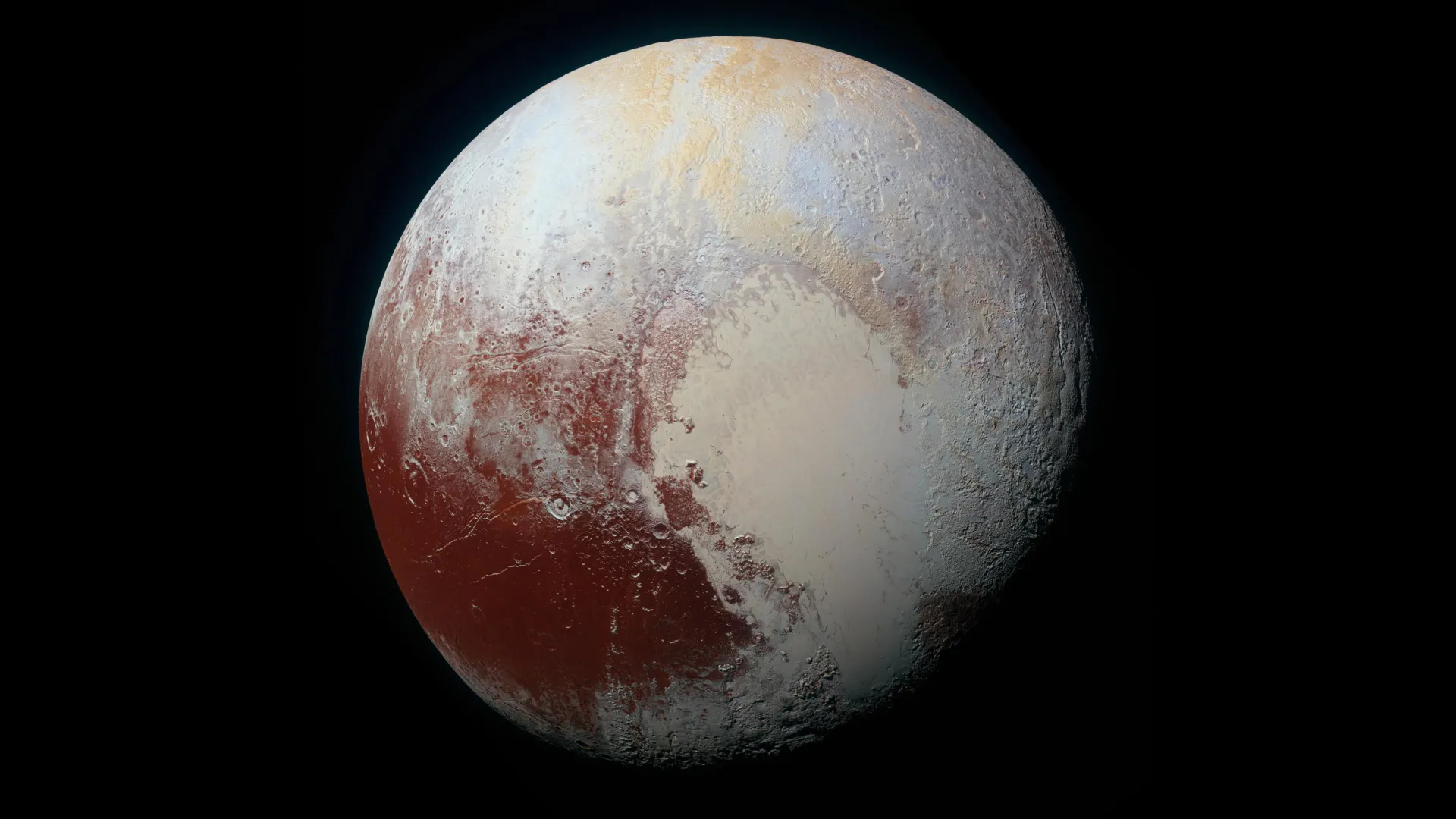
A groundbreaking analysis from the Southwest Research Institute (SwRI) has suggested that liquid nitrogen could be moving through cracks in the surface of Pluto, particularly near the northern edge of Sputnik Planitia, an expansive heart-shaped glacier. This study, led by Dr. Alan Stern, principal investigator of NASA’s New Horizons mission, provides compelling evidence of recent liquid activity on the dwarf planet.
Insights into Sputnik Planitia
Sputnik Planitia, comprised mainly of frozen nitrogen, is larger than the combined area of Texas and Oklahoma. High-resolution images from the New Horizons spacecraft revealed intriguing geological features within this glacier, including large convection cells divided by thin dark lines and broader patches. These observations suggest that some areas may briefly become wet, likely due to rising liquid nitrogen from below the surface.
Comparisons with Earth’s Ice
In a fascinating comparison, the SwRI team examined images of Greenland’s ice sheet alongside those from Pluto. They found that narrow dark markings—similar to those appearing on Greenland where liquid water is present—are also evident on Sputnik Planitia. This connection supports the theory that subsurface liquid nitrogen may be emerging to wet Pluto’s icy surface.
Dr. Kelsi Singer, another co-author of the study, highlighted that the surface of Sputnik Planitia is relatively young—less than one million years. This suggests that the features observed formed recently, indicating dynamic processes are at play on the dwarf planet.
Mechanisms of Liquid Movement
Computer simulations conducted by Dr. Orkan Umurhan propose how liquid nitrogen could reach Pluto’s surface. According to the models, nitrogen ice at the base of Sputnik Planitia can melt to form liquid nitrogen, which then rises through narrow channels—akin to lava or geysers on Earth. Once at the surface, the liquid could travel downhill, wetting the surrounding nitrogen ice and creating the observed dark markings.
Broader Implications
While no other clear evidence of basal liquid flow has been found on Pluto, much of its surface remains unmapped. This opens up the possibility of discovering similar processes elsewhere on the dwarf planet. Furthermore, the mechanisms identified may also be relevant to other celestial bodies, such as Triton, Neptune’s largest moon, which exhibits geyser-like eruptions.
Future high-resolution observations are essential to further investigate these intriguing phenomena, both on Pluto and beyond within the Kuiper Belt.
The exploration conducted by the New Horizons mission not only sheds light on the unique characteristics of Pluto but also invites ongoing research into the complexities of icy bodies within our solar system.


