NASA scientists and industry partners have recently conducted field tests of an innovative artificial intelligence (AI) application aimed at enhancing efficiency in solar system exploration missions. This cutting-edge technology is expected to facilitate quicker scientific discoveries and increase the volume of scientific data returned from these missions.
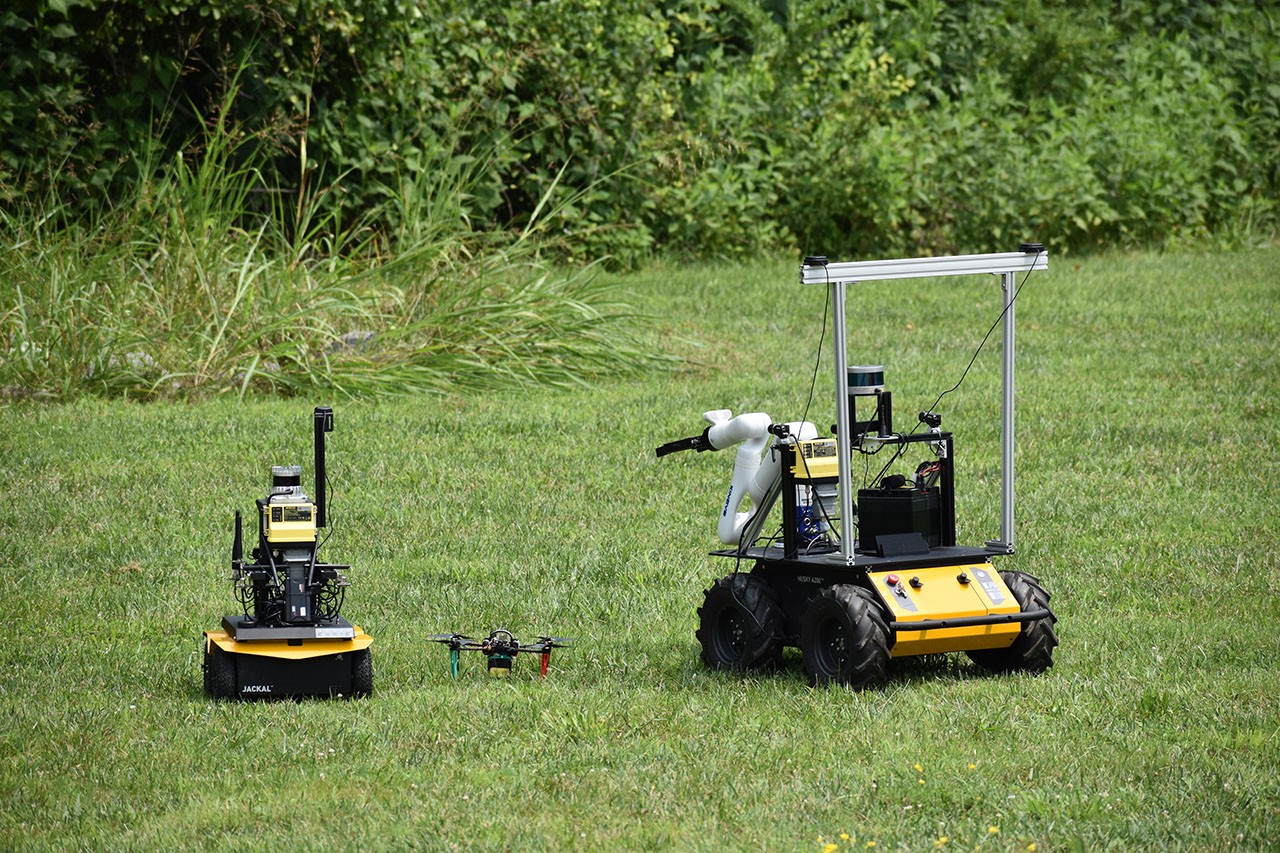
During the trials held at the Virginia Tech Transportation Institute, a fleet of three robots demonstrated their ability to function as an independent science team. Initially, a drone was tasked with selecting an area of interest based on specific scientific goals articulated by human experts. The robots utilized their programming to evaluate risks versus potential scientific benefits, determining the best member to investigate each area. Throughout the mission, they continuously monitored for environmental hazards, updated their strategies based on new information, and communicated their findings back to NASA’s Adaptive Sensing Technology for Responsive Autonomy (ASTRA) team.
This project aims to create a reliable surrogate for human teams in environments where real-time guidance is impractical, such as in uncrewed missions to the outer planets or in hazardous regions on the Moon and Mars.
A key objective of the tests was to determine if the robotic fleet could autonomously adjust its tasks based on new, emerging information. The fleet proved capable, maintaining focus on its original objectives while also exploring new leads identified during its work. For instance, when the lead drone discovered another area of interest, it paused its current task to assess the new opportunity and engaged another robot to investigate.
The fleet’s decision-making processes incorporated both quantitative and qualitative factors, such as the availability of robotic assets, their distances, velocities, and the relative risk associated with each task. They also considered how much the scientific team would value new information versus maintaining focus on their original mission.
Bethany Theiling, the lead investigator from NASA’s Goddard Space Flight Center, emphasized the importance of creating missions that can autonomously make decisions by weighing various criteria, thereby expanding the capabilities of future explorations.
The ASTRA team’s success hinges on the fleet’s ability to operate effectively without patient instructions, aligned with the team’s goals and risk evaluations.
The testing was conducted in collaboration with partners including Noblis, Aurora Engineering, and the University of Tulsa.


