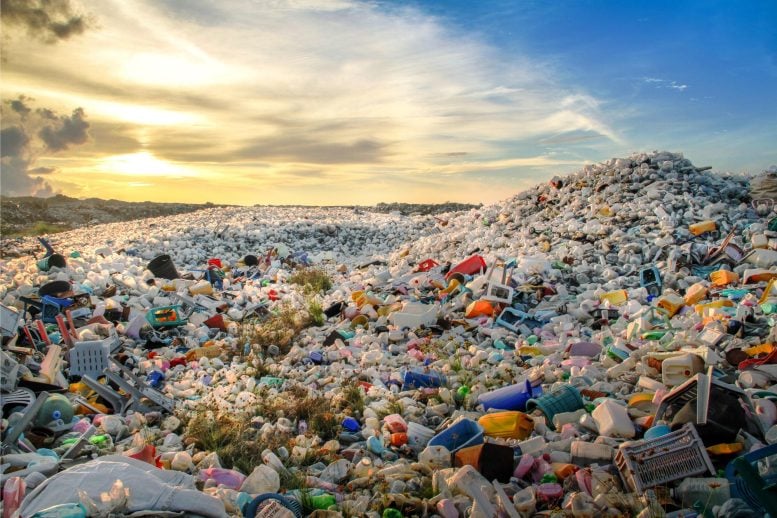
Researchers at Oak Ridge National Laboratory have developed a groundbreaking method to convert polyethylene waste, a common and challenging plastic, into gasoline and diesel-like fuels using a simple mixture of heated salts at temperatures below 200°C. This innovative process avoids the need for expensive catalysts and complex chemicals, which are typically required in conventional methods such as pyrolysis.
Key Highlights:
-
Process Overview: The new method utilizes molten salts containing aluminum chloride, which serve as both the reaction medium and catalyst. It operates efficiently at temperatures significantly lower than traditional methods.
-
Advantages: The approach eliminates the need for precious metal catalysts, organic solvents, and external hydrogen, making it cost-effective and easier to scale for industrial applications.
-
Chemical Mechanism: Researchers discovered that the aluminum sites in the molten salt act as acids, facilitating the breakdown of polyethylene chains into smaller hydrocarbons.
-
Challenges: A major hurdle is that the aluminum-based molten salts absorb water, complicating the stability of the system. Future work aims to improve containment to enhance process durability.
-
Patents and Future Work: The team has filed for a patent and is optimistic about the potential for large-scale applications, leveraging abundant polymer waste from consumer products.
This research represents a promising step toward addressing plastic waste issues by turning it into valuable fuels while maintaining a more sustainable approach to chemical processing.


