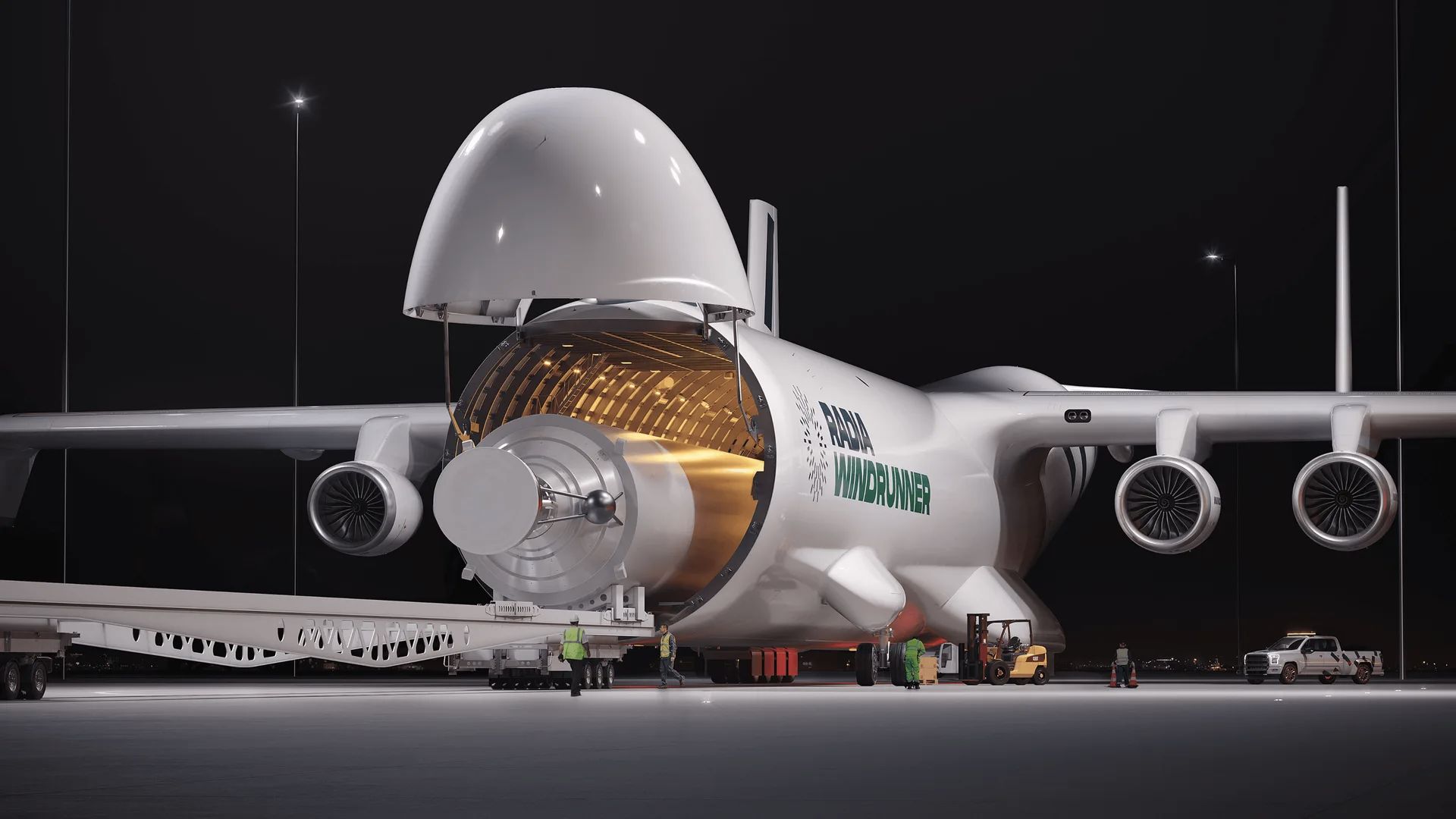
A Colorado-based company is showcasing WindRunner, the world’s largest aircraft by volume, aimed at addressing critical constraints in the emerging space industry. Unlike traditional transport systems, WindRunner focuses on cargo volume rather than just payload weight, allowing the direct delivery of large space systems—such as rockets and satellites—without disassembly.
Designed to Move the Largest Things in the World
Mark Lundstrom, founder and CEO of Radia, highlights the growing size and value of rockets and spacecraft, noting that existing transportation systems are outdated. He explains that WindRunner is designed to move these oversized objects efficiently and intact, enabling transport in hours instead of days. Features like a low cargo deck height and an innovative loading system facilitate the handling of large space-related cargo, offering a new logistics capability for the space community.
A More Responsive, Resilient, and Flexible Space Mobility
WindRunner complements existing launch infrastructure and airlift capabilities by providing logistics support for oversized, volume-dominated payloads that current aircraft cannot transport intact. This connection streamlines operations across manufacturing and launch processes, creating a more agile and resilient architecture for government and commercial space operators.
As modern space programs face transportation limitations, WindRunner offers a solution. It minimizes the need for disassembly and reduces the risks and costs associated with prolonged transport times. The aircraft can operate from unpaved runways, granting access to emerging spaceports and austere locations.
By utilizing standard cargo handling equipment, WindRunner eliminates the necessity for specialized loading systems. This capability suggests a more distributed logistics approach, allowing oversized hardware to reach operational sites closer to their destinations.
Radia envisions that WindRunner’s capacity could accommodate satellites twice the size of those currently transportable in one piece, offering designers more freedom in spacecraft development. This shift could significantly impact various missions, including communications and national-security operations, ultimately influencing the future design of spacecraft.
In summary, WindRunner is poised to revolutionize space logistics, facilitating the transport of large aerospace systems and refining how future spacecraft are conceived.


