WindRunner: Addressing Space Industry Constraints
A Colorado-based company has introduced WindRunner, recognized as the world’s largest aircraft by volume, aimed at tackling critical challenges in the space industry.
Designed to Move the Largest Things in the World
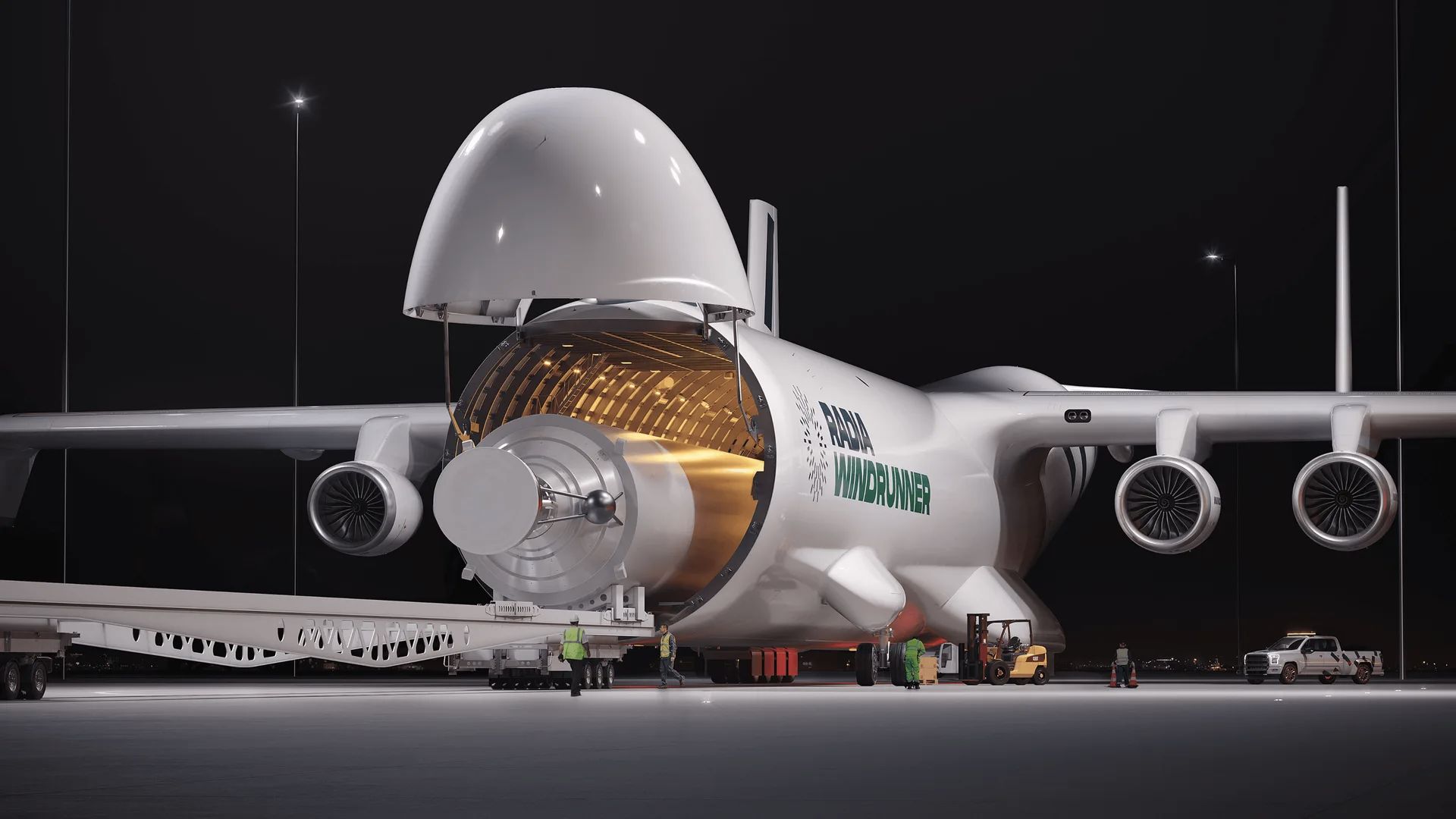
Mark Lundstrom, CEO of Radia, emphasized that as rockets, boosters, and spacecraft grow in size and complexity, existing transportation systems lag behind. WindRunner is engineered to transport oversized space systems, including fully assembled boosters and next-generation satellites, without the need for disassembly. Its innovative design features, such as a low cargo deck height and a nose door, facilitate efficient loading, offering the space community enhanced logistics capabilities.
A Response to Emerging Needs
WindRunner does not seek to replace current launch infrastructure; instead, it complements and extends logistics options for oversized payloads that existing aircraft cannot transport intact. By connecting various stages of space operations—from manufacturing to recovery—it fosters a more responsive and resilient space mobility architecture for diverse operators.
Modern space missions are often limited by transport options before ambition is exhausted. As rockets and satellites grow, the transportation avenues haven’t kept pace, requiring costly and time-consuming disassembly. WindRunner can drastically reduce transport time from days to hours, improving the efficiency of moving large launch systems and supporting reusable vehicle recovery.
Versatile Operations
With the capability for short takeoff and landing from unpaved runways, WindRunner can access underserved spaceports and austere sites. It operates with standard cargo handling equipment, reducing the need for specialized infrastructure. This could lead to a more distributed logistics network, enabling oversized space hardware to be transported closer to emerging launch sites.
WindRunner’s design could allow for the accommodation of satellites twice the size of currently transportable systems, potentially transforming spacecraft design. This increased capacity could benefit various applications in communication, earth observation, and national security missions, illustrating how innovative aircraft solutions might reshape future aerospace design and logistics.


