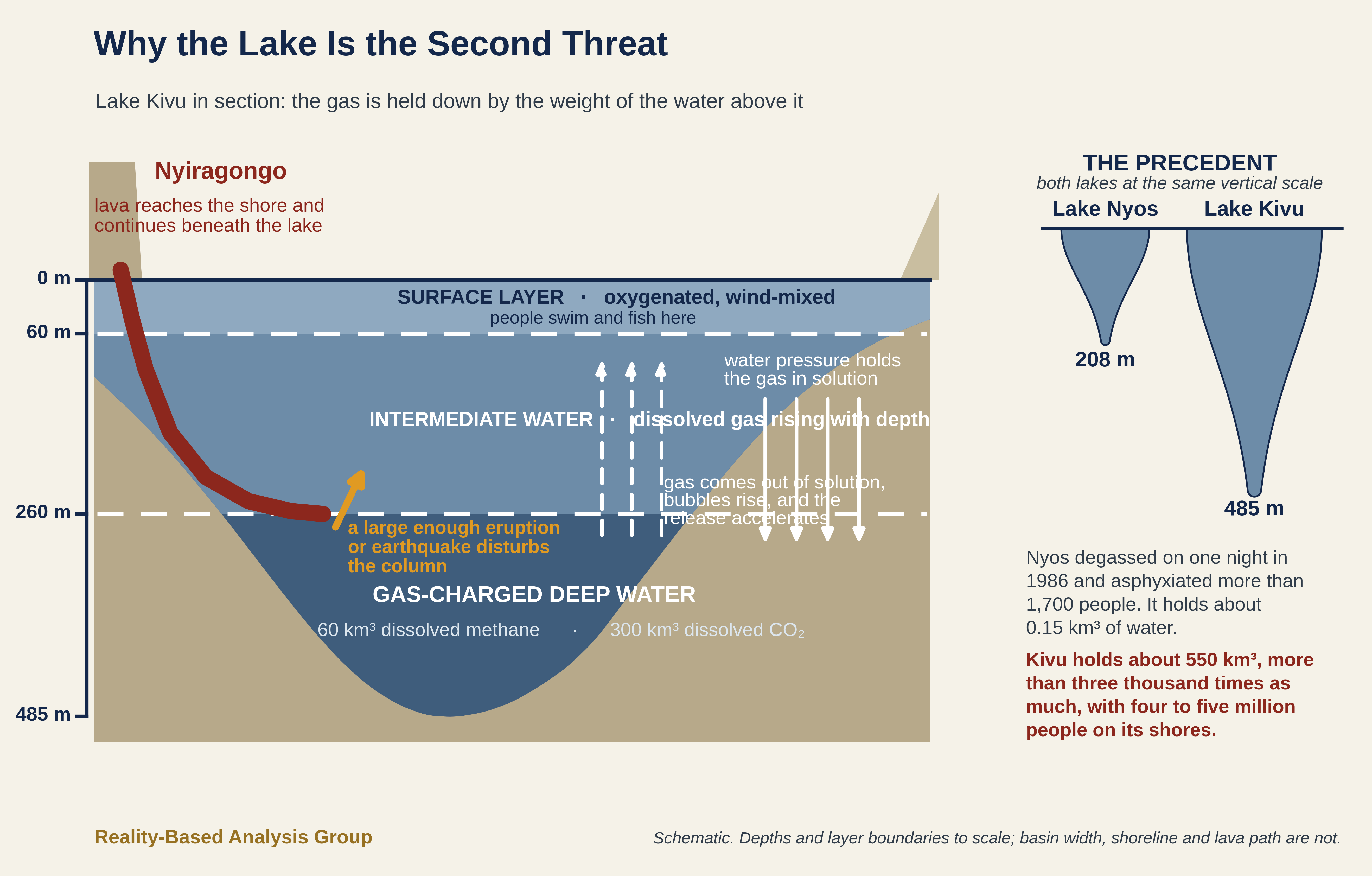
Lake Nyos, which tragically claimed the lives of more than 1,700 individuals during its gas release in 1986, contains around 0.15 km³ of water, while Lake Kivu holds a staggering 550 km³.
The perpetual threat from Lake Kivu looms large, and until a worst-case scenario unfolds—where the lake degasses—this danger will persist. The civilians I observed swimming, fishing, working, and living in Gisenyi and Goma face an even more complex danger: one of human origin. This man-made crisis stems from a genocide that remains unresolved, a war entering its fourth decade, fueled by potentially the world’s richest but most perilous underground mineral deposits—a unique and hazardous feature of this breathtaking region.
Africa’s Great War has led to over five million deaths, marking it as the deadliest conflict since World War II. This essay seeks not to recount the history of that war or the preceding Rwandan genocide but to address the underlying causes of the conflict. It will examine why the United Nations transitioned its peacekeeping mission into an offensive military operation and how the region’s resources underpin this cycle of violence. The genocide of the Tutsi in Rwanda in 1994 was halted not by an external intervenor, as stipulated by the UN’s Convention on the Prevention and Punishment of Genocide signed in 1948, but by a group of displaced Tutsi soldiers led by a remarkable military tactician: Paul Kagame. He has governed Rwanda in various capacities up to the present day, and under his leadership, his forces not only halted the genocide but also pushed the armed perpetrators across the border into the Congo. There, the world’s response was to provide support and resources to the now-displaced killers while the survivors grappled with the devastation in a nation left in ruins.
This lingering injustice has never been fully acknowledged or rectified, complicating the past thirty years’ events. This situation is exacerbated by the immense wealth hidden beneath the hills of eastern Congo, containing some of the globe’s most valuable minerals, including gold, coltan, cassiterite, and wolframite. This wealth has attracted interest and rivalry from the globe’s major powers, complicating the agendas of multiple parties involved—from Rwanda and Congo to the United Nations, China, the United States, and others. The unaddressed vengeance for the most atrocious crime, situated squarely atop the world’s most contested resources, has created a continuous cycle of violence, with every participant finding motives to perpetuate rather than resolve the conflict.
II. Precursors to Genocide
The border between these regions is arbitrary, a colonial construct, and easily crossed. In the lush Virunga mountain jungles bordering Gisenyi and Goma, the border fades into insignificance. The communities inhabit both sides, sharing the Kinyarwanda language, raising long-horned Ankole cattle, and often belonging to the same tribes—albeit sometimes under different names. Since 1916, Belgium governed both the Congo and Rwanda after taking control from the Germans, with the border taking form only upon independence. It is routinely crossed daily by countless locals at checkpoints like la Grande Barrière and la Petite Barrière, and heavily traversed during times of crisis.
These local communities primarily comprise two tribes: the Hutu and the Tutsi. Historically, tribal membership was fluid and could change with the fortunes of cattle ownership. While racial characteristics do exist, prior to imperialism, the distinctions were not rigid. President Kagame’s enforced laws against racial references reflect this complexity. Kagame himself embodies many features traditionally associated with Tutsi: tall, slender, with distinct facial features and lighter skin compared to Hutus, who might be shorter and darker. However, notable intermarriages blurred these distinctions, demonstrating that ethnic identities were quite fluid. The population in Rwanda, both historically and today, is a tapestry of individuals with varying characteristics, making it difficult to categorize anyone definitively.
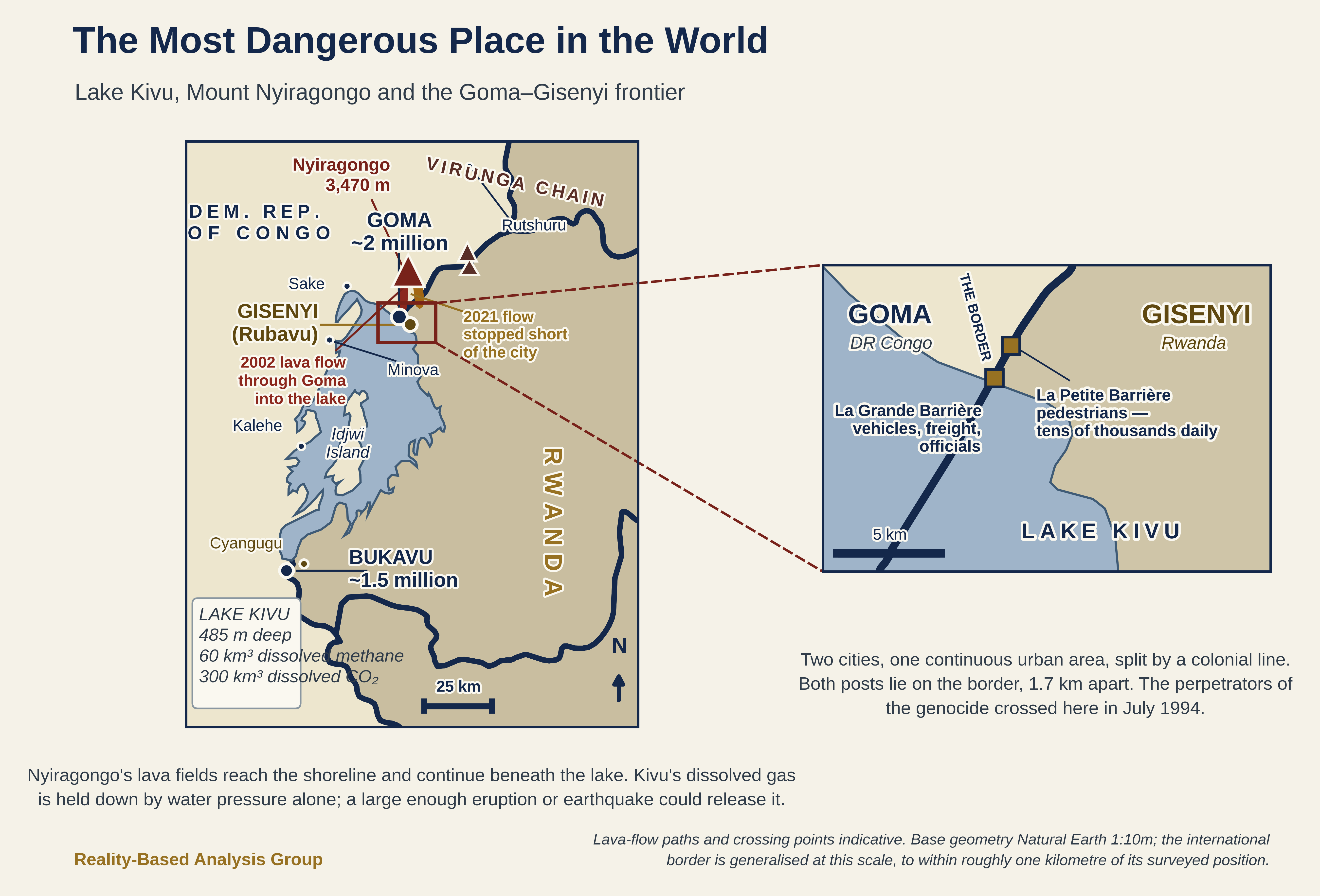
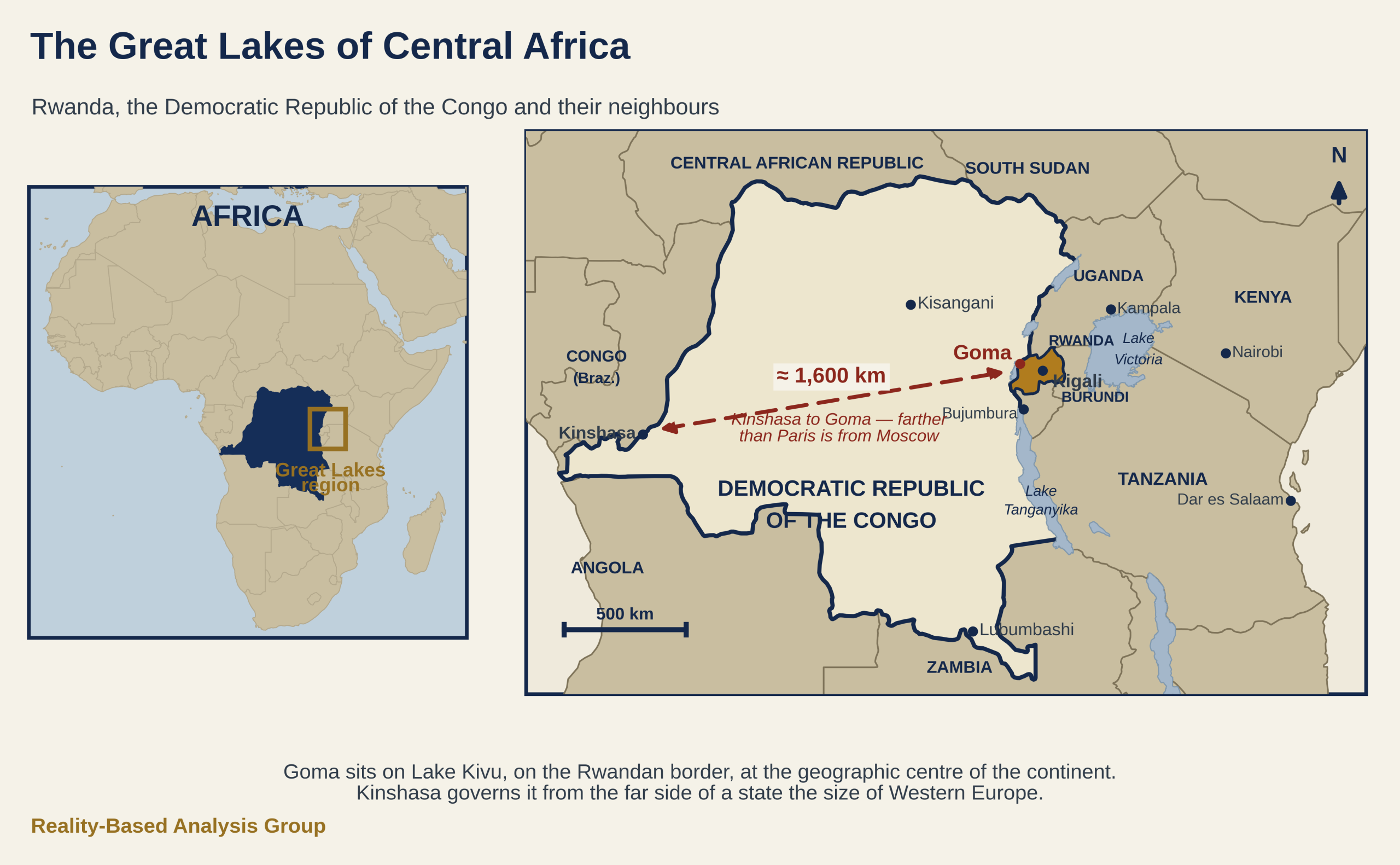
Goma and Gisenyi comprise an uninterrupted urban landscape, separated by a border and two checkpoints located just 1.7 kilometers apart.
The Twa, a historically sidelined forest-dwelling community, represent about two percent of the region’s population and remain distanced from this narrative, although they too experience the ramifications of genocide. The flexibility of tribal identity in Rwanda was at odds with the rigid racial distinctions imposed by European colonialism. Belgian administrators formalized these distinctions by classifying all Rwandans into Hutu, Tutsi, or Twa categories between 1933 and 1935, issuing identity cards that entrench racial identity—affecting the next generation. Belgian biases favored the Tutsi minority, viewed as superior due to their height and lighter skin. This favoritism set the stage for intense conflict, culminating in the genocide of 1994, where these identity cards would often dictate an individual’s survival or demise.
Under Belgian colonial rule, education and opportunities were systematically limited to the Tutsi, who held significant social and political sway. As independence approached, the Belgians reversed their allegiance, supporting the majority Hutu. In 1959, a revolt led by the Hutu sparked a revolution, leading to violent reprisals against the Tutsi, resulting in tens of thousands dead and hundreds of thousands fleeing into exile, including a young Paul Kagame, whose resilience and strategic brilliance would soon come into play as the fate of his homeland hung in the balance. When the genocide commenced in April 1994, Kagame was just thirty-six years old.
III. Genocide Interrupted
For three decades, Tutsi exiles barred from returning to Rwanda lived under the shadow of their homeland. During this time, Kagame rose through the ranks of Uganda’s military, becoming a key figure in Yoweri Museveni’s rebellion against the Ugandan government. However, while he served in the Ugandan army, Kagame and fellow Rwandan exiles organized the Rwandan Patriotic Front (RPF), which eventually invaded Rwanda to challenge the Hutu government. Though not present at the invasion’s onset due to military training in the U.S., he returned to commandeer the dispirited troops within two days. He transformed them into a formidable force that compelled the ruling Hutu administration to engage in negotiations.
The Arusha Accords of 1993 established a fragile peace between the factions, yet the Hutu government anticipated the return of the Tutsi with historical fears of retribution. Preparing for impending conflict, the Hutu regime stockpiled machetes and launched a propaganda campaign, promoting a message that revolved around an existential threat to Hutu society. Tensions escalated, culminating on April 6th, 1994, when a plane carrying President Habyarimana was shot down, and organized killings of Tutsi began within hours, spreading across the nation.
Over the course of a hundred days, the Hutu Power government orchestrated a systematic genocide, resulting in the deaths of between 800,000 and one million individuals, predominantly Tutsi. Neighbor turned on neighbor, killings occurred in homes and institutions, and victims were mercilessly pursued as they tried to escape. As the world watched in silence, the UN failed to respond despite clear evidence of genocide; its commander on the ground had consistently raised alarms about the impending catastrophe. The United States even prohibited the use of the term “genocide,” aware that it would trigger international obligations for intervention. The only entity that took decisive action was Kagame’s rebel force.
The RPF emerged from the mountainous regions of northwest Rwanda, confronting and ultimately defeating the Hutu Power military, halting the genocide. In their flight, the genocidaires largely crossed into Congo, resulting in one to two million Hutu refugees congregating near Lake Kivu. Among these refugees were not only civilians but also the perpetrators of the genocide who had perpetrated the violence. While the outside world finally decided to intervene, it provided vast resources, food, and shelter to these camps, inadvertently aiding the very individuals responsible for the atrocities against the Tutsi.
The refugee camps, established in areas difficult for sanitation, quickly became breeding grounds for cholera outbreaks, leading to the death of approximately twelve thousand people in the first month. Meanwhile, the narrative broadcasted internationally masked the reality that the same individuals responsible for the atrocities continued to exercise control over the camps. Despite the clear challenges, the world prioritized aid distribution over withdrawing support, permitting the killers the opportunity to regroup just kilometers away from the Rwandan border, shielded by the presence of civilian refugees.
This unaddressed and interrupted genocide contributes to ongoing violence in the area. Within Rwanda, Kagame initiated the Gacaca court system to address the crimes committed during the genocide and promoted reconciliation, achieving considerable success. Conversely, outside Rwanda, the perpetrators have never been disarmed or confronted, creating a cycle of violence that reverberates across the region.
IV. Unyielding
As President of Rwanda since the end of the genocide in 1994, Kagame’s leadership is often viewed through the lens of Rwanda’s transformation. Rising from the ashes of despair, Rwanda has become a beacon of success in Africa, fostering a society characterized by safety, stability, and low corruption while establishing universal healthcare and education. Even as Kagame faces criticism for a lack of democracy and curbing dissent, he retains an overwhelming voter base, consistently achieving high approval ratings. The discrepancy between Rwanda and its neighbor, the Democratic Republic of the Congo, is striking; the latter grapples with persistent instability, coups, and corruption, further complicating the ongoing conflict.
This reality illustrates why the violence shows no signs of abating. Attempts at peace negotiations frequently encounter conditions unacceptable to Kagame, predominantly the proposal to grant amnesty to genocide perpetrators living mere kilometers from the Rwandan border. Asserting his inability to trust the Congolese government to effectively disarm these militias, Kagame refuses to accept such terms. The UN’s shift from a peacekeeping role to an offensive position has diminished its capability to mediate the conflict effectively, as it reinforces existing geopolitical dynamics and complicates efforts for resolution.
V. The Riches
Eastern Congo is blessed with some of the most sought-after minerals on the planet, including tantalum, tungsten, tin, and gold—essential components in technology and manufacturing. One particular mine in Rubaya is a significant source of coltan, under the control of a rebel faction rather than a legitimate government body. This wealth creates multifaceted challenges for the region, as it incentivizes Rwanda to unofficially assert authority over parts of the Kivus while simultaneously undermining any peace that could jeopardize their revenue streams.
The lack of effective governance in the Congo allows militias and warlords to exploit the mineral disputes, leading to unregulated extraction and selling at discounted prices. This environment attracts numerous global actors who prioritize cheap access to resources over ethical considerations, promoting a status quo that guarantees continued instability in the region.
The strategic importance of these minerals complicates resolutions further; global powers, including the United States and China, compete for access, making them hesitant to support a strong Congolese state that could disrupt favorable arrangements. Rwanda’s involvement in eastern Congo is primarily grounded in addressing the historic injustices of 1994, while external powers are primarily interested in maintaining access to essential resources. This complex clash of interests secures the ongoing conflict.
VI. The Task
Despite no overt warfare, Rwanda has maintained a consistent proxy involvement in the Congo for the past thirty years. The first major intervention occurred when Paul Kagame sought to dismantle the refugee camps housing genocidaires, using Laurent Kabila as a proxy leader to generate a revolutionary movement that successfully displaced the Hutu perpetrators in 1997. Afterward, Kabila turned on his former sponsors, prompting Rwanda to adapt its strategy—supporting new rebel groups to maintain its objectives.
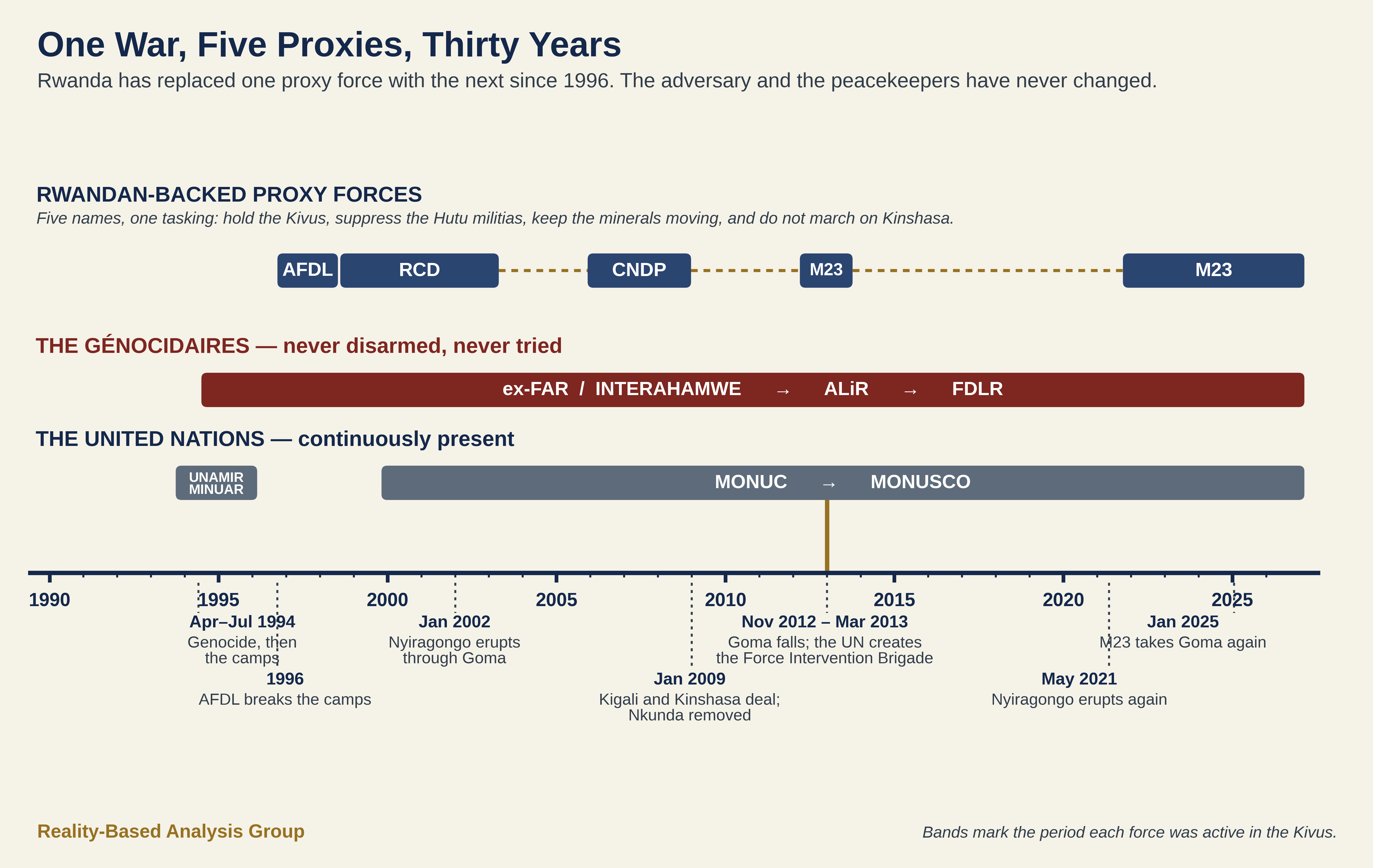
Successive proxy forces have emerged, with genocidaires and UN missions enduring continuously over the years.
In the following year, Kabila expelled Rwandan forces, prompting Rwanda to pivot yet again and establish new alliances. Although a peace agreement in 2003 formally ended Africa’s Great War, it merely co-opted certain militia factions without effectively addressing the larger issues at hand. New leaders, like Laurent Nkunda, emerged, tasked with protecting Tutsi lives while managing the volatile landscape. Their singular focus remained the continuation of the status quo, maintaining control over the Kivus to secure the continuous flow of minerals.
VII. Better Never Than Late
The United Nations has been present throughout these conflicts, first observing the genocide, then managing refugee camps, and ultimately deploying significant peacekeeping operations in the region. Their past inaction starkly contrasts with the decisive maneuvers taken in 2012, when M23 forces seized Goma without opposition from UN forces. Spurred by political vulnerability and scrutiny regarding the illegal mineral trade, the UN’s response escalated dramatically.
On March 28, 2013, the UN Security Council authorized the unprecedented Force Intervention Brigade, deploying troops with offensive mandates to confront armed groups like M23. This marked a turning point, illustrating the UN’s capacity to improve security conditions in the Kivus when faced with the political will to act. However, the selective targeting of M23, without addressing the enduring FDLR militia, hints at the underlying geopolitical factors influencing this engagement.
The UN achieved a significant victory against M23, yet this came with consequences. Their actions violated the principle of neutrality traditionally upheld by peacekeeping forces, arising from a desire to maintain stability while ultimately favoring one side of a complex conflict. This marked a choice driven by the interests of global powers, who prefer to maintain unfettered access to resources over resolving deeper humanitarian crises.
VIII. Contagion
The Kivus are rich not only in minerals but also host dangerous pathogens. Informal mining operations often expose workers to diseases like the Marburg virus, leading to lethal outbreaks in the region. The most recent epidemic serves as a grim reminder of how intertwined violence and disease have become, compounding the challenges faced by local populations fighting for survival amidst political and social unrest.
Similar outbreaks have frequently been mismanaged, resulting in governmental overreach and public backlash. Over the past few years, the Ebola virus has emerged, yet the global response often prioritizes economic concerns over humanitarian needs, reflecting the complex entanglements in the region.
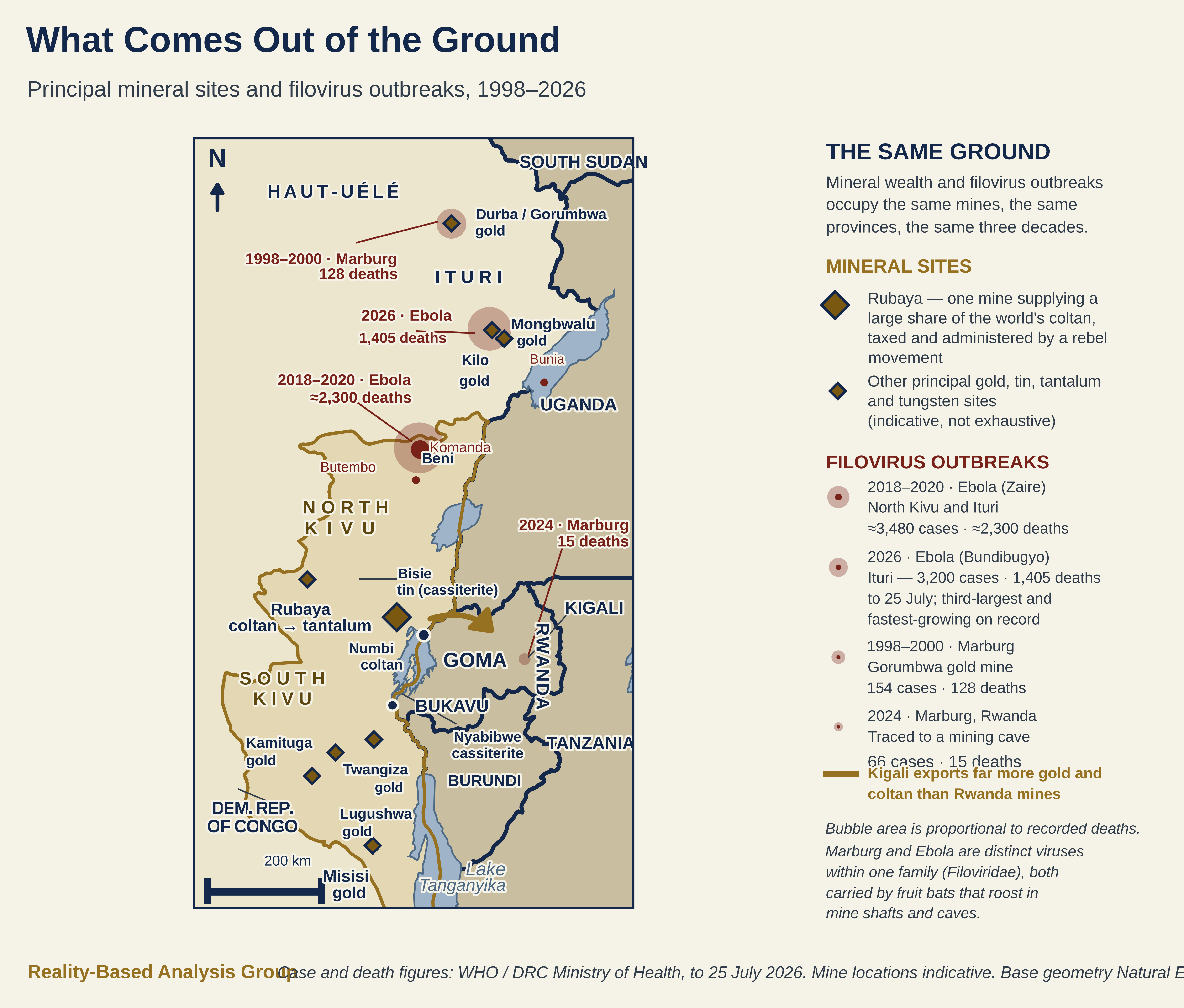
Mineral sites and filovirus outbreaks from 1998 to 2026: both wealth and disease emerge from the same terrain.
Ongoing conflicts and outbreaks intertwine, revealing the regional instability brought about by both violent human actions and natural threats. This cycle of turmoil impacts innocent civilians, ensnared in a web exceeding their control, perpetuated by geopolitical ambitions and the region’s geological vulnerabilities. It manifests as a continuous cycle of violence.
IX. Three Solutions
Three potential resolutions exist for this ongoing situation, two of which face stiff opposition. The most promising yet least likely solution would involve establishing a strong, well-governed Congolese state capable of managing its resources independently. This vision is often a talking point in peace dialogues but remains elusive due to vested interests actively working against it.
Beneficiaries of the current chaos—ranging from local authorities to international powers—prefer the status quo. Rwanda routinely exports more minerals than it produces, while Congolese officials exploit the instability to distract from their governance failures. Individuals involved in the conflict—from rebel leaders to traders—continue profiting from unregulated access to precious resources.
The second potential solution, which has seen quiet rejection, is the official annexation of the Kivus by Rwanda. While some may argue that governing these regions would end the current chaos and ensure more consistent management of local resources, it could lead to greater regional instability and conflict over borders.
Thus, the status quo persists, where eastern Congo exists in a nebulous state, benefitting everyone but its residents, further complicated by geopolitical calculations around resource access.
The third, and perhaps final solution brings us back to the geological threats. The potential eruption of Nyiragongo could unleash catastrophic consequences for the region by triggering the degassing of Lake Kivu, inadvertently resolving many ongoing disputes—albeit at an unimaginable human cost. Such an event would prompt immediate concern for resource recovery, as parties recalibrate their strategies in response to the aftermath, yet it would create a new landscape with new challenges and potential resolutions.
Ultimately, the international community, led by the UN, must recognize the importance of prioritizing human lives over resource acquisition, striving for transparent solutions that not only facilitate access to minerals but also deliver overdue justice and end the ongoing cycle of violence. Until then, innocent civilians will remain ensnared in a relentless cycle beyond their control.
* For clarity, I have referred to the Belgian Congo, Zaire, and the Democratic Republic of Congo collectively as “the Congo.” This should not diminish or overlook the distinct nation of the Republic of Congo, whose capital, Brazzaville, I had the pleasure of visiting and appreciating years ago. It has no role in the essay above.