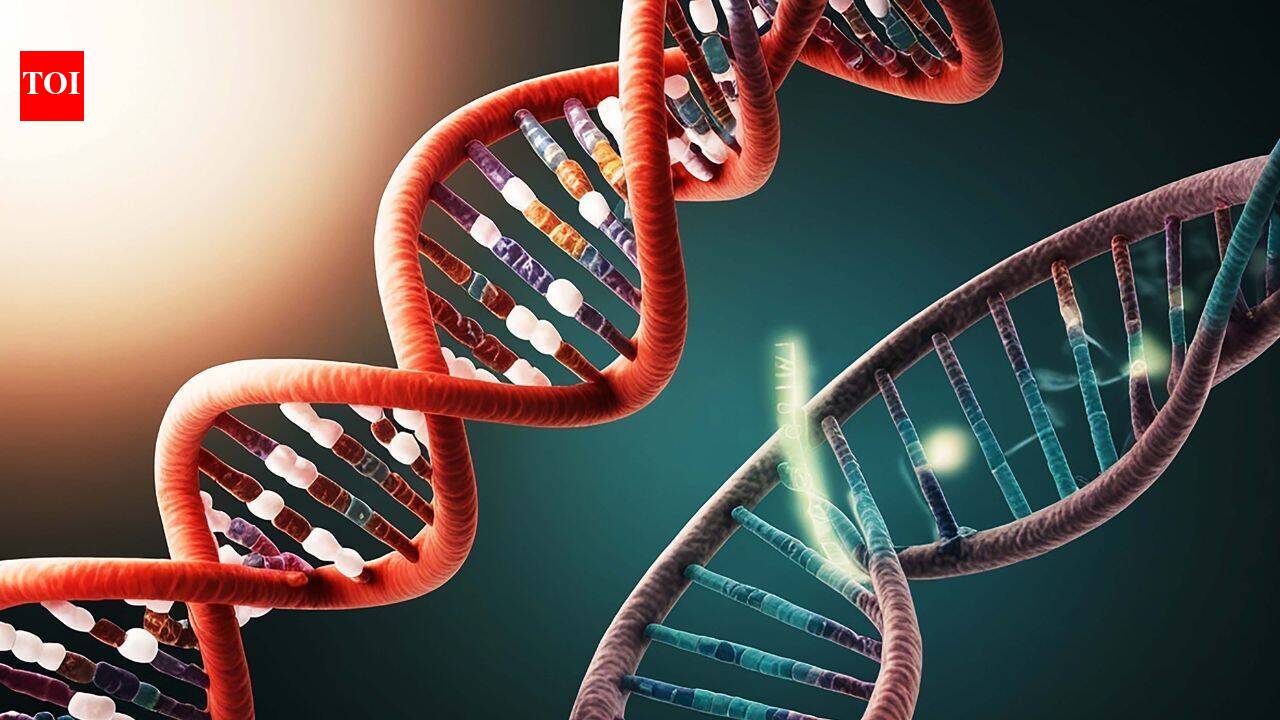
Researchers at UC San Diego have made a groundbreaking discovery in the field of genetics by demonstrating that a natural bacterial enzyme can accurately read and transcribe DNA containing not just the standard four letters (A, T, C, G) but also four synthetic letters. This effectively doubles the genetic alphabet used in life.
Key Points:
-
Standard DNA Alphabet: All known life utilizes a genetic code made up of four bases, which pair predictably to store genetic information critical for life.
-
Synthetic Extensions: Scientists have developed synthetic DNA bases that can pair with natural bases, creating the potential for a broader genetic code.
-
Natural Enzyme Success: The study used a naturally occurring bacterial enzyme, which has never been exposed to synthetic bases previously. This enzyme was found to accurately read and transcribe strands of DNA that included both natural and synthetic bases.
-
Implications of Doubling the Alphabet:
- Doubling the genetic alphabet expands codon possibilities from 64 to hundreds, enabling the programming of cells to create novel proteins.
- This could lead to breakthroughs in targeted medicines, new materials, and synthetic biology while allowing for cleaner genetic circuits that don’t disrupt normal cellular processes.
-
Redefining Biological Boundaries: The ability of a natural enzyme to process an expanded genetic code suggests that the traditional four-letter system may not be a strict necessity for life—indicating that life could potentially exist with different genetic architectures.
-
Practical Applications in Medicine and Data Storage: The discovery opens new avenues in medicine by creating therapeutic genes that can bypass natural defenses, and enhances DNA’s potential as a dense information storage medium.
-
Future Challenges: Despite the promising results, using synthetic DNA in living organisms poses significant challenges, including the need for all cellular machinery to coordinate effectively with the new code and safety concerns regarding engineered organisms.
-
Next Steps: The research represents a proof of principle that could pave the way for further studies to integrate expanded genetic alphabets into functional biological systems in practical applications.
This discovery not only challenges our understanding of genetic codes but also holds vast potential for future scientific advancements.