New Insights into Moon Formation: Quick or Gradual?
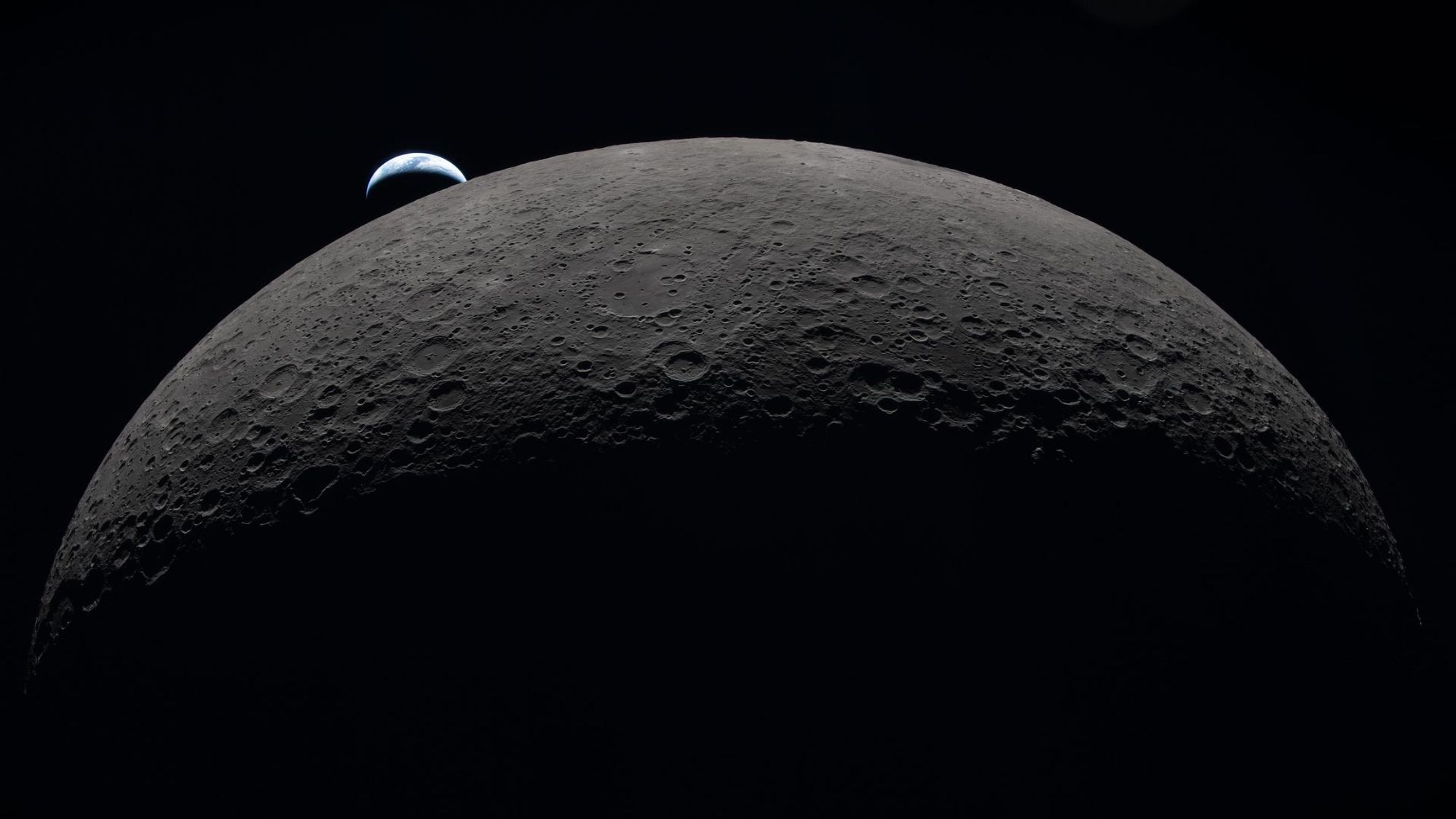
Recent simulations suggest that the moon may have formed in just a few hours after a cataclysmic impact between the early Earth and a Mars-sized body called Theia. This finding arises from research that closely examines the internal temperature of protoplanets and its role in their collision dynamics.
The Giant Impact Hypothesis
The giant impact theory, particularly refined by planetary scientist Robin Canup, has long been the leading explanation for the moon’s origin. Canup’s simulations indicated that Theia collided with Earth at an optimal angle, allowing debris to enter orbit and eventually coalesce into the moon.
Gradual vs. Rapid Formation
Traditionally, two scenarios have been proposed for moon formation:
-
Gradual Accretion: The debris from the impact could have orbited Earth for an extended period, allowing the moon to gradually form.
-
Quick Formation: NASA-led simulations from 2022 suggested that the moon could have formed extremely rapidly, within hours.
New Research Insights
Led by Adeene Denton from the Southwest Research Institute, new simulations delve deeper into the geological properties and material strengths of Theia and Earth at the time of impact. They discovered that a warmer Theia would be more likely to be obliterated upon collision, leading to rapid moon formation.
- Impact of Temperature: A warmer protoplanet would have different material properties, significantly affecting how it deformed during the impact and how debris was distributed around Earth.
- Timeframes: If the collision occurred soon after planetary formation (less than 60 million years in), the moon could coalesce from the debris within about five hours.
Conversely, a cooler impact scenario — occurring about 100 to 150 million years after planetary formation — would allow the moon to form in a more gradual manner, potentially leaving more of Theia’s core intact.
Implications of the Research
This research not only strengthens the theory that the moon could form quickly under certain conditions but also suggests a link between the moon’s physical characteristics and the thermal conditions at the time of the impact. There are still some unanswered questions, especially given the isotopic differences between Earth and the moon that current models struggle to explain.
While this study provides new insights into moon formation, it also raises a question about the search for exomoons. If moon-forming disks tend to be short-lived, searching for them around terrestrial exoplanets could prove difficult, while gas giant exoplanets might still yield viable moon-forming disks due to different formation processes.
Conclusion
The findings were published in The Astrophysical Journal Letters on September 1, highlighting the continued evolution of our understanding of lunar origins and the intricacies of planetary formation in our solar system and beyond.