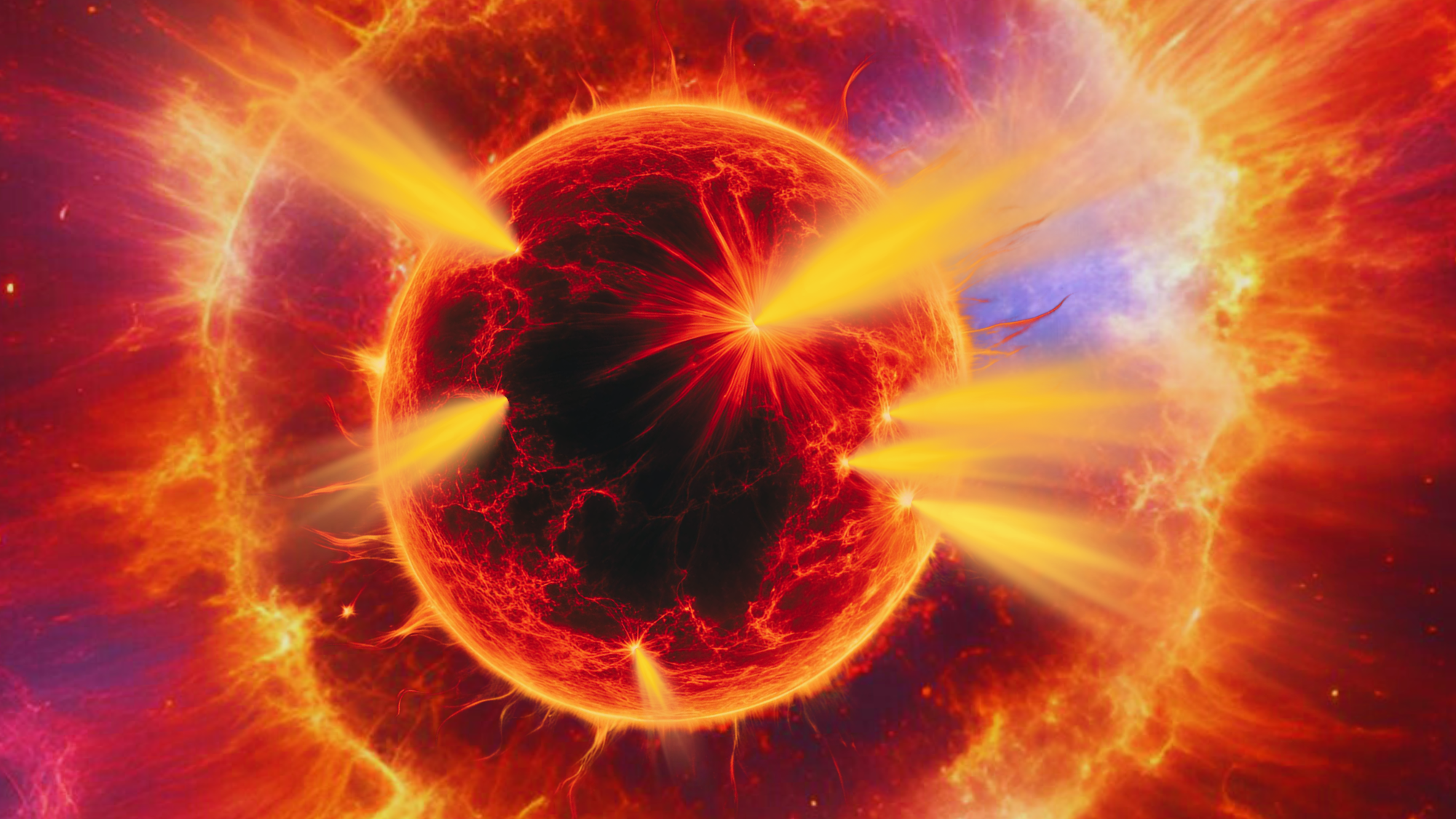
Scientists are advancing our understanding of how stars create the elements that make up our planet and everything around us. Recent research examines the processes of stellar explosions and how these supernovae disperse elements across the cosmos.
Key Findings:
-
Supernova Explosions:
- A study focused on the radioactive element titanium-44, produced during supernovae. Researchers discovered that these explosions create 35% more titanium-44 than previously estimated. This will help refine models of supernova behavior and processes.
-
Type I Supernovae:
- Another study concentrated on Type I supernovae, which occur when a neutron star pulls material from a companion star, leading to intense thermonuclear explosions. These events are capable of forging heavy elements and emitting significant energy, including X-ray bursts.
-
Nickel-Copper Cycle:
- Research revealed the involvement of the nickel-copper cycle in X-ray bursts, confirming that nuclear material is temporarily trapped during this process, albeit in small amounts.
Implications:
These findings enhance models of supernovae, improving our comprehension of stellar explosions and the chemical element formation that influences the universe’s evolution.
The studies were published in the July edition of Physical Review Letters and provide notable insight into a longstanding astrophysical mystery.