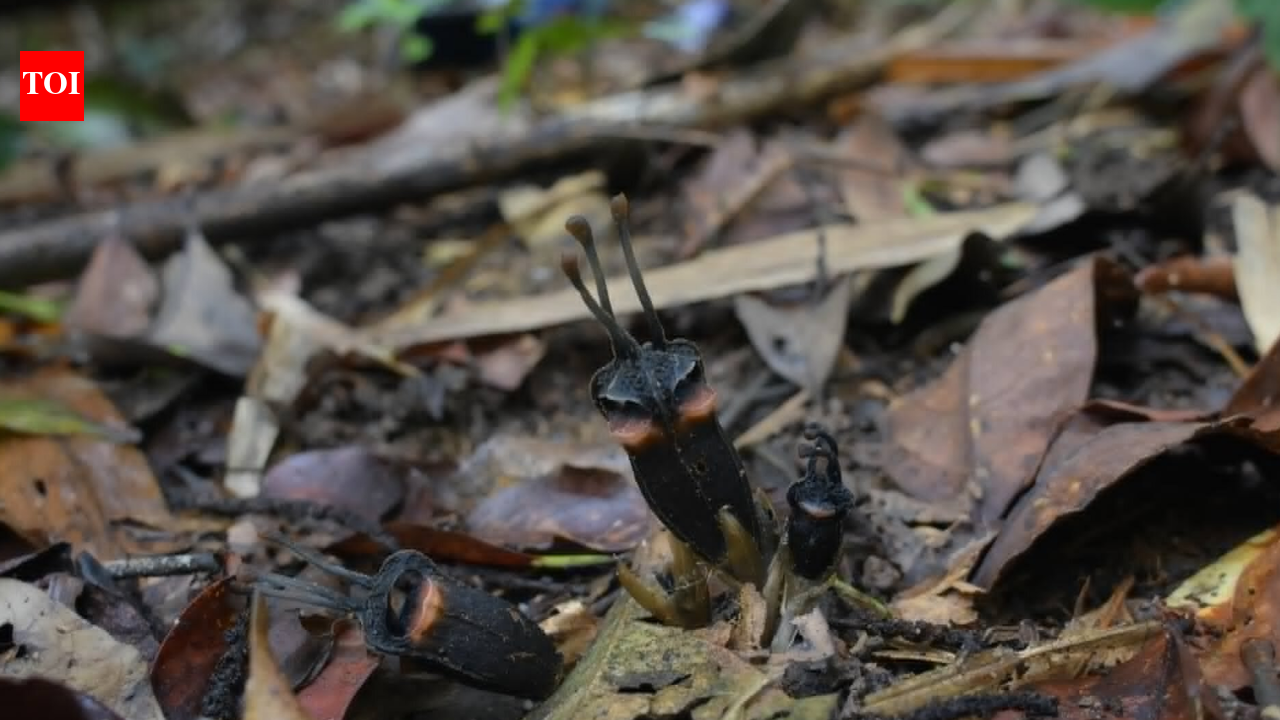
The recently discovered plant, Thismia daemona, also known as the “devil flower,” has intrigued scientists with its unique characteristics. Found in Thailand’s Thong Pha Phum National Park, this flowering plant lacks leaves, branches, and chlorophyll, making it incapable of photosynthesis. Instead, it relies on underground fungi for nutrients, a lifestyle referred to as mycoheterotrophy.
Key Features:
-
Appearance: Thismia daemona primarily presents a blackish hue with reddish-orange fleshy structures. Its flower, emerging from the leaf litter, features a dome-like structure called a mitre with three slender appendages, giving it an almost mythical aspect.
-
Habitat: This plant was discovered at an elevation of 950-970 meters, a surprising find since most species of Thismia are typically found in lowland rainforests. It thrives beneath the shade of lower montane forests.
-
Conservation Status: With fewer than 50 known individuals, Thismia daemona is categorized as Critically Endangered. Its restricted habitat and reliance on specific conditions make it particularly vulnerable to environmental changes, highlighting the necessity for conservation efforts involving local communities.
Significance:
This discovery not only contributes a new species to the Thismia genus but also expands the geographical range of this rare group, previously known from regions like Malaysia, Borneo, and Sumatra. The find emphasizes the importance of protecting delicate ecosystems and the species that inhabit them.