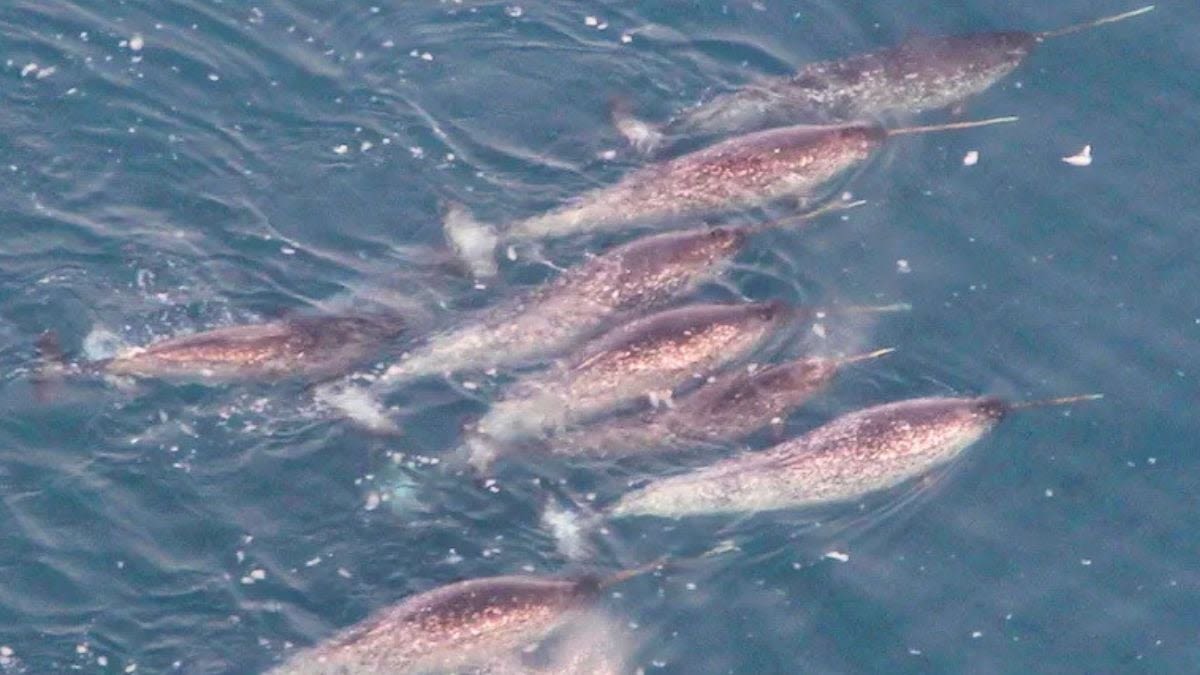
The article discusses how scientists are leveraging narwhals to gather vital data on changing ocean conditions in the Arctic, particularly around Greenland’s glaciers. Narwhals, equipped with satellite-transmitting sensors, have been observed diving in remote fjords where traditional measurements are scarce.
This approach is significant for studying ocean warming, as these whales can access areas difficult for human researchers due to thick sea ice and icebergs. The study focuses on the interaction between cold polar waters and warmer, saltier Atlantic waters, highlighting the consequences for glacier melt. The researchers found that Atlantic water is penetrating deeper into fjord systems, threatening glacier stability and influencing climate models.
Overall, this innovative method using narwhals presents an opportunity to improve our understanding of ocean dynamics and their impact on climate change, proving to be a vital resource for future climate predictions.