The article discusses the growing trend of relying on “science” in educational practices, particularly in the realms of reading, learning, and math. Rene Grimes, a special education teacher, emphasizes that while research offers valuable insights into how students learn, it cannot dictate every aspect of instructional decision-making.
Key Points:
-
Rhetorical Weight of “Science”: The term “science” can give the impression that teaching methods are thoroughly validated when, in reality, much research still contains uncertainties.
-
Translation of Research to Classroom: A significant challenge arises when research findings are presented as definitive solutions. By the time they reach educators, the ambiguity often becomes oversimplified recommendations.
-
Need for Humility: Grimes urges a humble approach in interpreting scientific findings, advocating for a careful distinction between evidence and interpretation. Overstating research can lead to misapplications in educational settings.
-
Example from Math Education: The “Science of Math” initiative claims the necessity of timed activities to promote mastery in math, but the supporting evidence is limited and may not warrant such strong recommendations—highlighting the need for careful scrutiny.
-
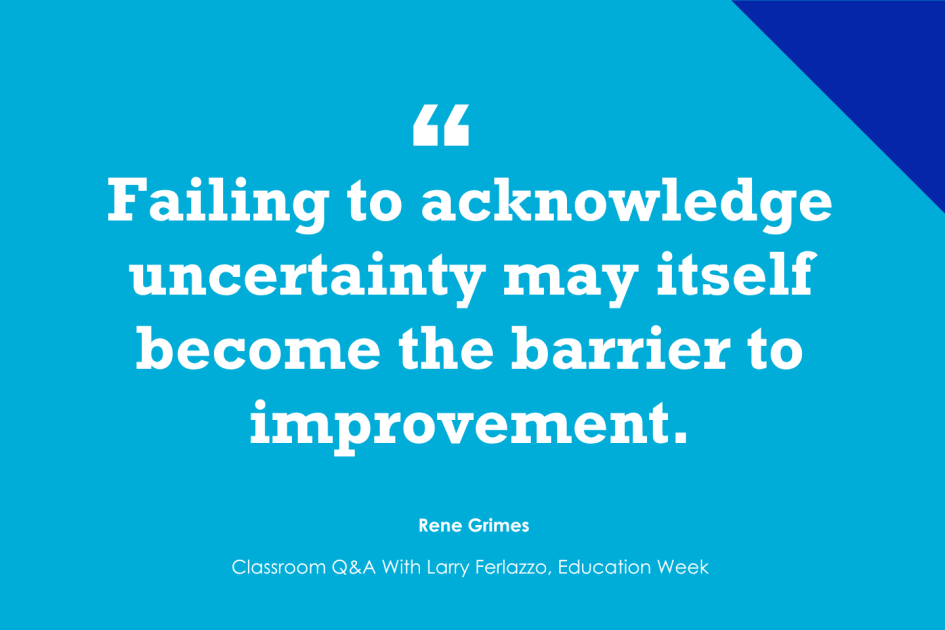
Acknowledge Uncertainty: Instead of viewing science as a body of settled knowledge, it should be seen as an ongoing inquiry that involves constant questioning and reassessment.
-
Five Critical Questions: Grimes proposes five key questions educators should ask when applying research to practice, emphasizing the importance of understanding the context, limitations, and implications of the research.
-
Continuous Learning: Reinforcing the idea that scientific understanding is never complete, Grimes calls for educators to maintain openness to new evidence and adapt practices accordingly.
Conclusion:
The article emphasizes that while “the science of…” phrases can foster important discussions in educational fields, it’s crucial for educators to approach such claims critically. They must engage in careful inquiry, shy away from absolutism, and remain adaptable as new findings emerge.