The coronavirus pandemic has significantly altered the landscape of economics and finance, including asset correlations. Following the market crash in March and the subsequent, albeit incomplete, recovery, different asset classes have exhibited an unusual level of co-movement. Typically, high correlations among returns are expected during severe market downturns. However, the pressing question remains: will these elevated correlations persist in the long run?
Recent developments regarding the coronavirus crisis include:
- Cornavirus vaccine trials on monkeys show promising results: NY Times
- Uncertainties surrounding the coronavirus relief package legislation in Congress: Roll Call
- During today’s Federal Reserve meeting, policymakers discuss declining economic momentum: BBG
- The Fed has extended its lending program through the end of 2020: CNN
- CEOs of major tech companies are set to testify before Congress today: CNBC
- US colleges are increasingly opting for online classes this fall: USA Today
- Europe is assessing the risk of a potential second wave of coronavirus: NBC
- US consumer confidence has declined more than expected in July: Reuters
- The pace of US home price increases has slowed to 4.5% annually in May: CNBC
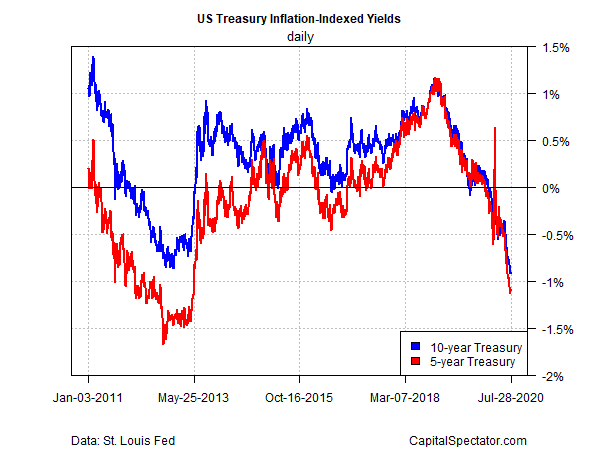
Real Treasury TIPS yields continue to show negative values, reflecting a persistent downside bias:
Prepare for the forthcoming initial release of the second-quarter economic data, as expectations indicate a very grim report. While there is hope for improvement in Q3 and beyond, the immediate challenge is to come to terms with the significant losses expected on Thursday, July 30, when the Bureau of Economic Analysis releases its “advance” GDP estimate.
Recent highlights from the economic landscape include:
- Republicans have proposed a new aid package that reduces jobless benefits: Reuters
- Major trials for an experimental COVID-19 vaccine commenced earlier this week: AP
- Democrats are advocating for a ban on federal agents in U.S. cities: BBC
- The global economic recovery may be faltering as the virus resurges: Bloomberg
- Gold has surged to a record high, driven by economic anxieties: CNN
- Two Republican senators have voiced opposition to Shelton’s nomination to the Federal Reserve: WSJ
- Trump’s national security adviser has tested positive for the coronavirus: Reuters
- Former Malaysian Prime Minister found guilty in the 1MDB case: WSJ
- The Dallas Fed reports a continued rebound in the manufacturing sector during July, following a record drop in spring: FWBP
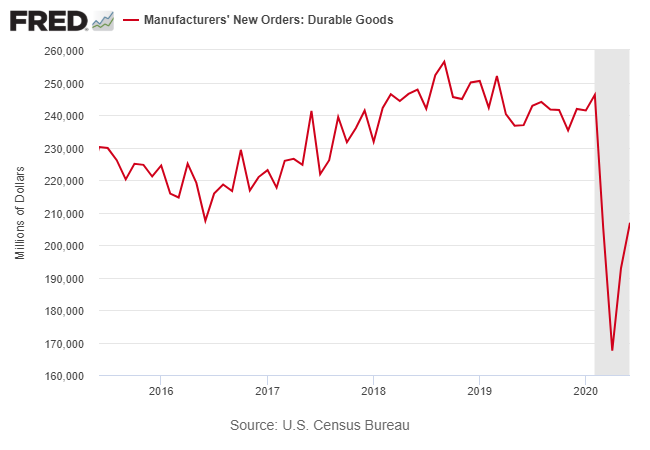
- US durable goods orders are continuing their recovery in June after significant declines: MW
Foreign inflation-linked government bonds have outperformed the major asset classes, according to data derived from a set of exchange-traded funds. Other segments of the international fixed-income market have also experienced robust performance in the week ending July 24.
Treasury Secretary Mnuchin announces that the GOP’s $1 trillion relief plan is ready: CNBC
Protests for racial justice surged across the US during the weekend: CNN
The US consulate in Chengdu has been closed following China’s retaliatory actions against the Houston consulate: USA Today
Is the outbreak of the coronavirus in North Korea a threat to Kim’s leadership? CNN
The US government has increased its investment in a coronavirus vaccine to nearly $1 billion: AFP
Consumer surveys indicate a promising start for the German economy in Q3: Reuters
Gold prices have reached a record high of over $1900 per ounce: CNBC
New home sales in the US surged in June: Reuters
The US economic recovery has reached a neutral pace in July according to PMI survey data: IHS Markit
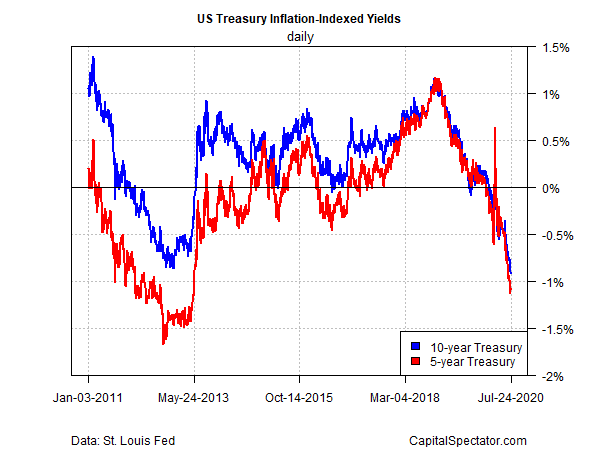
The real yield on the 10-year Treasury TIPS has fallen to -0.92%, the lowest level since 2013:

David Dayen
Summary via publisher (The New Press)
Over the past four decades, our choices have narrowed, opportunities have diminished, and our daily lives have become heavily influenced by a few powerful corporations. Today, nearly everything we purchase, the locations we shop at, and the services we use originate from a concentrated market. A mere six major banks dominate our financial systems, four airlines handle the majority of our travel, and four major mobile providers facilitate most of our communications. If you require medical assistance, you may find yourself relying on one of three main pharmacy chains to fill your prescriptions, and if hospitalization is necessary, virtually every medical accessory you need will come from a few large suppliers. Dayen, the editor of the American Prospect and author of the acclaimed work Chain of Title, offers a compelling narrative on living in this monopolized era and explores potential avenues for resisting corporate dominance.

The subtle gains in various segments of the precious and base metals markets are beginning to draw increased attention as buying activity intensifies. Although the overall year-to-date performance is not uniformly positive across the metals market, recent trading suggests a potential bull market could emerge in the coming weeks, fueled by the momentum seen in specific exchange-traded products as of the closing on July 23.
Trump has announced the cancellation of parts of the Republican convention due to the coronavirus outbreak: CNBC
China has ordered the closure of the US consulate in Chengdu as a response to similar actions taken concerning the Houston consulate: CNN
Covid-19 deaths in the US have surpassed 1,100 for the third consecutive day: Reuters
The Senate GOP has postponed the release of its coronavirus relief plan until next week: CNBC
A US fighter jet came alarmingly close to an Iranian passenger plane over Syria: BBC
The US dollar is on track to experience its weakest month since early 2018: Bloomberg
This year, gold, copper, and silver are rising together—an unusual occurrence: The Economist
Eurozone PMI data suggest that economic output grew in July, marking the first increase since February: IHS Markit
The UK economy has rebounded significantly in July, according to PMI data—the largest increase in five years: IHS Markit
US Leading Economic Index continued to rise in June, although the pace of improvement has slowed: MW
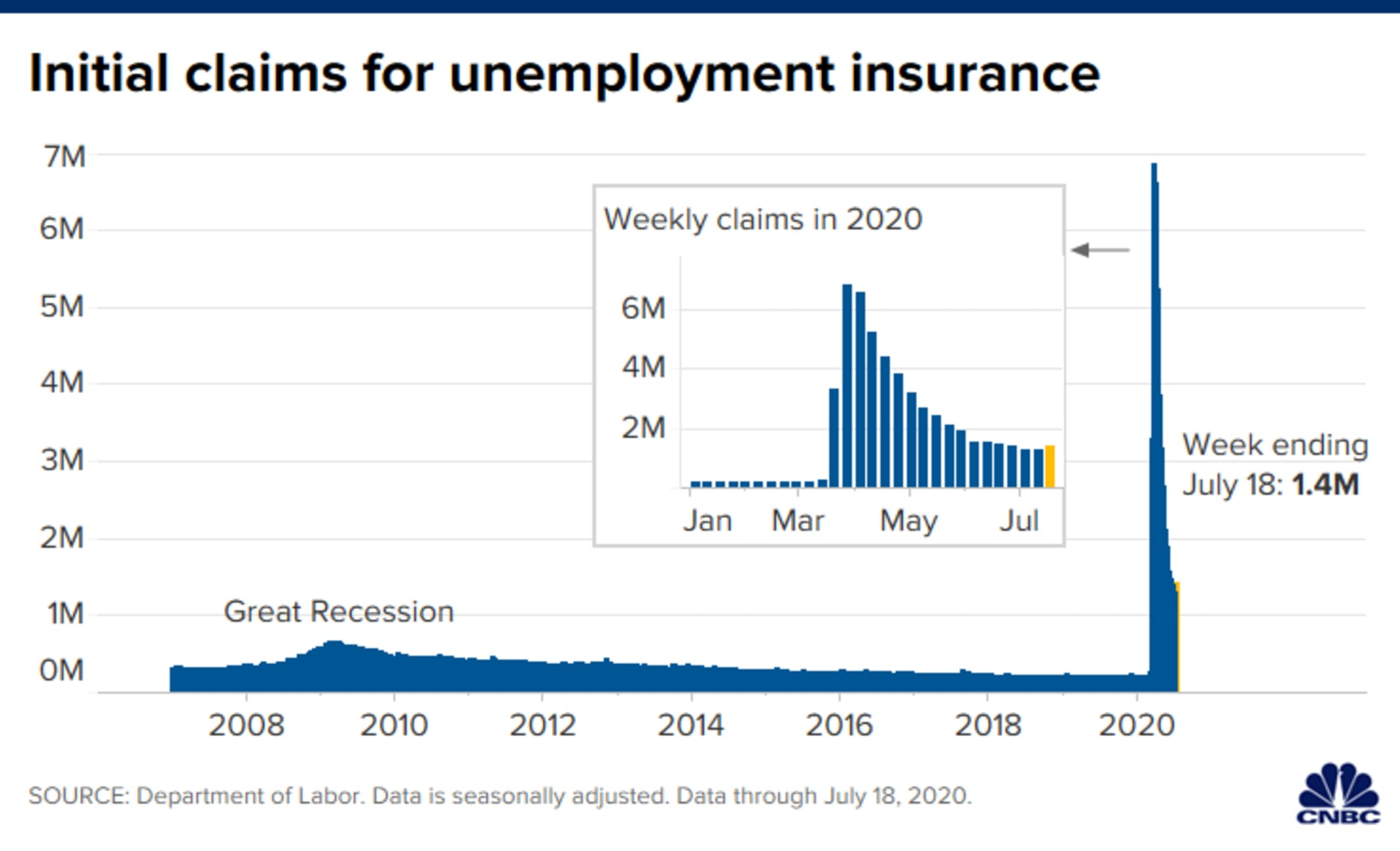
Jobless claims in the US have risen again, indicating a new warning sign for the economy: CNBC
The demand for safe-haven government bonds remains robust amidst a backdrop of renewed concerns regarding the cooling US economic recovery, deteriorating US-China relations, and a lack of control over the coronavirus pandemic. These factors collectively contribute to a growing belief that purchasing Treasuries—even at record low yields—is a wise decision.