In mid-May 2023, Ukraine undertook a significant operation by launching around 1,500 long-range drones into Russia. This marked a notable shift in its military capabilities—transforming drones from mere tactical tools on the battlefield to strategic instruments capable of targeting sensitive locations deep within enemy territory. This evolution in drone warfare has critical implications for the ongoing conflict in Ukraine and for military operations in the future. As the nature of drone strikes evolves, escalation is becoming a more fluid, ongoing process rather than a series of distinct, recognizable actions. The ability to incrementally adjust the range, frequency, payload, and target of drone attacks means that military escalation resembles a gradual incline rather than a traditional escalation ladder. Consequently, this blurred line increases the risk of miscalculations as the thresholds for escalation become less clear.
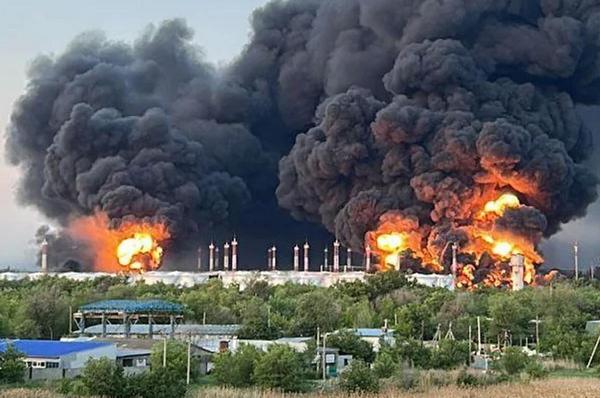
Aftermath of drone strike on Russian fuel depot
Incremental Escalation
The early discussions in the West about providing Ukraine with long-range strike capabilities primarily revolved around the transfer of advanced and identifiable weapon systems like ATACMS, Storm Shadow, Taurus, and sometimes Tomahawk-class systems. These weapons came with heightened escalatory sensitivity as they represented explicit extensions of NATO’s deep-strike capabilities. The concern was not just about technical range but also about the political implications: supplying such systems might be seen by Moscow as a decisive crossing of a red line, enabling systematic attacks deep into Russian territory. Consequently, debates about these systems frequently focused on explicit approval thresholds, range limits, and fears of entangling NATO directly in the conflict.
However, the strategy began to evolve over time. Instead of relying solely on the transfer of complete strategic strike systems, Ukraine and its allies embraced a decentralized model based on modular drone technology, which included flexible assembly, commercial components, satellite integration, software adjustments, targeting support, and various manufacturing locations. This approach enabled the strategic capability to develop incrementally through aggregation rather than through the delivery of a singular, identifiable weapons platform. Localized assembly could occur across multiple smaller facilities, making them less vulnerable to attack compared to centralized production sites. This distributed model improved resilience against suppression and allowed deep-strike capabilities to grow without the overt political ramifications associated with direct transfers of NATO missile systems.
From the perspective of Ukraine’s allies, this distributed strategy offered numerous advantages, such as reducing vulnerability to Russian counteractions by decentralizing production, lowering the visible political alarm of escalation, and maintaining a degree of formal separation between NATO governments and Ukrainian offense operations. This ambiguity allowed allied nations to contend that they were merely supporting Ukraine’s domestic defense industry rather than directly contributing offensive capabilities. However, Moscow may see these distinctions as becoming increasingly irrelevant, particularly as sophisticated long-range strikes penetrate deeper into Russian territory, heavily utilizing Western technologies, intelligence, navigation systems, and logistics. Russia may view the situation more in terms of operational outcomes than legal definitions.
The Strategic Threat
Ukraine’s enhanced capacity to target critical infrastructure deep within Russia presents serious strategic challenges. Despite possessing formidable air defense systems, including advanced interceptors and point-defense networks, defending a vast national territory against relentless drone assaults poses significant obstacles. Air defense resources are limited, geographically constrained, and require constant trade-offs. Shielding one segment of infrastructure invariably compromises protection elsewhere.
With backing from Western intelligence, satellite reconnaissance, and communications support, Ukraine can direct precise strikes against vulnerable elements of Russia’s strategic infrastructure. This capability allows for a flexible shifting of attack patterns, compelling Russian defenses to adopt a reactive stance. Additionally, low-cost drones can be deployed in large numbers to saturate local defenses, especially when attacks utilize varied approaches and repeated probes aimed at identifying weaknesses.
Recent attacks indicate Ukraine’s escalating reach and adaptability in its operational strategy. Strikes have effectively targeted Russian oil refineries, fuel depots, airbases, air defense systems, and other critical industrial sites located hundreds of kilometers from the front lines. Facilities involved in fuel production and refinement have proven especially susceptible due to their blend of economic significance, military relevance, and physical vulnerability. Even transient disruptions in refinery activities can strain logistics, increase repair responsibilities, and necessitate the redistribution of air defense assets from other crucial sites.
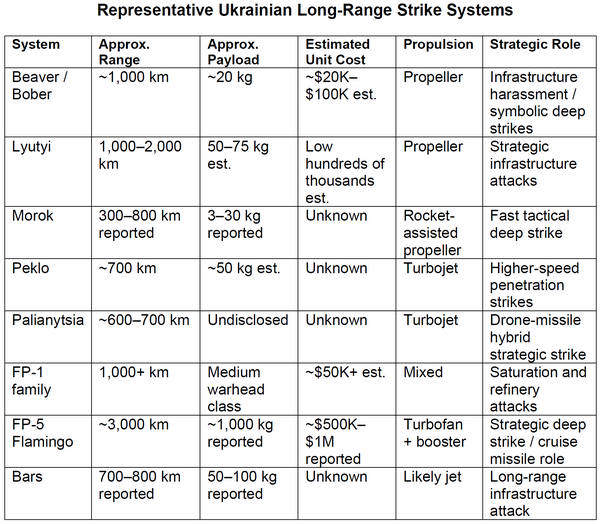
Moreover, Russia’s strategic aviation facilities have also become increasingly vulnerable. Ukrainian strikes on airbases associated with bomber operations show that sanctuaries in the rear areas can no longer be taken for granted. Even when substantial damage is averted, repeated incursions into secured airspace incur psychological and operational costs by necessitating ongoing assessments of vulnerability and defensive measures.
The cumulative impact of these campaigns extends beyond immediate physical damage. Persistent deep-strike operations create ongoing uncertainty throughout a wide strategic zone. Industrial sites, transportation networks, logistics hubs, and energy infrastructure must increasingly allocate resources for protection, redundancy, repairs, and operational adjustments. Thus, the strategic burden is not only a result of actual strikes but also the perpetual necessity to safeguard against unpredictable future attacks.
The political and psychological ramifications of these operations may also be significant. Successful Ukrainian strikes into Russian territory reinforce Western perceptions that Ukraine remains operationally resilient and strategically agile, even amid the protracted nature of the war. These successes bolster political support for ongoing military aid and enhance Ukrainian morale as they demonstrate that Russia’s perceived invulnerability is not absolute. Conversely, the continuous breach of Russian rear areas may escalate internal political pressure on the Kremlin to re-establish deterrent credibility through increasingly aggressive responses.
The Interdiction Problem
Ukraine’s distributed drone capabilities pose a grave interdiction challenge for Russia. Traditional means of halting the transfer or manufacturing of strike weapons could, in theory, be accomplished by pinpointing and destroying major supply depots, fixed launch systems, or centralized production facilities. However, the landscape of distributed drone warfare fundamentally alters this calculus.
Ukraine’s logistical tie with NATO now stretches over an immense and highly fragmented border system. For instance, the Poland–Ukraine border spans more than 500 kilometers and includes numerous road and rail crossings facilitating continuous civilian and commercial movement. Additionally, access through Romania, Slovakia, and Hungary creates a broad logistical network rather than a singular supply corridor. This complexity renders the interdiction environment exceptionally challenging. Drone components can be incrementally moved through ordinary commercial logistics networks rather than conspicuous military conveyances. Guidance electronics, optics, engines, batteries, machine tools, software systems, communication devices, and composite materials often have legitimate civilian uses, making selective interdiction remarkably challenging.
Moreover, the dispersed nature of production compounds the problem. Modern long-range drone capabilities do not rely on a single, large manufacturing hub, thus avoiding vulnerability to conventional strikes. Parts can be spread across various workshops, subcontractors, and assembly sites, allowing production capacity to recover even after successful attacks on specific facilities. Consequently, effective interdiction increasingly compels Russia to contemplate strikes not just against Ukrainian targets but against the entire logistical ecosystem that supports the flow of components and expertise. This creates a precarious escalation dynamic; as distributed enablement develops further, the distinction between the battlefield and NATO’s rear areas continues to blur.
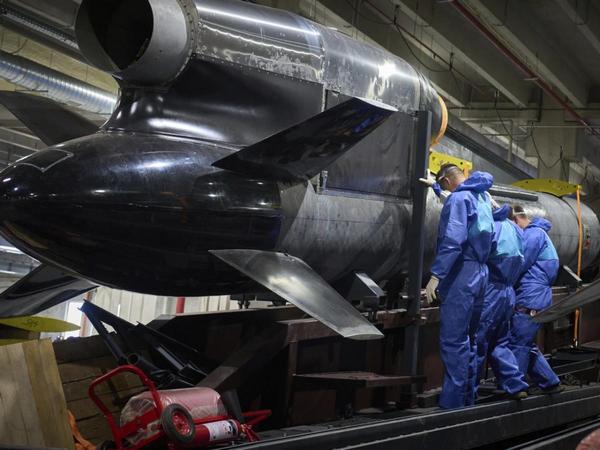
Assembly of Ukrainian Flamingo long-range strike drone
Escalation Threshold Opacity
One of the more troubling aspects of distributed drone warfare is the increasing opacity surrounding escalation thresholds. Traditional escalation models depended on clearly observable events—such as military mobilization, strategic bombing campaigns, or delivery of major weapon systems. However, distributed drone enablement obscures these differences, allowing for the gradual evolution of strategic strike capabilities through varied technological networks.
From the Western viewpoint, maintaining these distinctions preserves a formal separation between NATO states and Ukrainian military control. In contrast, Moscow may find the line between “Ukrainian-made” and “NATO-enabled” systems increasingly artificial, particularly if their strategic impacts are similar. The risk lies not merely in uncertainty regarding the location of red lines but also in fostering an environment where continuous probing becomes common. If incremental escalations occur without significant retaliation, decision-makers could mistakenly conclude that future escalations will also be manageable, despite the actual thresholds being unclear, adaptable, or intentionally ambiguous.
Potential Russian Escalation
Given the expanding scope of Ukrainian deep-strike missions, it is unlikely that Russia will remain passive. Possible responses could encompass broader mobilizations, changes in targeting doctrines, and attacks on NATO’s reconnaissance assets and logistics infrastructure, potentially leading to strategic nuclear signaling. The danger lies not only in any individual response but in the cumulative escalation logic binding them together in a quest for escalation dominance.
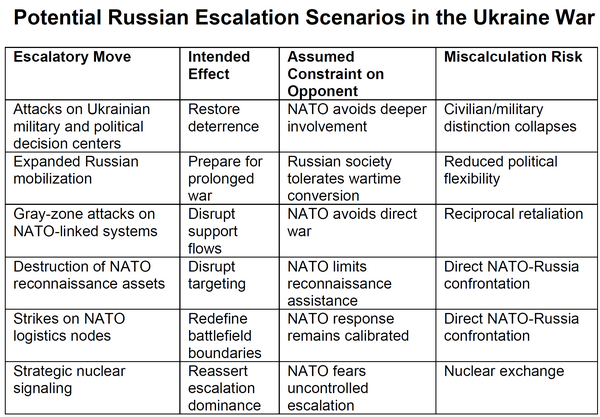
Conclusion
The burgeoning NATO-supported Ukrainian deep-strike capabilities could be steering the conflict into an increasingly volatile stage. While drone warfare has reshaped battlefield strategies in Ukraine, it also threatens some of the fundamental assumptions that used to govern escalation between major powers. Continuous long-range drone operations enable pressure to be exerted seamlessly across various dimensions—whether in terms of range, frequency, payload, or target selection. This evolution replaces the clear steps of traditional escalation with a more ambiguous process that could foster dangerous strategic perceptions. As escalation becomes more gradual and less tied to distinct events, decision-makers might presume that future escalations will remain manageable, only to misjudge actual retaliatory limits.
Furthermore, the distributed enablement strategy employed by Ukraine’s allies exacerbates this issue. By facilitating strategic strike capabilities through decentralized supply chains, modular components, software integrations, and varied assembly methods, NATO countries have avoided direct deliveries of long-range weaponry while enabling progressively capable deep-strike operations. However, this distinction may lose its significance in Moscow’s eyes as the strikes become increasingly impactful. The real threat may not stem from a deliberate escalation of conflict from either side but from the cumulative logic of incremental escalations. This gradual shift can obscure proximity to critical retaliatory thresholds until they are inadvertently crossed, posing a threat that goes beyond merely provoking a caged bear; it encapsulates misjudging the actual strength of the cage itself.