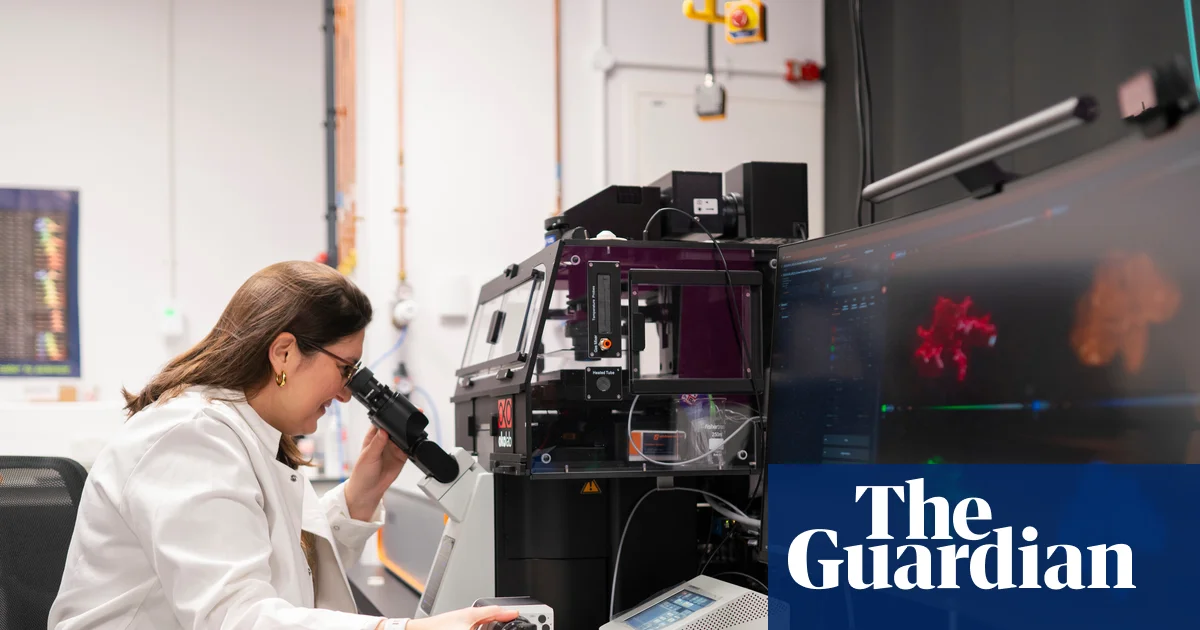
The article discusses the increasing prevalence of young people with debilitating bowel conditions, particularly inflammatory bowel disease (IBD), and highlights a groundbreaking microscope developed to aid researchers in understanding and treating these diseases.
Key Points:
-
Rising Incidence of IBD: Over half a million individuals in the UK have IBD, commonly diagnosed between the ages of 15 and 40, significantly impacting their education and relationships.
-
New Microscope: A revolutionary microscope, referred to as “Curie,” allows researchers to view cellular details down to 20 nanometers, operating at ten times the resolution of standard light microscopes. It utilizes stimulated emission depletion (STED) microscopy, a technique recognized with a Nobel Prize in 2014.
-
Functionality: The microscope employs a dual-laser system that enhances image quality by focusing on fluorescent tags within cells, providing insights into cellular structures and changes over time. It can create clear images of thick tissues under controlled conditions.
-
Research Applications: PhD student Dimitrios Ioannidis is using the microscope to investigate the protein complexes that form the protective barriers in intestinal cells, which may change from fetal development through adulthood, potentially affecting disease outcomes.
-
Funding and Strategic Importance: The microscope’s unveiling was accompanied by a £67 million funding announcement for the Rosalind Franklin Institute and additional support for other UK science facilities, despite ongoing budget challenges.
-
Future Implications: Understanding the healthy tissue architecture compared to diseased states may unveil root causes of conditions like IBD, thus informing the development of targeted therapies.
The introductory section emphasizes the critical timing for IBD research and the potential for advancements thanks to new technology.


