It seems you have shared an extensive article detailing the current state of Netflix’s straight-to-streaming film slate and the comparative performance to theatrical releases. The piece distinctly emphasizes the differing metrics and public perceptions surrounding streaming films versus traditional box office performances.
Here’s a summary of the key points presented:
Key Insights:
-
Streaming Metrics vs. Box Office: The article illustrates that while box office performances are well-publicized and understood, streaming metrics often lack clarity and come with delayed reporting, leading to a disparity in public perception.
-
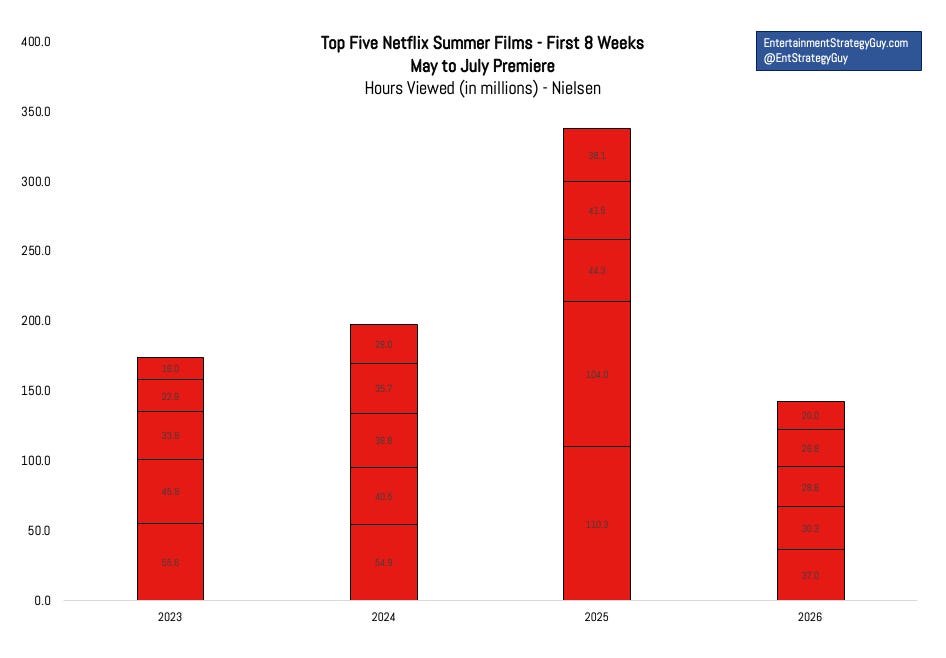
Decline in Netflix Film Performance: Netflix’s films released over the summer haven’t met their previous benchmarks, with none surpassing 20 million TV hours—marking a significant decline in viewer engagement compared to past summers.
-
Quiet Summer: Overall, this summer has been less productive for Netflix in terms of standout films, which traditionally would dominate cultural conversations.
-
Comparative Analysis: The piece compares Netflix’s film metrics to those of other platforms, illustrating that many underperforming Netflix films have viewership numbers comparable to some theatrical flops, emphasizing a potential gap in how success is judged within streaming.
-
Four Key Factors for Nuance:
- Data Literacy: Familiarity with box office terms helps the audience gauge success quickly, whereas streaming data lacks that instant understanding.
- Timing and Reporting Delays: Streaming data is released with delays, which affects how quickly public sentiment can be formed.
- Transparent Financials: Determining profitability for streaming films is complex due to opaque financial reports compared to theatrical releases.
- Narrative Control: Netflix’s published data creates a specific narrative that other streaming platforms do not offer, leading to a less critical approach to their content’s performance.
Conclusion:
Ultimately, the article argues that while streaming films are held to different standards than their theatrical counterparts, they still need to be evaluated critically. The conversation around audience preferences and content trends remains paramount in understanding the evolving media landscape.
If you have any specific questions or would like to discuss any section in more detail, feel free to ask!