Millions Are Using ‘Talking Buttons’ With Their Pets: It’s Not Speech, but It’s Not a Gimmick Either
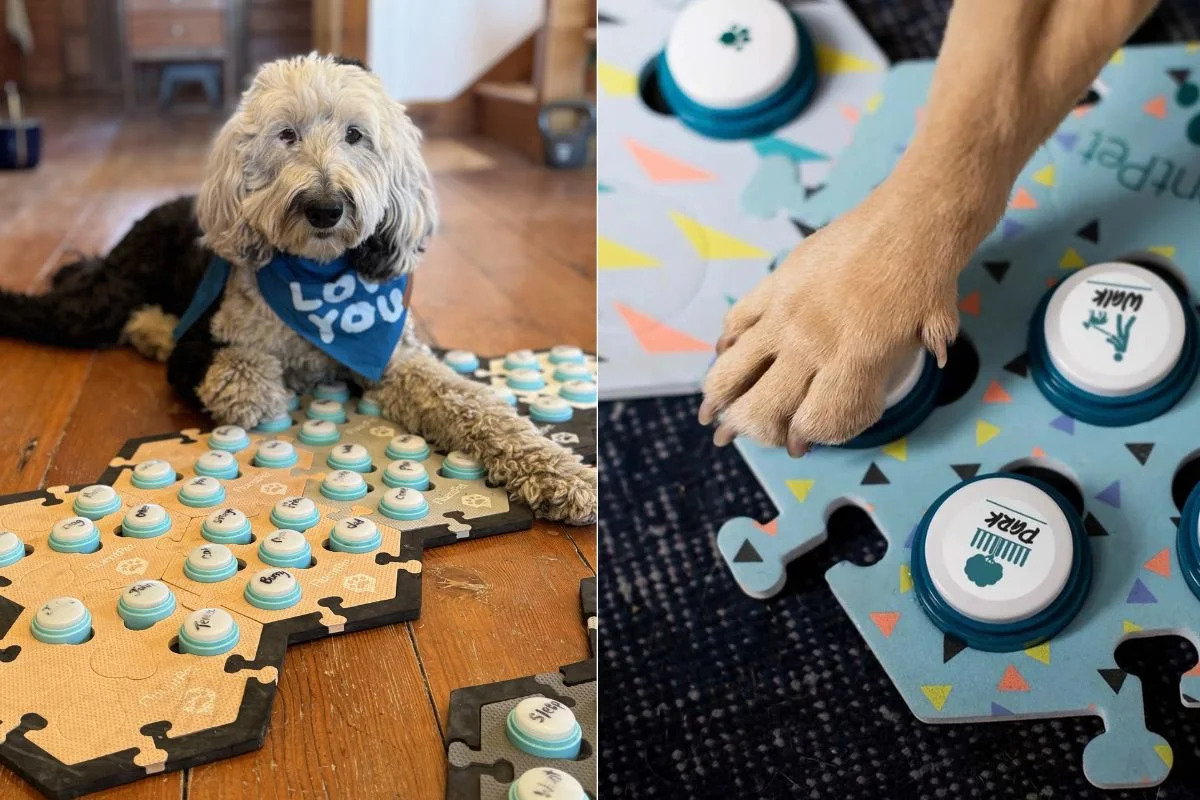
Alexis Devine, a Washington resident, has amassed a massive social media following of over eight million largely due to her entertaining dog, Bunny. Bunny’s remarkable ability to use talking buttons to express desires and even pose philosophical questions has captivated audiences worldwide.
In one viral clip, Bunny utilizes her buttons to alert Alexis to a sharp foxtail lodged in her paw. This moment of interspecies communication showcases the potential of these buttons in enhancing our understanding of animal needs.
Many viewers may not know that the talking buttons aren’t reserved for trained professionals; they can be purchased by anyone from companies like FluentPet. Alexis, who had minimal experience with animal training prior to the pandemic, began her journey with a single button—“Outside.” Over time, Bunny learned to use the buttons to communicate her wishes effectively.
Currently, these buttons have found their way into over two million households, contributing to over 50 million button presses. This unprecedented data offers insight into animal cognition and behavior.
The Rise of Talking Buttons
Why are talking buttons gaining popularity? Many owners seek a deeper understanding of their pets and a closer bond. Alexis emphasizes that many people buy buttons so pets can indicate when and where they are in pain, an invaluable tool for pet health.
Real-life examples highlight the benefits: pets can now communicate discomfort or other needs, potentially leading to early interventions for health issues.
One Reddit user reported improved behavior in their dog after teaching her to use buttons, noting she became calmer and more sociable.
Scientific Insights
The exploration of talking buttons isn’t new; past experiments, like those involving Clever Hans, have fueled skepticism about animal communication. Nevertheless, recent studies from UC San Diego indicate that dogs using these buttons exhibit responses beyond just reacting to owner cues.
Federico Rossano, a cognitive science expert, likens effective communication through buttons to a child communicating needs, illustrating the powerful potential of this interaction.
Bunny’s journey has shown that she can combine words independently, exploring different phrases much like a toddler would. This exploration signifies a form of communication that goes beyond simple conditioning.
A New Era of Pet Relationships
As our understanding of canine communication evolves, shifting from the dominate-and-train mindset of the past to one of mutual understanding is crucial. Alexis suggests that rather than controlling pets, we should be guardians striving to understand them.
This shift could redefine pet ownership, fostering relationships where communication—even if not linguistic in the traditional sense—becomes deeply meaningful.
As this technology develops, it’s clear that the future of pet-parent relationships is not just about commands but about partnership and collaboration with our furry companions.