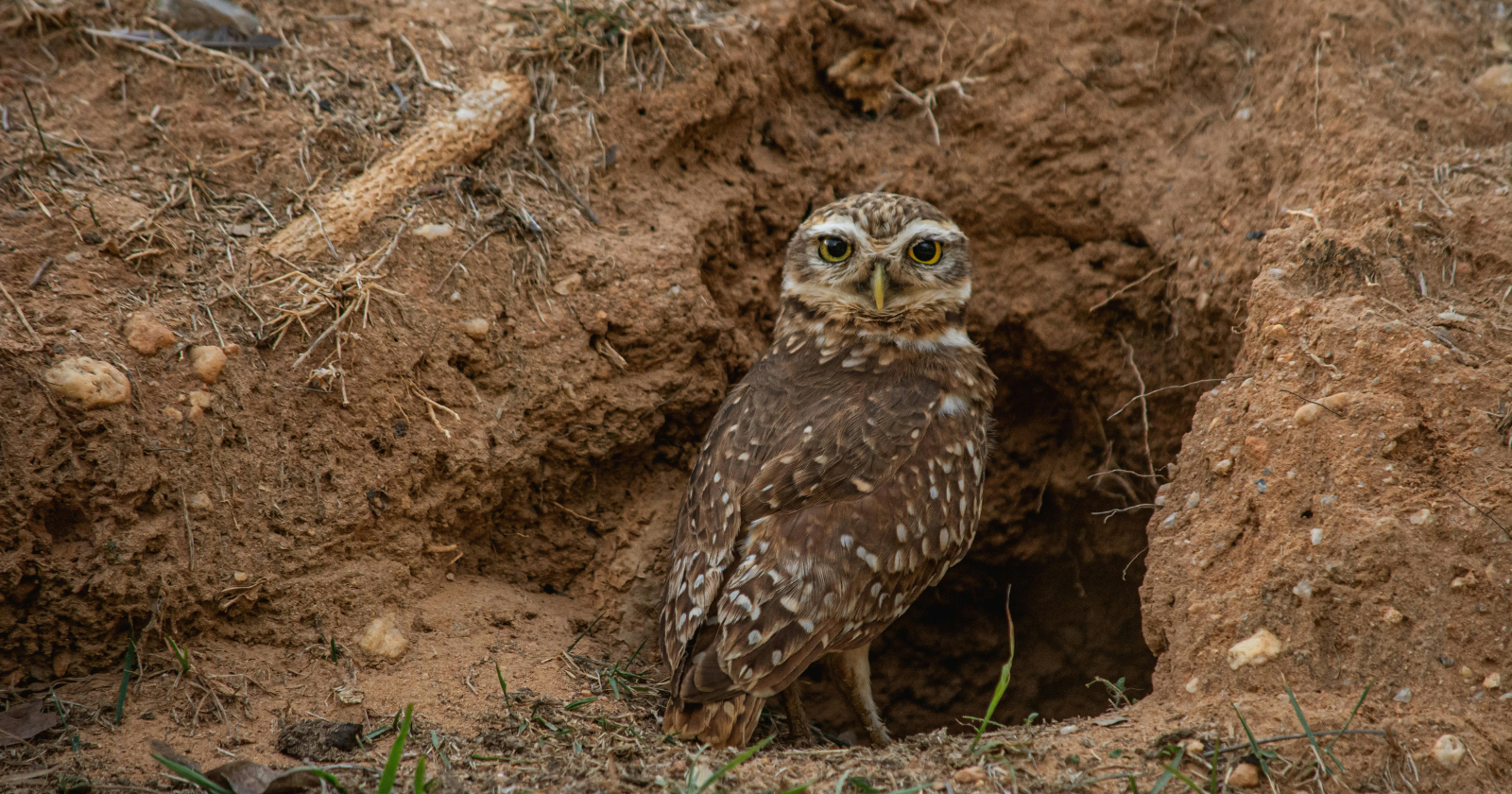
The burrowing owl, an unusual species that thrives in daylight and lives underground, faces significant habitat loss in Arizona due to urban development, agricultural changes, and solar farms. When a Phoenix-area housing project threatened its habitat, Wild at Heart Raptor Rescue jumped at an opportunity from Longroad Energy to relocate the owls to a solar farm that provided suitable conditions.
In March 2025, the team relocated 19 burrowing owls to the solar site, creating artificial burrows for them. The relocation process mimicked a witness-protection program, with netting to prevent them from returning home and daily feeding provided until they acclimated. Their successful breeding—36 chicks hatched within months—demonstrated the solar farm could serve as a viable habitat.
The site’s flat, open landscape with minimal predators and shaded areas under the solar panels offered ideal conditions for the owls to hunt effectively and feel secure. However, this situation highlights a paradox: while solar energy developments contribute to the loss of natural habitats for the owls, they also provide new opportunities for their survival. The future of this initiative relies on continued monitoring and success in owl reproduction, presenting a potential model for compatible coexistence between renewable energy projects and wildlife preservation.


