South Korea’s Nuri Rocket Achieves Milestone with Successful Deployment of Microsatellites
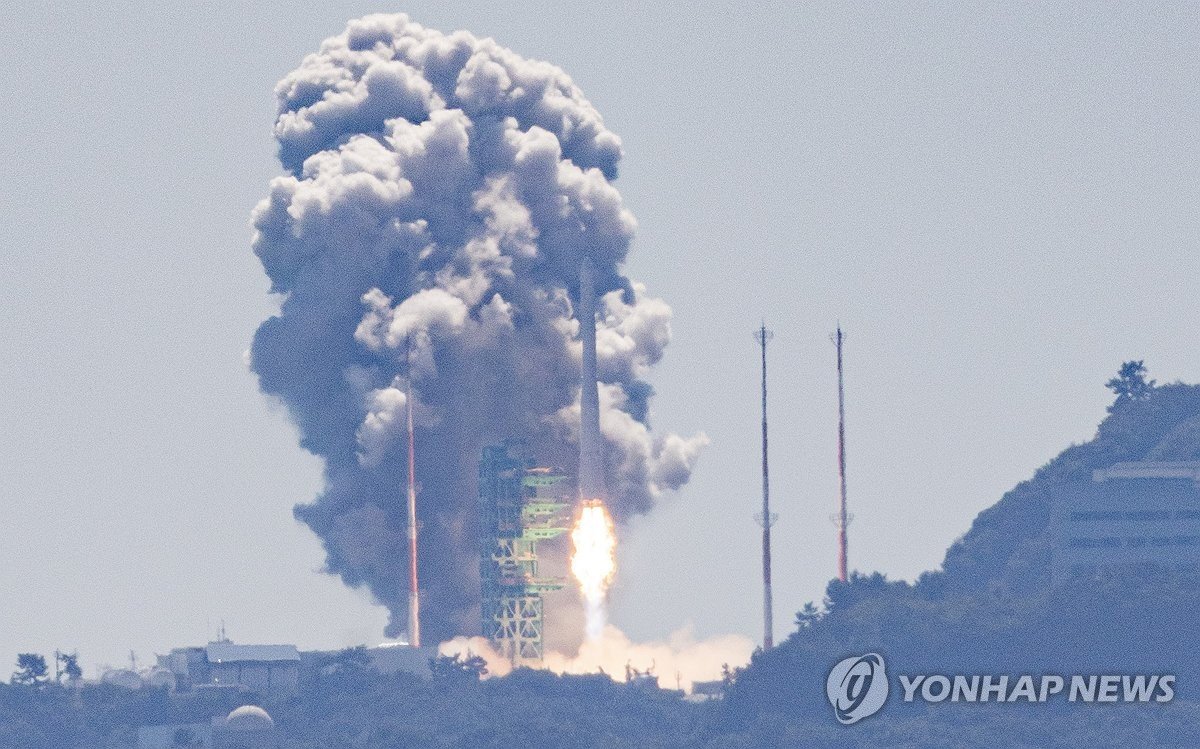
GOHEUNG, South Korea – On October 7, 2026, the Nuri space rocket successfully deployed five microsatellites during its fifth mission, marking a significant advancement towards South Korea’s first domestic satellite constellation. This success underlines an increase in private-sector involvement in space development, according to experts.
Launched from the Naro Space Center in Goheung, approximately 400 kilometers south of Seoul, the 200-ton Nuri rocket carried its primary payload of five New-space Earth Observation Satellite Constellation for National Safety (NEONSAT) microsatellites. As a secondary mission, the rocket also deployed nine CubeSats developed by various South Korean research institutes and universities, although one CubeSat failed to separate.
This mission represents Nuri’s fourth consecutive success, improving its overall success rate from 75% to 80%. Oh Tae-seok, administrator of the Korea AeroSpace Administration (KASA), stated that the successful deployment showcases South Korea’s enhanced space transportation capabilities, allowing for a variety of missions aligned with customers’ orbital requirements.
The recent launch underscores a shift from focusing solely on independent access to space to integrating satellite constellations and private sector participation into its space strategy. The five NEONSATs are part of a larger plan to create a 10-satellite Earth observation constellation aimed at efficiently monitoring the Korean Peninsula for national security and disaster responses, with additional satellites slated for launch in the following year.
Once operational, the full constellation is projected to provide more than three daily images of the Korean Peninsula, revisiting the same locations within 24 hours. “We aim to conduct at least one Nuri launch annually through 2032,” said Oh, indicating a commitment to improving reliability and transitioning towards a commercial launch service model.
The CubeSats launched during this flight reflect a trend toward smaller, standardized satellites which can be manufactured in larger quantities for varied missions, including monitoring space radiation and developing optical communication technologies.
This mission also signals a move from a government-centric development model to one that is more industry-led. Hanwha Aerospace Co., which has taken on the responsibility of manufacturing the rocket since its fourth launch, also participated in operations for the fifth mission.
Science Minister Bae Kyung-hoon described the launch as “another milestone” for South Korea’s space industry, reaffirming government support for this commercial transition.
Experts suggest that this transition could unlock various business opportunities across the space value chain. However, challenges remain in turning South Korea’s launch capabilities into globally competitive commercial services. Nuri still functions as an expendable rocket with infrequent launches, which complicates efforts to lower costs.
To enhance competitiveness, experts advocate for improving reliability, increasing launch frequency, and developing reusable launch technologies. “The global market is shifting towards reusable and cost-effective launch vehicles,” noted Ahn Hyung-joon from the Science and Technology Policy Institute (STEPI).
As South Korea progresses in its space endeavors, leveraging improvements in Nuri’s performance while investing in innovative technologies will be essential for success in the competitive space industry landscape.


