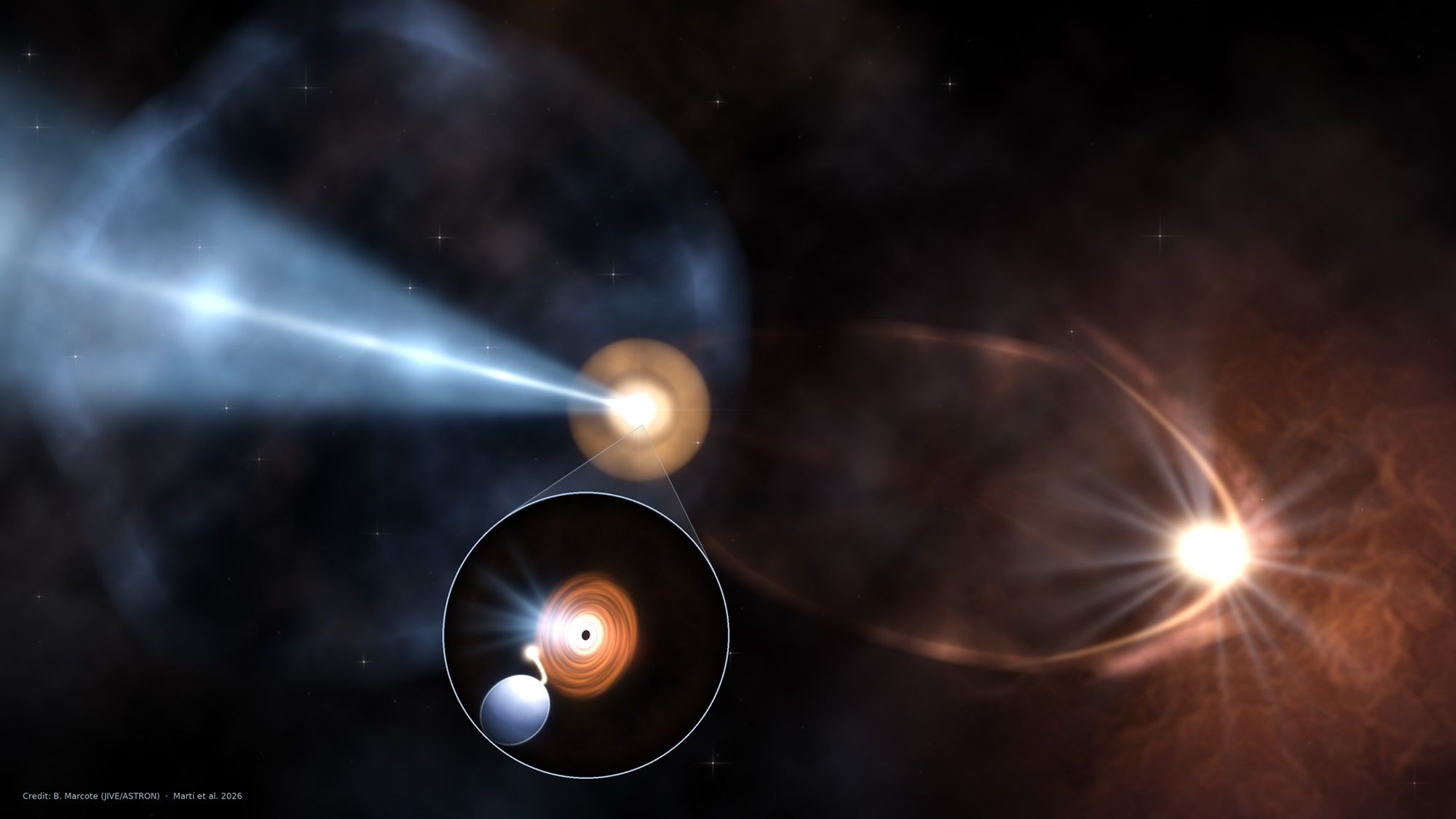
Researchers have identified a strong candidate for a “microblazar,” a concept long theorized but never observed until now. Observing these microblazars could provide insights into black holes that emit powerful energy jets.
What is a Microblazar?
- Blazars: These are extremely energetic quasars powered by supermassive black holes. Material is stripped from their host galaxies, creating powerful jets that can appear primarily when aimed directly at Earth.
- Microblazars: Smaller versions of blazars, theorized to share similar properties but at a reduced scale.
Key Discoveries
-
IRAS 18293-0941: This newly identified microblazar is approximately 12,000 light-years away and found in our galaxy, concealed by dust. It exists within a binary system comprising a black hole and a large star, with matter falling into the black hole and creating jets of energy.
-
Unique Characteristics: The object displays several expected features of microblazars, such as powerful emissions and evidence of interactions between jets and surrounding material. However, it notably lacks rapid variability — a common trait for microblazars where brightness fluctuates quickly.
-
Research Techniques: A combination of observational tools, including various telescopes and archival data, facilitated the identification of IRAS 18293-0941 and its characteristics.
Implications
Even though IRAS 18293-0941 lacks one expected feature (rapid variability), it holds promise as the first known microblazar. Experts emphasize the significance of this discovery for understanding high-energy astrophysical processes and the behavior of black holes in our universe. Further investigation into the surrounding environment is underway to delve deeper into its properties.


