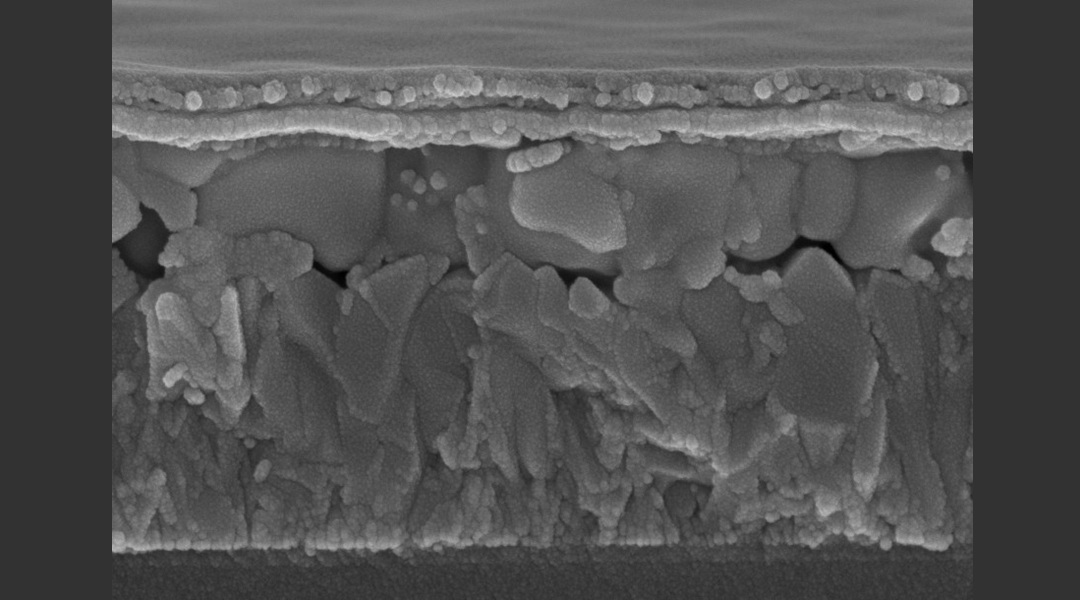
Researchers have discovered a method to suppress halide segregation in tandem solar cells, enhancing both efficiency and stability across various mixed-halide perovskite compositions. Tandem solar cells stack two light-absorbing materials to convert sunlight into electricity more effectively, with mixed-halide perovskites often utilized for their tunable composition.
Due to uneven crystallization of iodide and bromide ions, these films typically form bromide-rich areas that lead to defects and efficiency losses. The research highlights the importance of not just the additives used but also their precise placement within the film.
By adding a fluorinated molecule called PFDOA during film preparation, researchers created a vertical concentration gradient that maximized PFDOA at the surface, where bromide tends to crystallize rapidly. This stratification allows for “gradient-controlled crystallization,” which stabilizes the faster crystallizing regions without hindering the overall process.
As a result, PFDOA-treated perovskite solar cells achieved a power conversion efficiency of 17.78%, surpassing untreated cells. The study also noted that this strategy was effective across different mixed-halide compositions, suggesting broader applicability.
However, challenges remain in applying this method to commercial manufacturing, especially in scaling up production and testing under real-world conditions. Researchers aim to understand the principles behind the concentration gradients further, which could lead to more effective solar cell fabrication methods in the future.


