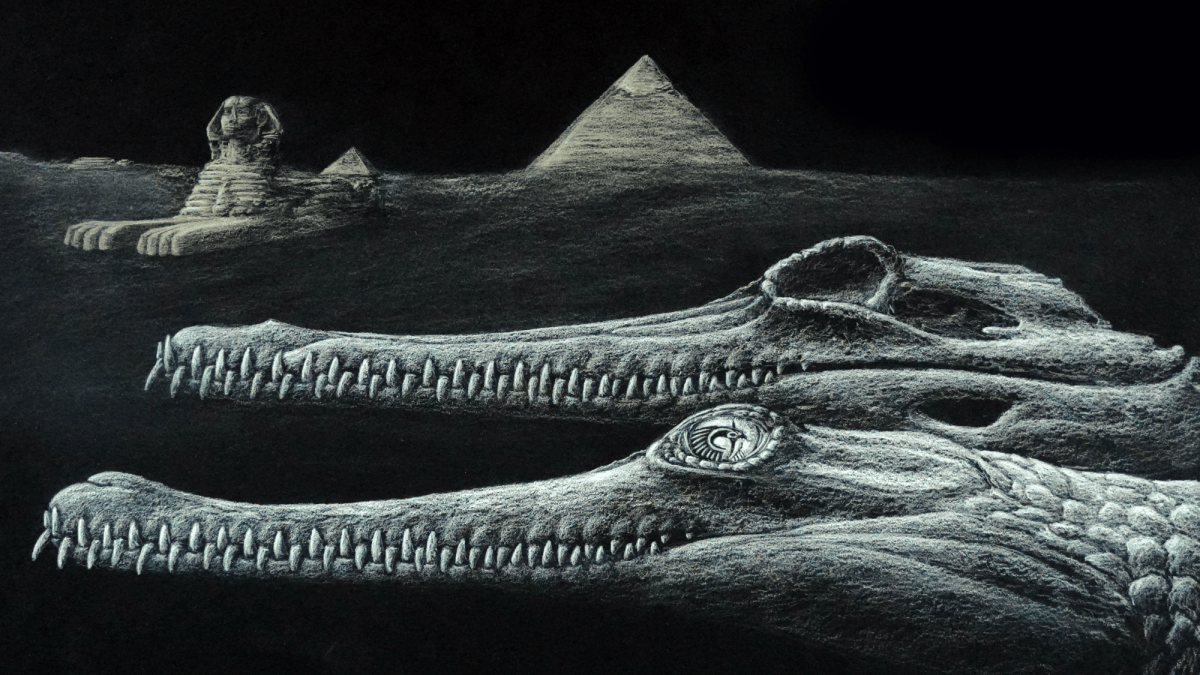
The discovery of a new species of extinct crocodile, Herugavialis cairensis, adds to the ongoing intrigue surrounding the Great Sphinx in Giza, Egypt. This new species, characterized by a missing tip of its snout—much like the Sphinx’s missing nose—was described in a recent study. The Great Sphinx, believed to have been carved during Egypt’s Fourth Dynasty (around 2613–2494 BCE), symbolizes royal power with its lion body and human head.
The newly identified crocodile is a type of gavial, known for their long, thin snouts, primarily found today in freshwater environments in the Indian subcontinent and Southeast Asia. Fossils from the Mokattam Formation, dating back about 45 million years, originally thought to belong to another species, were re-evaluated with advances in paleontology revealing the distinct characteristics that warranted the new classification.
Named after the Egyptian god Heru, linking back to the Sphinx, this crocodile coexisted with at least two other species in Egypt’s ancient marine environments. The study underscores the rich and fluctuating diversity of crocodilian species in the region over the last 50 million years.


