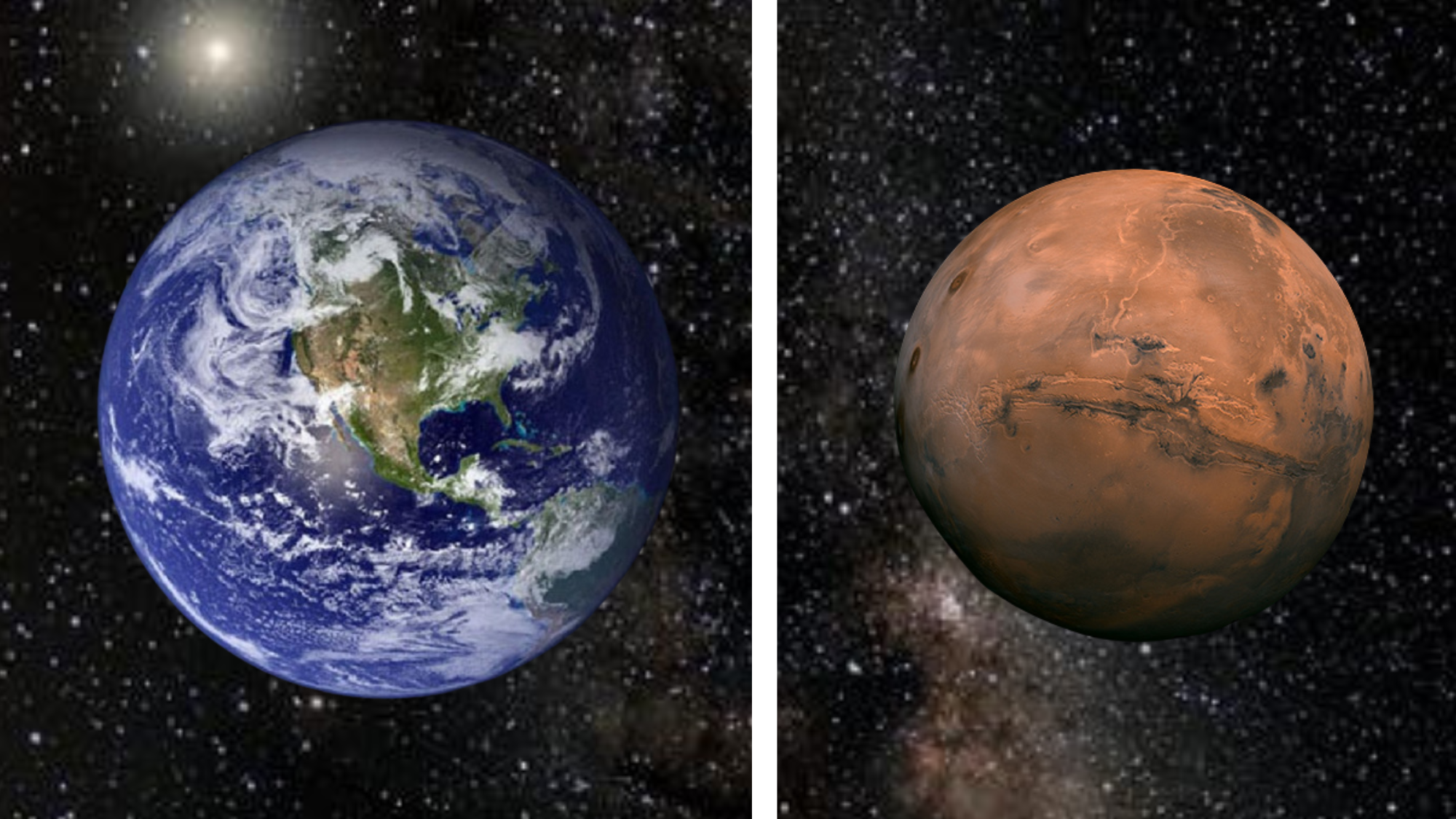
Earth and Mars: Different Formation Histories Uncovered
Recent research reveals that Earth and Mars, despite originating in the same region of the solar system, formed through distinct processes. This finding challenges the notion that planets develop uniformly and sheds light on the complex history of our solar system, which formed approximately 4.5 billion years ago.
Key Findings:
-
Distinct Formation Processes:
- Earth and Mars have different chemical compositions, suggesting varied formation mechanisms. Anders Johansen, a planetary sciences professor at the University of Copenhagen, noted the unexpected differences in their formation histories.
-
Formation Environment:
- Early solar system conditions were chaotic, filled with a rotating disk of gas and dust where planetesimals formed through collisions and mergers of dust grains and pebbles.
-
Research Methodology:
- The study focused on volatile elements like sodium, zinc, and potassium, which serve as indicators of the thermal and violent history a planet experienced during formation. Analyzing these elements in the crust and mantle of both planets provides a clearer picture of their formation.
-
Hybrid Model of Formation:
- The results suggest that Earth’s mass is primarily composed of protoplanets formed by pebble accumulation (75%), with the remaining 25% coming from planetesimals. Conversely, Mars seems to have formed mainly from planetesimals (75%) with less contribution from pebbles.
-
Implications for Exoplanets:
- This research methodology could aid in understanding the formation of exoplanets, assisting in the assessment of their potential habitability by determining their volatile content.
Conclusion
Understanding how Earth and Mars formed is crucial for deciphering planetary formation across the universe. As researchers continue to study these processes, they enhance our ability to predict the habitability of planets beyond our solar system. The comprehensive analysis, as detailed in the research published in Nature Astronomy, provides a promising direction for future studies on planetary formation and composition.


