AI Turns the Power Problem Into a Transient Problem
At the heart of the issue is the changing behavior of the IT load. In a conventional data center, large numbers of independent loads create a relatively predictable electrical profile. However, AI clusters introduce much greater synchronization. As GPUs process common workloads, many accelerators can increase power consumption simultaneously, resulting in fast power pulses within the system.
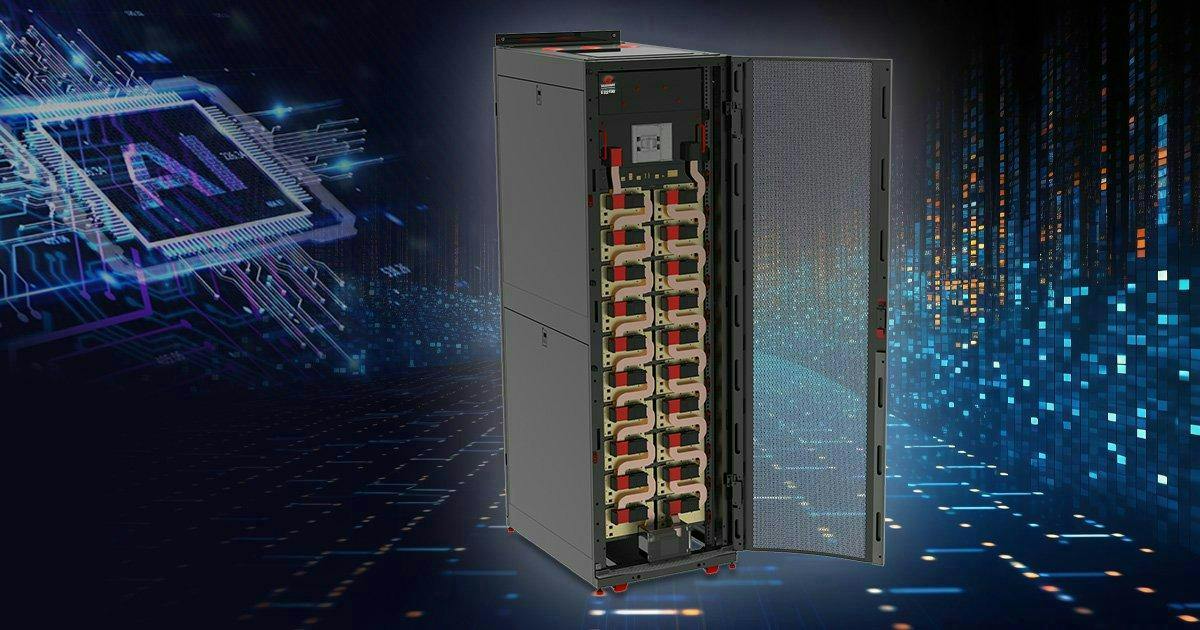
Hybrid supercapacitors serve as a buffer between the dynamic compute load and infrastructure. During upward transients, they provide incremental power, and recharge when the demand falls. The goal is not to create additional energy but to smooth the load seen by upstream components—like UPS systems and utility connections—thus alleviating stress from rapid changes inside AI clusters.
From Backup Insurance to Active Power Infrastructure
Historically, data center storage often functioned as backup insurance, providing power only during outages. AI shifts this paradigm to make storage part of everyday operation, buffering compute peaks and stabilizing electrical systems. The characteristics needed from storage change: response time, recharge speed, and cycle life become critical.
Musashi’s hybrid technology, which exceeds 100,000 cycles at full depth of discharge, demonstrates this new approach, raising questions about storage economics when they are not merely waiting for outages.
Where You Manage the Transient Matters
Placement of storage creates various strategies for managing power transients. Storage at the UPS level aids in bridging power loss, while closer proximity to compute systems reduces the strain on the electrical infrastructure. Musashi’s collaboration aims for decentralized energy storage to provide dynamic responses without propagating fluctuations throughout the facility’s electrical system.
Can Storage Get More Compute From Existing Megawatts?
AI’s unique workloads can occasionally exceed data centers’ utility capacity. Storage can fill these short-duration peaks without requiring additional power from the grid, effectively smoothing the load that the power source experiences. This increase in productive compute emphasizes a need for more efficient power management without throttling the capabilities of GPUs.
Does the AI Data Center Still Need Minutes of UPS Runtime?
The traditional approach of sizing UPS systems around minutes of runtime may need reevaluation. If generators can quickly start and accept loads, a data center may require less stored energy, focusing instead on the power needed during the transition. This streamlined approach could optimize design objectives and improve performance.
Seconds, Not Hours
Batteries will not become obsolete but will serve different functions than hybrid supercapacitors. The latter are designed for short-duration, high-power use cases, suitable for managing fast AI-related transients. The distinction between resiliency, long-duration backup, and rapid GPU-driven power transients showcases the diverse needs within energy storage.
From the Battery Room to an Energy Storage Architecture
AI is reshaping how we view energy storage in data centers. Operators may soon focus on a comprehensive energy storage architecture rather than specific components like UPS batteries. Different types of storage will be required for long-duration backups, utility interfacing, and short-duration ride-through. This evolution emphasizes the need for specialized energy storage systems that address the complexities introduced by AI workloads.
In summary, as AI demands become increasingly dynamic, the electrical architecture will evolve from a static reserve of energy to a more intricate control mechanism.


