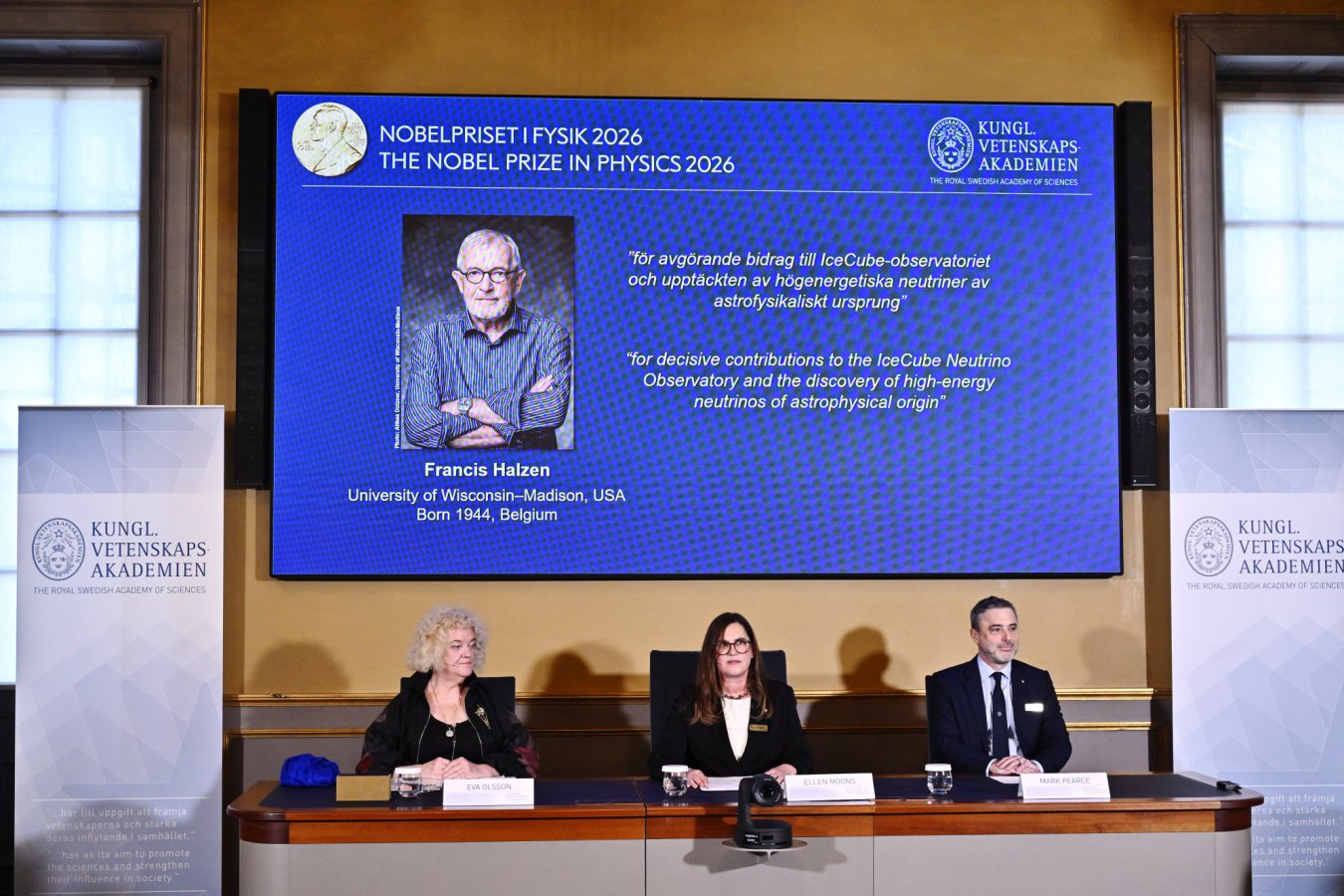
Francis Halzen from the University of Wisconsin–Madison has been awarded the 2026 Nobel Prize in Physics for his groundbreaking work in detecting neutrinos using a large detector located at the South Pole. Neutrinos are elusive particles that rarely interact with matter, allowing researchers to study cosmic phenomena.
Halzen proposed the innovative use of Antarctic ice as a neutrino detector in 1988, leading to the establishment of the IceCube Neutrino Observatory. This facility, completed in 2011, employs thousands of light sensors positioned two kilometers beneath the ice, enabling scientists to trace neutrinos back to their cosmic origins.
Halzen has successfully led a global collaboration of over 450 researchers from various institutions, marking a significant achievement in modern physics. He expressed surprise and joy upon receiving the Nobel Prize, stating that he did not expect it. A more detailed story will follow.


