Overview of M83 Galaxy Observations
Image Comparison
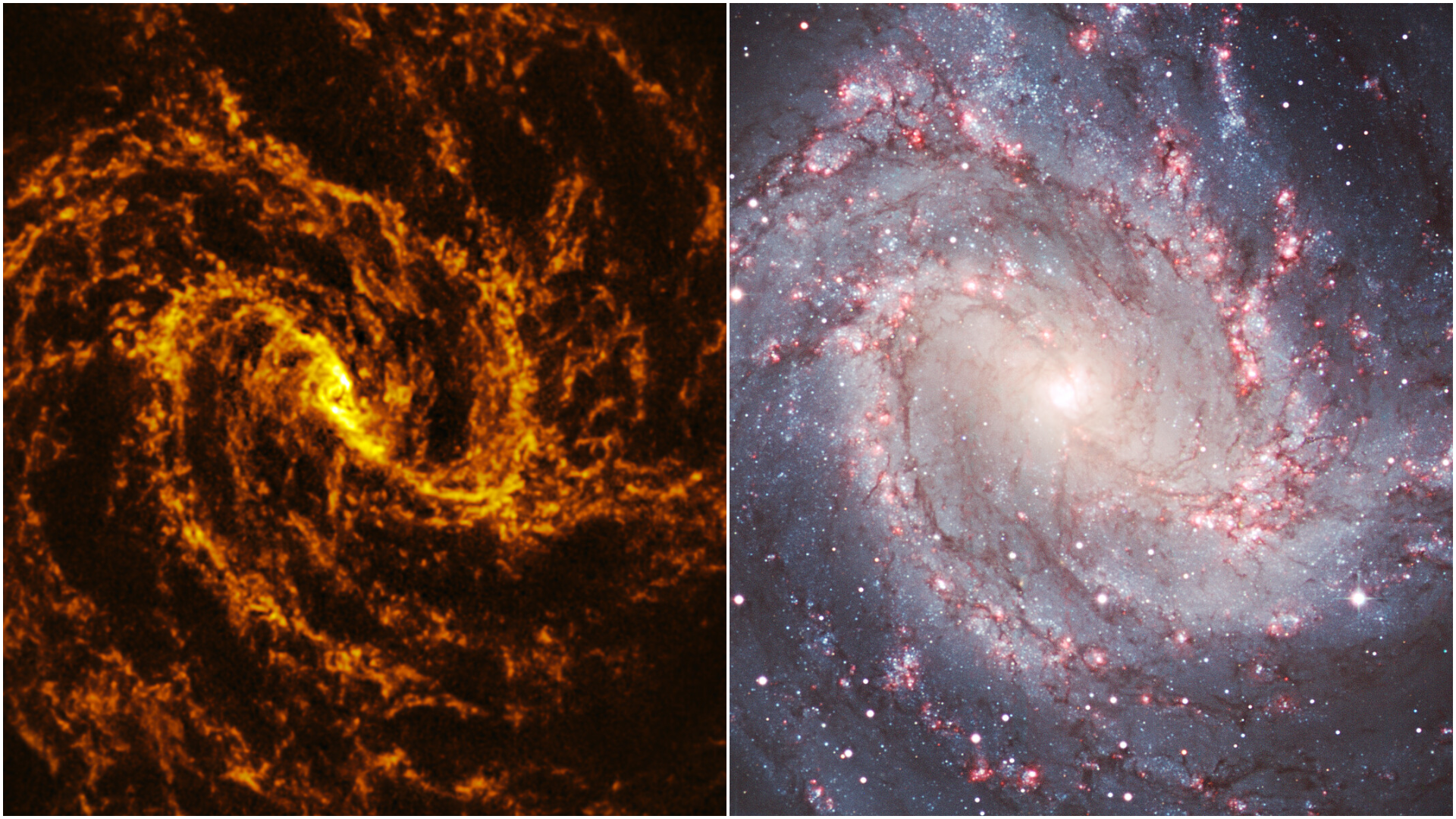
The featured image showcases M83, a spiral galaxy, observed in two different wavelengths:
- Left: Submillimeter wavelengths, revealing cold molecular gas.
- Right: Visible light, highlighting the galaxy’s vibrant colors.
Image Credit: ALMA (ESO/NAOJ/NRAO)/J. Koda et al.
What is M83?
M83, located 15 million light-years away, presents strikingly different views depending on the observational wavelength. The image illustrates how two observatories could render vastly different results from the same galaxy:
- The ALMA in Chile captures the galaxy in submillimeter wavelengths, giving it an orange and black hue reminiscent of Halloween.
- The La Silla Observatory, also in Chile, showcases it under visible light, presenting a dazzling display of purple, pink, blue, and gray.
Why is it Incredible?
The varying wavelengths unlock distinct details about the galaxy that may remain hidden in a single perspective. Studying celestial bodies through diverse wavelengths and observatories enhances our understanding of the universe. Upcoming space telescopes, such as NASA’s Nancy Grace Roman Space Telescope, aim to complement existing technologies, revealing further insights into the cosmos and its complexities.
By examining both the visible light and submillimeter views of M83, astronomers can better appreciate its structure and the gas and dust that contribute to its signature spiral shape.


