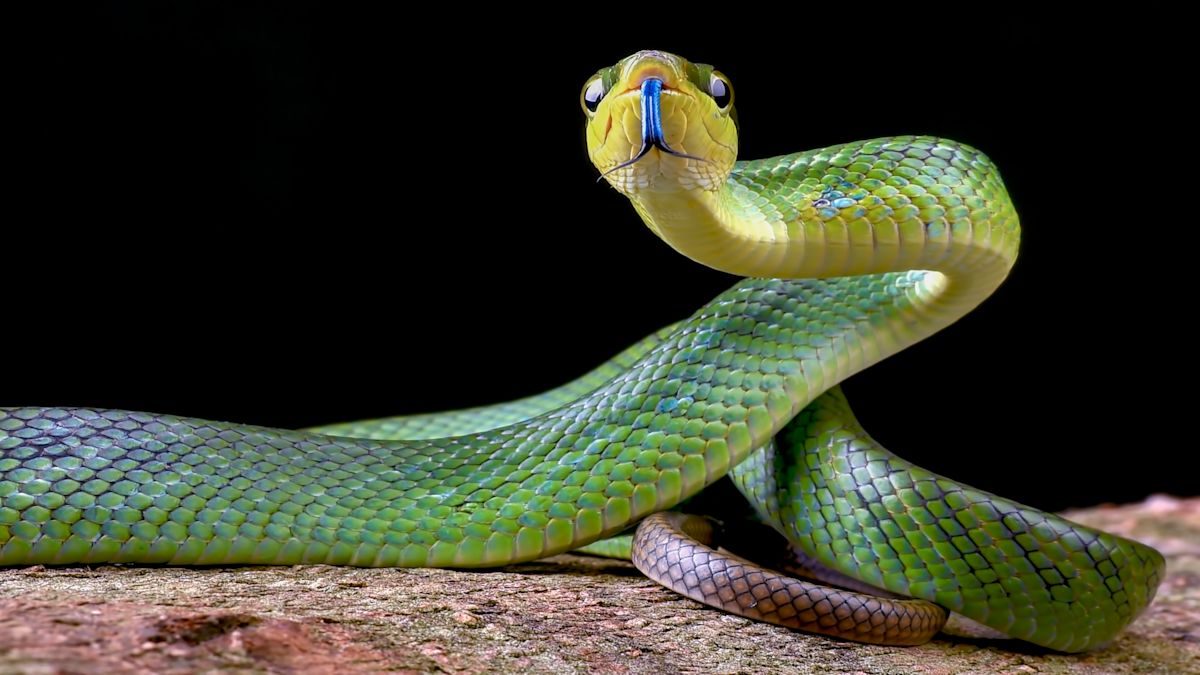
The Evolutionary Journey of Snakes
The origins of snakes’ unique limbless, elongated bodies have been a topic of debate among scientists, particularly whether these traits developed for burrowing underground or aquatic life. Recent fossil evidence indicates that the evolution of snakes is more complex than either explanation suggests.
Key Findings
-
Diverse Early Snakes: Research on a complete fossil of Tametara mirim, dating back to the Late Cretaceous period (around 80 million years ago) in Brazil, shows significant ecological and morphological diversity in early snakes.
-
Advanced Imaging Techniques: Scientists employed computed tomography and cinematic 3D rendering to examine the fossil, uncovering intricate details about the skull, vertebrae, and brain structures.
-
Distinct Lifestyles: The study’s lead author, Tiago Simões, noted that early snakes diverged into various lifestyles much earlier than previously thought. Comparing Tametara to Dinilysia patagonica, another fossil snake from Argentina, revealed striking differences in brain anatomy, indicating different adaptations and ecological strategies.
Broader Context
With over 4,000 living snake species, all descended from lizard ancestors, the evolutionary history of snakes is still not fully understood. Fossil records of the earliest snakes are limited, leaving researchers divided primarily between adaptations for burrowing or aquatic habitats.
-
Multiple Adaptations: The findings suggest that early snakes experienced shifts between burrowing and terrestrial life, with adaptations occurring in different lineages rather than following a singular evolutionary path.
-
Brain vs. Skeleton: Researcher Simone Macrì emphasized that brain architecture provides richer insights into the evolutionary strategies of early snakes compared to the skeletal structure alone.
Continued Research
To enhance understanding, scientists are increasingly using advanced imaging technologies. This allows for a deeper exploration of how ancient snakes interacted with and adapted to their environments, suggesting that early snakes were actively experimenting with various ecological strategies.
Additional Resources on Snake Evolution
For further exploration into snake evolution and unusual species, consider the following articles:
- A tale of a venomous sea snake that evolved in a Philippine lake.
- Discovery of a 50-foot ancient snake in Gujarat, India.
- Research on how snakes evolve a taste for cannibalism, from king cobras to Burmese pythons.
- Finding a bizarre snake species in India with unique teeth.
- Rediscovery of a rare snake species in Sichuan, China.
For more insights, you can subscribe to newsletters for updates on fascinating wildlife discoveries and ecology.


