The proposal outlined in this article suggests a groundbreaking experiment that uses laser light to interact with passing gravitational waves. Here are the key points:
-
Energy Exchange Mechanism: The theoretical proposal involves using laser light to exchange tiny amounts of energy with gravitational waves—either transferring energy to the wave or absorbing it.
-
Measurement through Interference: By allowing light to reflect many times (up to an effective path length of one million kilometers), minute changes in frequency caused by these energy exchanges can build up into measurable interference signals.
-
Not Proven Yet: The experiment hasn’t been performed yet, and even if energy transfer is observed, it won’t directly confirm the existence of gravitons.
-
Experimental Setup:
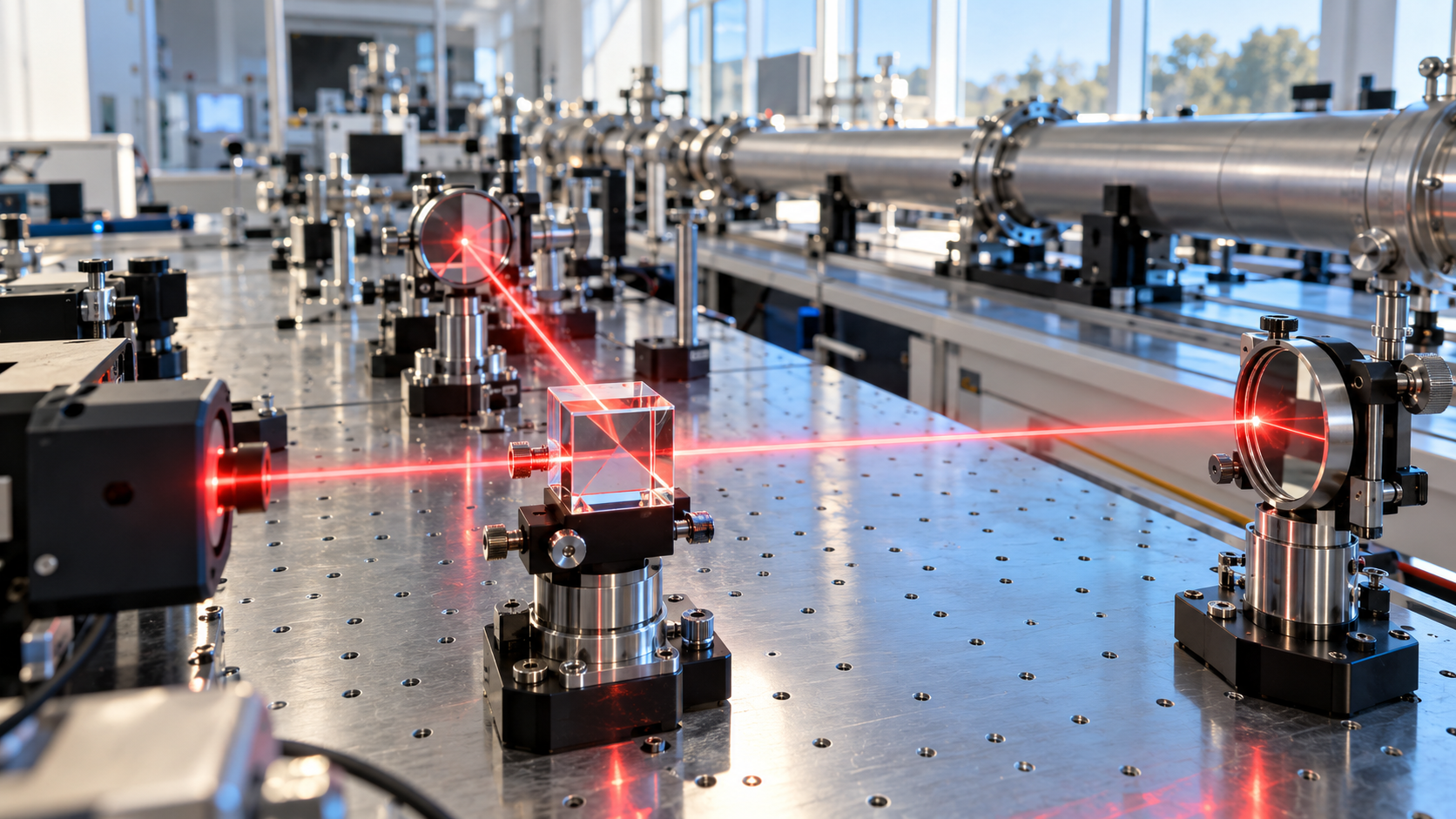
- A laser pulse is split into two traveling in perpendicular directions.
- A passing gravitational wave affects their energies differently.
- Timing is crucial; ideally, the light pulses need to interact with the gravitational wave at specific points in its cycle to avoid cancellation of effects.
-
Challenges:
- Maintaining optical performance over long distances with many reflections is technically demanding.
- Timing needs to be precise to link light measurements with gravitational wave detections by observatories like LIGO.
-
Quantum Considerations: The proposal dives into deeper questions about whether gravity adheres to quantum rules, with the energy transfer being linked to gravitons but not directly proving their existence.
This experiment, if successfully implemented, could significantly advance our understanding of gravitational waves and quantum gravity, linking classical gravity with quantum phenomena.


