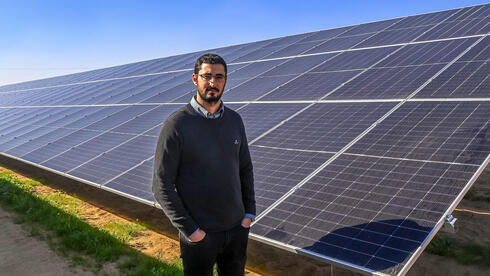
Renewable energy company Doral has announced that it has obtained construction permits for the second phase of its extensive solar farm project in Indiana, USA. This phase includes two projects with a combined capacity of 1,100 megawatts, bringing the total projected capacity to around 2,700 megawatts upon completion in 2029. An additional section of approximately 216 kilowatts is planned for the future. The project will cover about 80,000 dunams, roughly equivalent to the area of Tel Aviv, Holon, and Bat Yam combined.
Doral anticipates that this new phase will yield NIS 350 million in revenue and NIS 300 million in annual EBITDA, with construction costs estimated between NIS 2.5 billion and NIS 3 billion. Notably, the solar facility will be agrivoltaic, allowing landowners to continue growing crops such as corn, wheat, and vegetables amidst the solar arrays, while also using other sections for grazing livestock.
The landowners are compensated with fixed payments from Doral for land usage, while the company benefits from electricity sales. Unlike many other solar projects, there are currently no energy storage solutions planned; electricity will be routed directly into the PJM grid, without signed contracts for direct sales to major clients like AI data center operators.
Doral CEO Yoni Hantis stated that they have qualified for federal tax incentives by expediting the development process, although he noted that reliance on these incentives would eventually decrease. He emphasized that rising electricity prices in the U.S. position solar generation as the most efficient and cost-effective energy solution.
The extent of the tax benefits has not been disclosed, but investors classified as “tax partners,” including Bank of America and Truist Bank, will benefit from these incentives. Hantis also expressed interest in developing data centers within the solar facility, aiming for independence from fluctuating energy tariffs.
In its financial reports for the first half of 2026, Doral reported increased revenue and reduced losses, partly due to the consolidation of results from its Polish subsidiary, Zephyrus, and growth in electricity supply contracts with large clients. Recently, Doral acquired a controlling interest in its U.S. subsidiary, Doral LLC, raising its stake from 26% to 53% with an investment of $738 million, thereby enhancing liquidity and positioning the company to meet the growing energy demand in the U.S.


