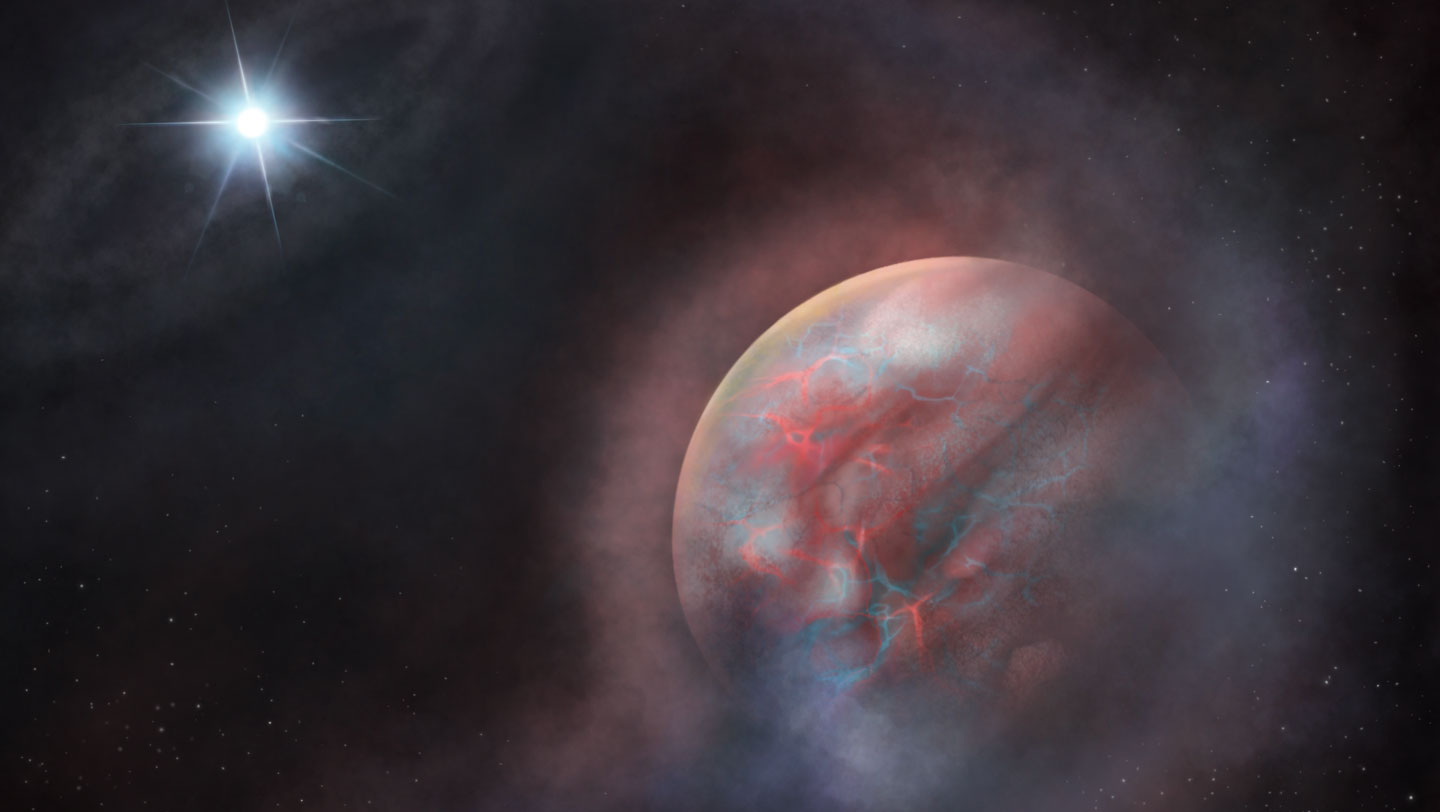
The discovery of a potential “phoenix” planet, formed from the remnants of a dead star, marks a significant advance in our understanding of planetary systems. Predicted over 15 years ago, this finding could reshape our views on planetary formation, suggesting that even after a star’s death, new worlds may emerge.
Key Points
-
Background: The concept of second-generation planets has long been theoretical, often seen as speculation.
-
Discovery: Astronomers detected signs of a new planet in the atmosphere of a white dwarf named HS 0209+0832. This star, the remnant of a low-mass star like our sun, offers insights into how stellar corpses can foster the birth of new planets.
-
Chemical Composition: The white dwarf’s atmosphere is surprisingly rich in niobium, a rare metal, indicating a unique process of element formation associated with dying stars.
-
Planetary Evidence: Observations from the TESS space telescope revealed fluctuations in the white dwarf’s brightness, suggestive of a nearby gas giant. The hypothetical planet might orbit extremely close to the star, akin to a smaller version of Jupiter.
-
Implications: This discovery could change our understanding of the lifecycle of stars and planets, implying that solar systems can have a second life even after the host star has died.
Future Considerations
While we cannot yet confirm if our own solar system will host a second-generation planet post-sun’s demise, the findings pave the way for ongoing research into these intriguing phenomena in astrophysics.


