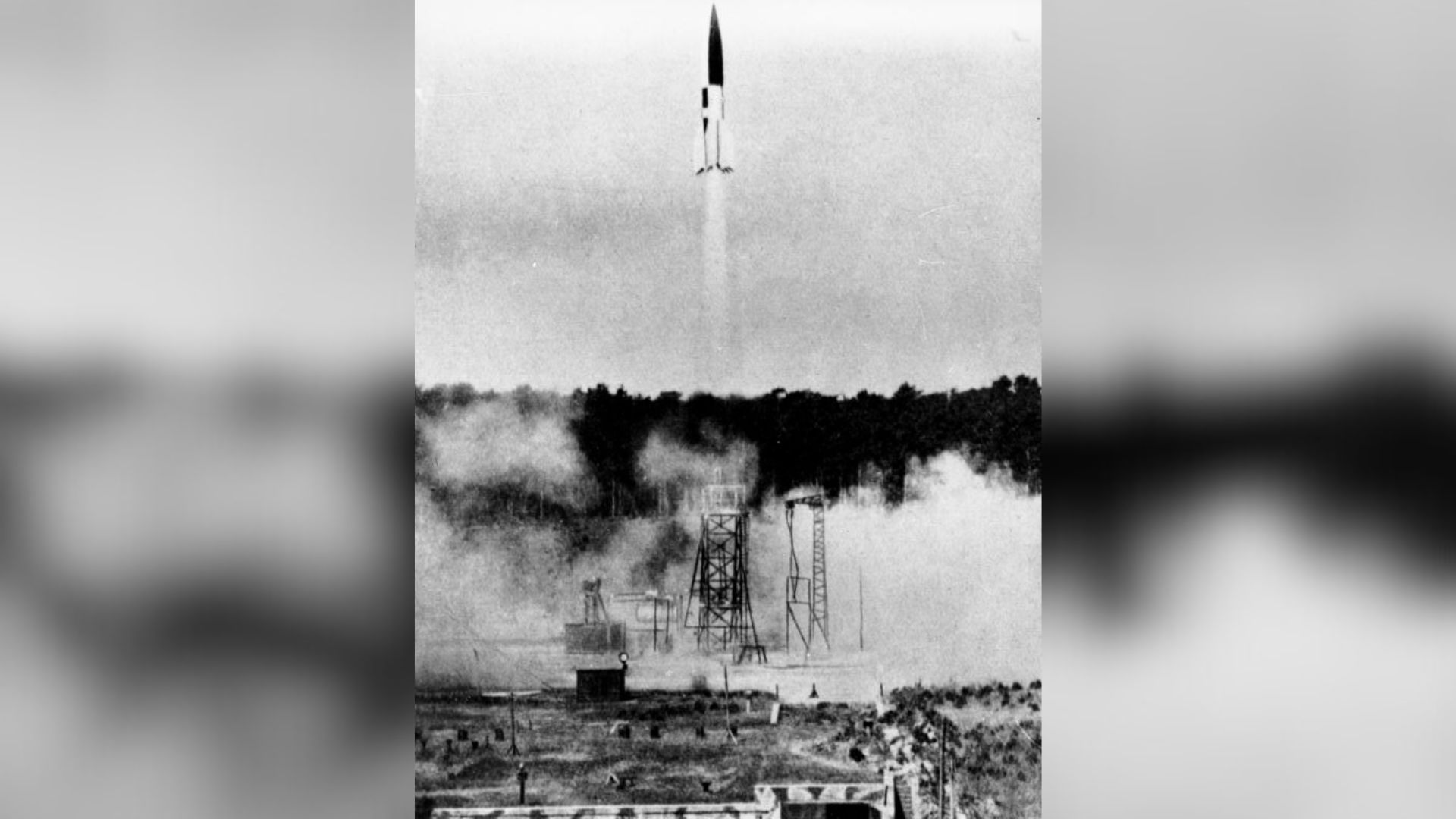
On October 3, 1942, Germany conducted the first successful test launch of the ballistic missile known as the V-2, or Aggregat 4, designed by Wernher von Braun. Launched from Peenemünde, it reached an altitude of 52.5 miles (84.5 kilometers), just shy of the Kármán Line, before landing 118 miles (190 km) away.
The V-2, standing 46 feet tall (14 meters), was a significant weapon in World War II, capable of traveling up to 3,400 mph (5,470 kph) and carrying a 2,200-pound (1,000 kg) warhead for distances up to 200 miles (320 km). Though it was launched over 3,000 times against cities like London and Antwerp, it caused relatively limited casualties—around 5,000 deaths—compared to the tens of thousands who died in its production under harsh conditions.
Despite its destructive potential, the V-2 also laid the groundwork for future space exploration, influencing modern rockets and intercontinental ballistic missiles. After the war, many of its designers, including von Braun, were brought to the U.S. through Project Paperclip, contributing to the early American space program and the development of rockets that would eventually send astronauts to the Moon.


