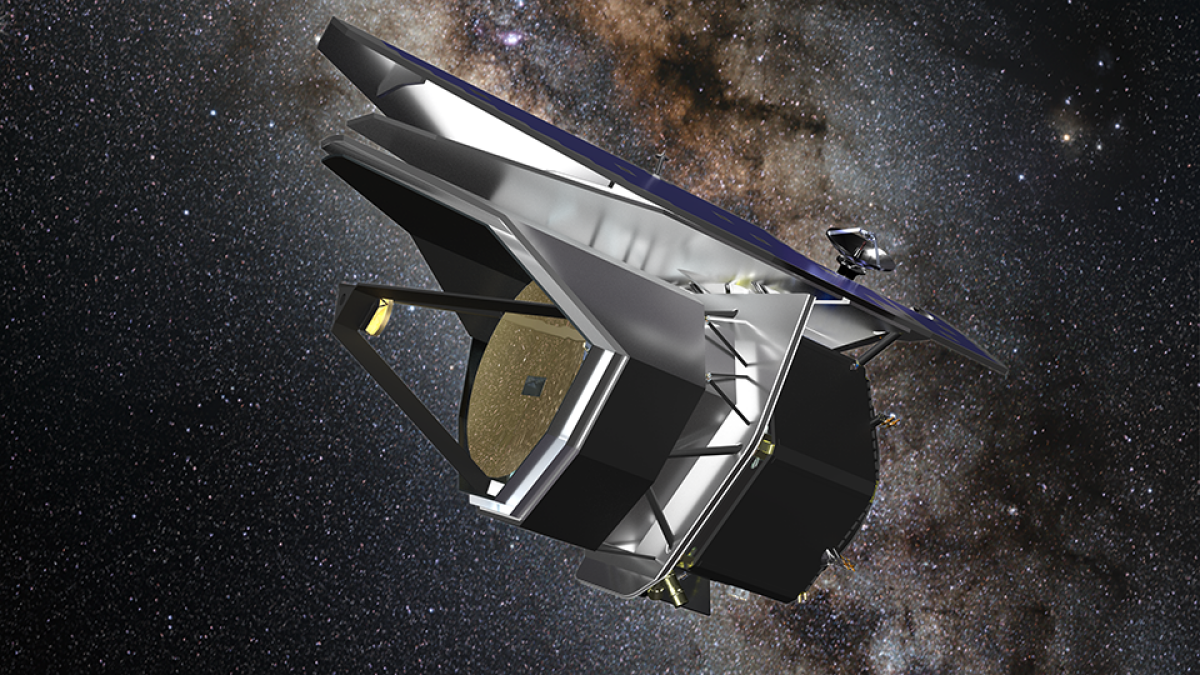
NASA is advancing its plans for a new space telescope named Prima, aimed at exploring the cold, dusty universe more clearly than ever before. This telescope is expected to launch in the early 2030s, provided it passes a final review.
Prima’s Mission:
- It will fill a gap in our astronomical observations by capturing far-infrared light, a range currently unmonitored by existing space telescopes.
- This capability will allow astronomers to explore regions obscured by cosmic dust, uncovering details about newborn stars, black holes, and material critical to planet formation.
Scientific Goals:
- Planetary Water and Air Formation: Studying gas and dust disks around young stars to track where water exists and how it might reach planets.
- Black Hole and Galaxy Co-evolution: Investigating the development of galaxies alongside their central supermassive black holes during a formative era of the universe.
- Origin of Cosmic Ingredients: Analyzing dust produced by stars to trace the origins of essential elements for life.
Technological Advancements:
- Prima will utilize super-cooled materials to detect far-infrared light, significantly enhancing sensitivity, potentially by a factor of 1,000.
- The telescope will feature a 5.9-foot mirror and advanced sensors operating in extremely low temperatures.
Budget Consideration:
The budget for Prima is capped at $1.2 billion, a fraction of the $10 billion spent on the James Webb Space Telescope.
Ultimately, the Prima mission represents a new category of NASA missions aimed at achieving high-impact results at a lower cost, expanding our understanding of the universe and the fundamental ingredients necessary for life.


