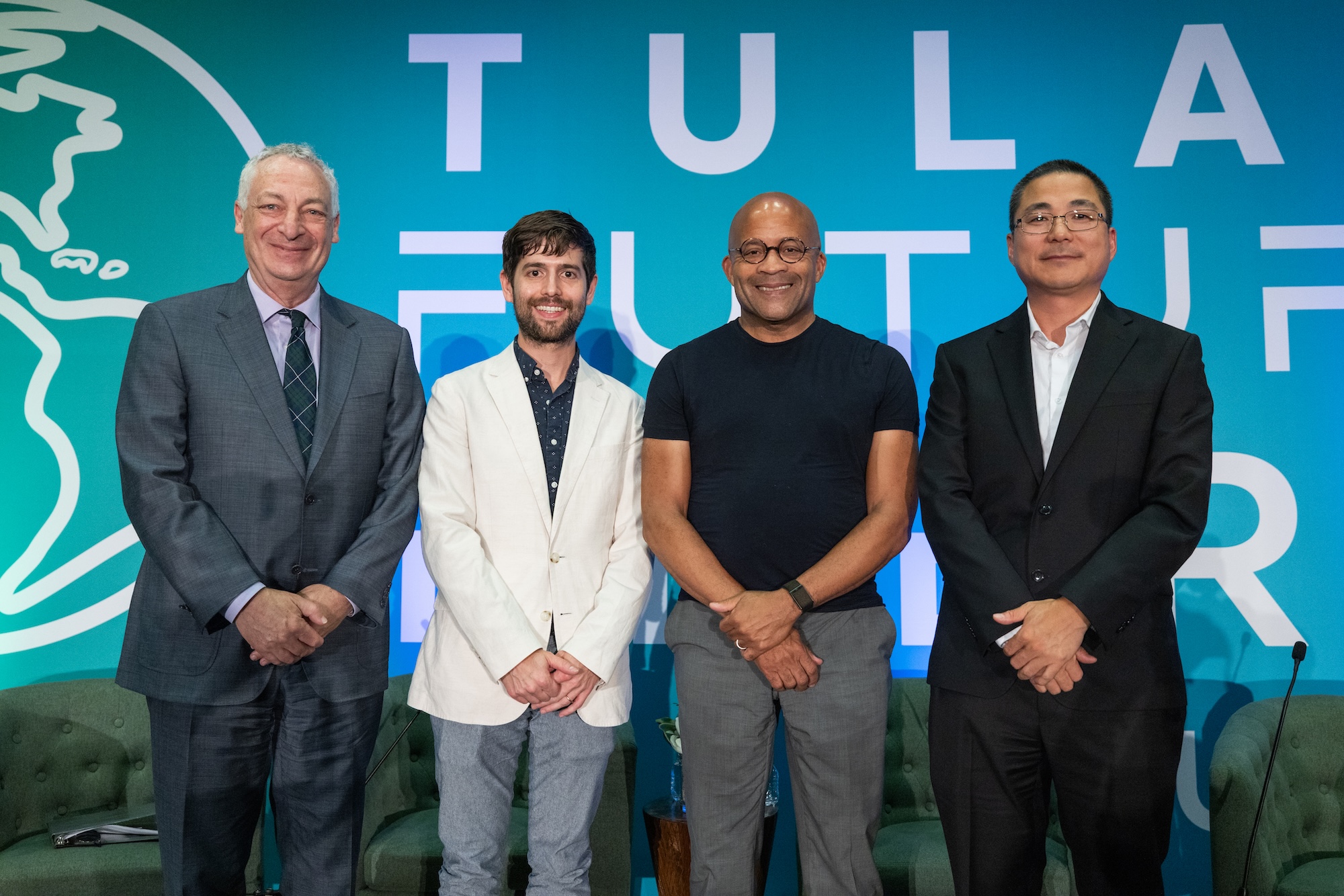
Artificial intelligence (AI) is notably increasing energy demand, but researchers from Tulane University suggest it can also aid in discovering materials that improve the electrical grid and expand energy access. At the Tulane Future of Energy Forum, physicist Jianwei Sun and chemist Daniel Straus discussed how AI could accelerate the search for new superconductors, materials that carry electric current without resistance.
The U.S. Department of Energy’s Genesis Mission has selected a Tulane-led team to focus on an AI-driven method to identify new superconductors. Sun emphasized that AI can enhance discovery speeds, potentially leading to superconductors capable of functioning at room temperature. Such advancements could significantly reduce energy losses during transmission, making energy cheaper and more efficient.
AI’s ability to analyze extensive material databases can streamline the traditionally trial-and-error process of material testing, allowing researchers to focus on the most promising candidates. As Straus noted, if a room-temperature superconductor is developed, it could revolutionize energy usage and distribution.
Beyond future innovations, AI is also enhancing existing energy systems. Microsoft’s Darryl Willis pointed out that AI is improving oil well planning, maintenance, and the permitting process for nuclear reactors. He highlighted the ongoing global issue of energy access, asserting the importance of using data to ensure that clean and reliable energy reaches even the most underserved populations.


